Kirjojen hintavertailu – 12 859 818 kirjaa ja 27 kauppaa

Kirjailija

S. T. Joshi

Kirjat ja teokset yhdessä paikassa: 92 kirjaa, julkaisuja vuosilta 1990–2025, suosituimpiin kuuluu Ambrose Bierce. Vertaile teosten hintoja ja tarkista saatavuus suomalaisista kirjakaupoista.

Nimi esiintyy myös muodoissa: S T Joshi, S.T. Joshi

92 kirjaa

Kirjojen julkaisuvuodet: 1990–2025.

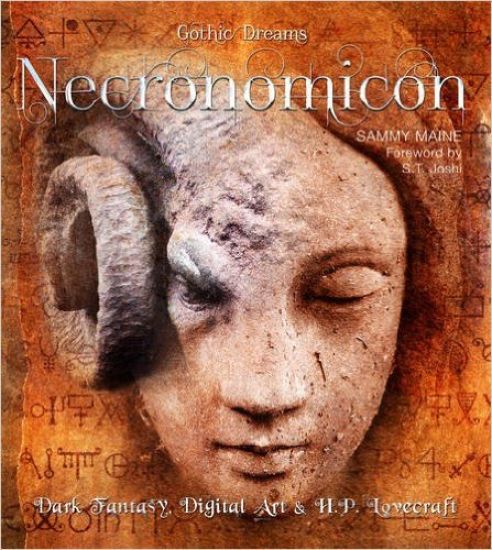
Necronomicon

Necronomicon

Sammy Maine; S.T. Joshi

Flame Tree Publishing
2015
sidottu
The Necronomicon – the Book of the Dead – what horrors lurk inside, whispering malevolently as the secrets try to creep out… Master of weird horror H. P. Lovecraft famously mentioned the mysterious fictional Necronomicon in some of his stories, with no more than a few cryptic references to it, and he inspired other authors, such as August Derleth, to incorporate the grimoire into their own works. Thus this notorious book, featuring arcane text and histories of the terrible gods that stalk these writers' works, has taken on a life of its own. In this exciting new book, punchy text describes how fantasy art, literature and movies have been influenced by this dangerous tome, accompanied by powerfully atmospheric artworks.
Acolytes of Cthulhu

Acolytes of Cthulhu

Neil Gaiman; S.T. Joshi; Edmond Hamilton

Titan Books Ltd
2014
pokkari
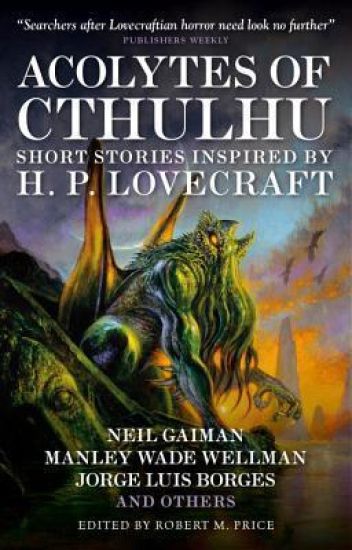
These are twenty-eight works in the vein of the master, H. P. Lovecraft, by some of his greatest disciples. It is a volume of treasures from modern masters such as Neil Gaiman (American Gods) and S. T. Joshi (Black Wings of Cthulhu), to famed storytellers including Jorge Luis Borges (The Aleph), Edmond Hamilton (The Star Kings), and Pulitzer Prize nominee Manley Wade Wellman (Rebel Boast).
The Original Atheists

The Original Atheists

S. T. Joshi

Prometheus Books
2014
pokkari
This is the first anthology ever published to feature the writings of leading eighteenth-century thinkers on the subjects of atheism, religion, freethought, and secularism. Editor S. T. Joshi has compiled notable essays by writers from Germany, France, England, and early America. The contributors include Denis Diderot (a principal author of the multivolume FrenchEncyclopedie), Baron d'Holbach (System of Nature, 1770), Voltaire (Philosophical Dictionary), David Hume, Immanuel Kant, Thomas Jefferson, James Madison, Ethan Allen, Thomas Paine, and other lesser-known thinkers. With a comprehensive introduction providing the intellectual and cultural context of the essays, this outstanding compilation will be of interest to students of philosophy, religious studies, and eighteenth-century intellectual history.
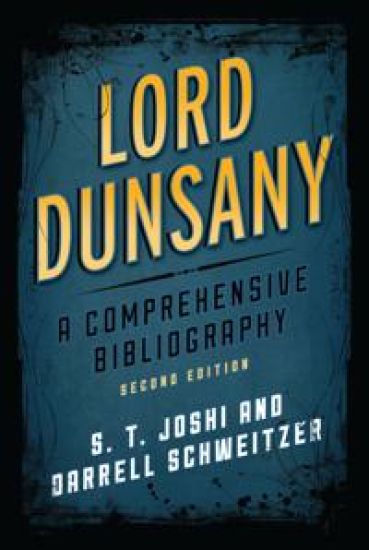
Lord Dunsany

Lord Dunsany

S. T. Joshi; Darrell Schweitzer

Scarecrow Press
2013
sidottu
Anglo-Irish writer Lord Dunsany (1878–1957) was a pioneering writer in the genre of fantasy literature and the author of such celebrated works as The Book of Wonder (1912) and The King of Elfland’s Daughter (1924). Over the course of a career that spanned more than five decades, Dunsany wrote thousands of stories, plays, novels, essays, poems, and reviews, and his work was translated into more than a dozen languages. Today, Dunsany’s work is experiencing a renaissance, as many of his earlier works have been reprinted and much attention has been paid to his place in the history of fantasy and supernatural literature. This bibliography is a revision of the landmark volume published in 1993, which first charted the full scope of Dunsany’s writing. This new edition not only brings the bibliography up to date, listing the dozens of new editions of Dunsany’s work that have appeared in the last two decades and the wealth of criticism that has been written about him, but also records many obscure publications in Dunsany’s lifetime that have not been previously known or identified. In all, the bibliography has been expanded by at least thirty percent. Among this new material are dozens of uncollected short stories, newspaper articles, and poems, and many books, essays, and reviews of Dunsany’s work published over the past century. Altogether, this bibliography is the definitive listing of works by and about Dunsany and will be the foundation of Dunsany studies for many years to come.
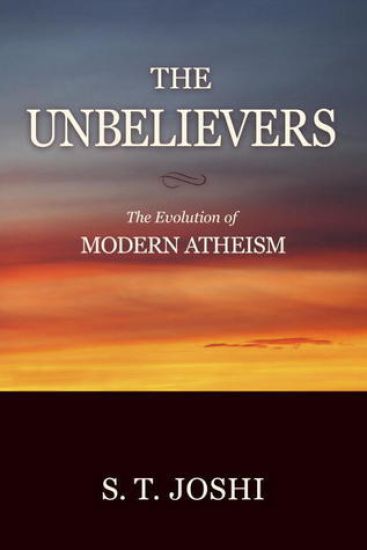
The Unbelievers

The Unbelievers

S. T. Joshi

Prometheus Books
2011
pokkari
Atheism, once a minority view, is now openly embraced by an increasing number of scientists, philosophers, politicians, and celebrities. How did this formerly closeted secular perspective gain its current prominence as a philosophically viable and challenging worldview? In this succinct history of modern atheism, a prolific author, editor, and scholar traces the development of atheist, agnostic, and secularist thought over the past century and a half. Beginning in the nineteenth century, when intellectuals first openly voiced skepticism about long-standing Christian beliefs, Joshi considers the impact of several leading thinkers: Thomas Henry Huxley ("Darwin's Bulldog"), Leslie Stephen, John Stuart Mill, Friedrich Nietzsche, and Mark Twain. Each of these writers, in different ways, made searing criticisms of such religious conceptions as the immortality of the soul, the doctrine of biblical inerrancy, and the existence of God, at a time when such notions were largely taken for granted. Next, the author examines prominent atheist thinkers of the early twentieth century: attorney Clarence Darrow, journalist H. L. Mencken, philosopher Bertrand Russell, and horror writer H. P. Lovecraft. Around the same time as Darrow and Mencken were involved in the celebrated Scopes trial in America, which resulted in a triumph for the theory of evolution, Bertrand Russell in England was becoming well known as a forthright atheist. And Lovecraft was championing atheism in his novels and tales. Turning to recent decades, the author considers the uproar caused by outspoken atheist Madalyn Murray O'Hair and the controversial 1962 "school prayer" Supreme Court decision. Finally, he evaluates the work of best-selling authors Gore Vidal, Richard Dawkins, Sam Harris, and Christopher Hitchens. In each case, he carefully dissects the views of the writers in question and points out both the strengths and fallacies or ambiguities in their arguments. This excellent intellectual history will be a welcome addition to the libraries of readers of both secular and religious orientations seeking a greater understanding of contemporary atheism.