Kirjailija
Sabine Baring-Gould
Kirjat ja teokset yhdessä paikassa: 457 kirjaa, julkaisuja vuosilta 1977–2026, suosituimpiin kuuluu The Collected Supernatural and Weird Fiction of Sabine Baring-Gould. Vertaile teosten hintoja ja tarkista saatavuus suomalaisista kirjakaupoista.
Nimi esiintyy myös muodoissa: Sabine Baring Gould, Sabine Baring -Gould
457 kirjaa
Kirjojen julkaisuvuodet: 1977–2026.

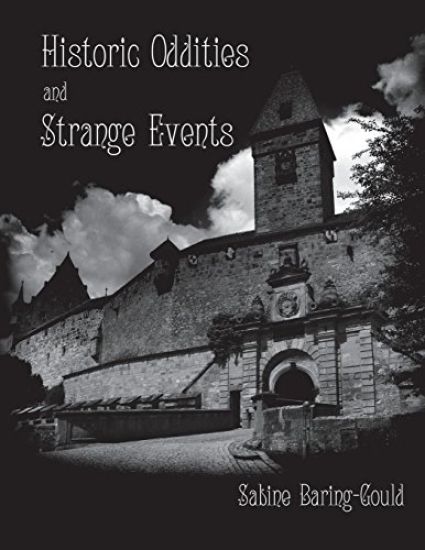
Historic Oddities and Strange Events
Sabine Baring-Gould
Createspace Independent Publishing Platform
2018
nidottu
This special edition of 'Historic Oddities and Strange Events' was written by Sabine Baring-Gould, and first published in 1891, making it close to 130 years old. This antiquarian text features some very strange and disturbing stories with titles like The Poisoned Parsnips, The Murder of Father Thomas in Damascus, The Coburg Mausoleum, The Patarines of Milan, and more. This is an incredible old book and an absolute must-read for all those enthusiastic about the more peculiar and darker side of history. IMPORTANT NOTE - Please read BEFORE buying THIS BOOK IS A REPRINT. IT IS NOT AN ORIGINAL COPY. This book is a reprint edition and is a perfect facsimile of the original book. It is not set in a modern typeface and has not been digitally enhanced. As a result, some characters and images might suffer from slight imperfections, blurring, or minor shadows in the page background. This book appears exactly as it did when it was first printed. DISCLAIMER: Due to the age of this book, some methods, beliefs, or practices may have been deemed unsafe, undesirable, or unacceptable in the interim years. In utilizing the information herein, you do so at your own risk. We republish antiquarian books without judgment, solely for their historical and cultural importance, and for educational purposes. If purchasing a book more than 50 years old, especially for a minor, please use due diligence and vet the text before gifting.

The Book of Were-Wolves
Sabine Baring-Gould
Createspace Independent Publishing Platform
2018
nidottu
The Book of Were-Wolves by Sabine Baring-Gould. WHAT is Lycanthropy? The change of manor woman into the form of a wolf, either through magical means, so as to enable him or her to gratify the taste for human flesh, or through judgment of the gods in punishment for some great offence. This is the popular definition. Truly it consists in a form of madness, such as may be found in most asylums. Among the ancients this kind of insanity went by the names of Lycanthropy, Kuanthropy, or Boanthropy, because those afflicted with it believed themselves to be turned into wolves, dogs, or cows. But in the North of Europe, as we shall see, the shape of a bear, and in Africa that of a hyaena, were often selected in preference. A mere matter of taste According to Marcellus Sidetes, of whose poem a fragment exists, men are attacked with this madness chiefly in the beginning of the year, and become most furious in February; retiring for the night to lone cemeteries, and living precisely in the manner of dogs and wolves.

The Book of Were-Wolves: Being an Account of a Terrible Superstition
Sabine Baring-Gould
Createspace Independent Publishing Platform
2018
nidottu
This special edition of 'The Book of Were-Wolves' was written by Sabine Baring-Gould, and first published in 1865, making it over 150 years old. This antiquarian text features sections on Lycanthropy Among the Ancients, The Were-Wolf in the Middle Ages, Jean Grenier, Folk-Lore Relating to Were-Wolves, Mythological Origin of the Were-Wolf Myth, and more. This is a fascinating insight in the the history of this mythology, and is an absolute must-have for all enthusiasts of old myths and superstitions. IMPORTANT NOTE - Please read BEFORE buying THIS BOOK IS A REPRINT. IT IS NOT AN ORIGINAL COPY. This book is a reprint edition and is a perfect facsimile of the original book. It is not set in a modern typeface and has not been digitally enhanced. As a result, some characters and images might suffer from slight imperfections, blurring, or minor shadows in the page background. This book appears exactly as it did when it was first printed. At 'Black Books' we do not use OCR (Optical Character Recognition) technology to reproduce text from scanned or other forms of images. This can result in everything from strange characters to gibberish text. We believe that reading an old book, exactly as it was, is the most satisfying way to read it. DISCLAIMER: Due to the age of this book, some methods, beliefs, or practices may have been deemed unsafe, undesirable, or unacceptable in the interim years. In utilizing the information herein, you do so at your own risk. We republish antiquarian books without judgment, solely for their historical and cultural importance, and for educational purposes. If purchasing a book more than 50 years old, especially for a minor, please use due diligence and vet the text before gifting.
The Vicar of Morwenstow - Being a Life of Robert Stephen Hawker is an unchanged, high-quality reprint of the original edition . Hansebooks is editor of the literature on different topic areas such as research and science, travel and expeditions, cooking and nutrition, medicine, and other genres. As a publisher we focus on the preservation of historical literature. Many works of historical writers and scientists are available today as antiques only. Hansebooks newly publishes these books and contributes to the preservation of literature which has become rare and historical knowledge for the future.



Jacquetta (1886). By: Sabine Baring-Gould: Jacquetta and Other Stories, 1890: The Story of Jael, Jacquetta, Moth-Mullein .
Sabine Baring-Gould
Createspace Independent Publishing Platform
2018
nidottu
The Reverend Sabine Baring-Gould (28 January 1834 - 2 January 1924) of Lew Trenchard in Devon, England, was an Anglican priest, hagiographer, antiquarian, novelist, folk song collector and eclectic scholar. His bibliography consists of more than 1240 publications, though this list continues to grow. His family home, the manor house of Lew Trenchard, near Okehampton, Devon, has been preserved as he had it rebuilt and is now a hotel. He is remembered particularly as a writer of hymns, the best-known being "Onward, Christian Soldiers" and "Now the Day Is Over". He also translated the carol "Gabriel's Message" from the Basque language to English. CAREER: Because the family spent much of his childhood travelling round Europe, most of his education was by private tutors. He only spent about two years in formal schooling, first at King's College School in London (then located in Somerset House) and then, for a few months, at Warwick Grammar School (now Warwick School). Here his time was ended by a bronchial disease of the kind that was to plague him throughout his long life. His father considered his ill-health as a good reason for another European tour. In 1852 he was admitted to Cambridge University, earning the degrees of Bachelor of Arts in 1857, then Master of Arts in 1860 from Clare College, Cambridge. In September 1853 he informed Nathaniel Woodard of his desire to be ordained. He taught for only ten days at one of Woodard's boys' boarding schools in Sussex, Lancing College, but then moved to another, Hurstpierpoint College, where he stayed from 1857 to 1864. While there he was responsible for several subjects, especially languages and science, and he also designed the ironwork of the bookcases in the boys' library, as well as painting the window jambs with scenes from the "Canterbury Tales" and the "Faery Queen". He took Holy Orders in 1864, and became the curate at Horbury Bridge, West Riding of Yorkshire. It was while acting as a curate that he met Grace Taylor, the daughter of a mill hand, then aged fourteen. In the next few years they fell in love. His vicar, John Sharp, arranged for Grace to live for two years with relatives in York to learn middle-class manners. Baring-Gould, meanwhile, relocated to become perpetual curate at Dalton, near Thirsk. He and Grace were married in 1868 at Wakefield. Their marriage lasted until her death 48 years later, and the couple had 15 children, all but one of whom lived to adulthood. When he buried his wife in 1916 he had carved on her tombstone the Latin motto Dimidium Animae Meae ("Half my Soul"). Baring-Gould became the rector of East Mersea in Essex in 1871 and spent ten years there. In 1872 his father died and he inherited the 3,000-acre (12 km2) family estates of Lew Trenchard in Devon, which included the gift of the living of Lew Trenchard parish. When the living became vacant in 1881, he was able to appoint himself to it, becoming parson as well as squire. He did a great deal of work restoring St Peter's Church, Lew Trenchard, and (from 1883 to 1914) thoroughly remodelled his home, Lew Trenchard Manor...................
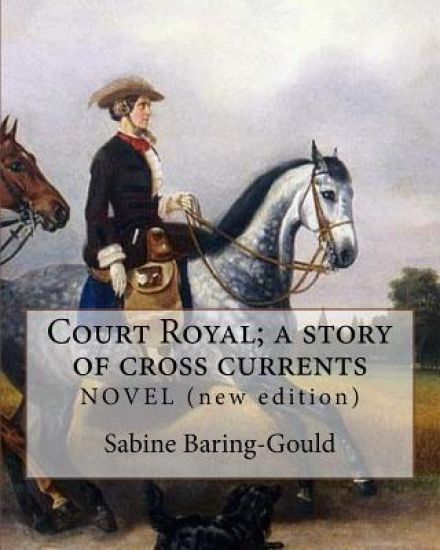
Court Royal; a story of cross currents, By: Sabine Baring-Gould: NOVEL. It explores the conflict between the English aristocracy and nineteenth centur
Sabine Baring-Gould
Createspace Independent Publishing Platform
2018
nidottu
The Reverend Sabine Baring-Gould (28 January 1834 - 2 January 1924) of Lew Trenchard in Devon, England, was an Anglican priest, hagiographer, antiquarian, novelist, folk song collector and eclectic scholar. His bibliography consists of more than 1240 publications, though this list continues to grow. His family home, the manor house of Lew Trenchard, near Okehampton, Devon, has been preserved as he had it rebuilt and is now a hotel. He is remembered particularly as a writer of hymns, the best-known being "Onward, Christian Soldiers" and "Now the Day Is Over". He also translated the carol "Gabriel's Message" from the Basque language to English. CAREER: Because the family spent much of his childhood travelling round Europe, most of his education was by private tutors. He only spent about two years in formal schooling, first at King's College School in London (then located in Somerset House) and then, for a few months, at Warwick Grammar School (now Warwick School). Here his time was ended by a bronchial disease of the kind that was to plague him throughout his long life. His father considered his ill-health as a good reason for another European tour. In 1852 he was admitted to Cambridge University, earning the degrees of Bachelor of Arts in 1857, then Master of Arts in 1860 from Clare College, Cambridge. In September 1853 he informed Nathaniel Woodard of his desire to be ordained. He taught for only ten days at one of Woodard's boys' boarding schools in Sussex, Lancing College, but then moved to another, Hurstpierpoint College, where he stayed from 1857 to 1864. While there he was responsible for several subjects, especially languages and science, and he also designed the ironwork of the bookcases in the boys' library, as well as painting the window jambs with scenes from the "Canterbury Tales" and the "Faery Queen". He took Holy Orders in 1864, and became the curate at Horbury Bridge, West Riding of Yorkshire. It was while acting as a curate that he met Grace Taylor, the daughter of a mill hand, then aged fourteen. In the next few years they fell in love. His vicar, John Sharp, arranged for Grace to live for two years with relatives in York to learn middle-class manners. Baring-Gould, meanwhile, relocated to become perpetual curate at Dalton, near Thirsk. He and Grace were married in 1868 at Wakefield. Their marriage lasted until her death 48 years later, and the couple had 15 children, all but one of whom lived to adulthood. When he buried his wife in 1916 he had carved on her tombstone the Latin motto Dimidium Animae Meae ("Half my Soul"). Baring-Gould became the rector of East Mersea in Essex in 1871 and spent ten years there. In 1872 his father died and he inherited the 3,000-acre (12 km2) family estates of Lew Trenchard in Devon, which included the gift of the living of Lew Trenchard parish. When the living became vacant in 1881, he was able to appoint himself to it, becoming parson as well as squire. He did a great deal of work restoring St Peter's Church, Lew Trenchard, and (from 1883 to 1914) thoroughly remodelled his home, Lew Trenchard Manor..................
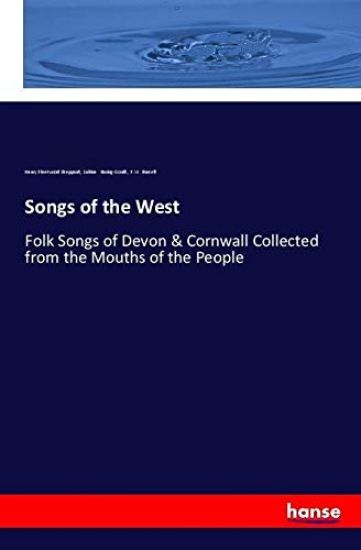
Songs of the West
Henry Fleetwood Sheppard; Sabine Baring-Gould; F. W. Bussell
Hansebooks
2018
nidottu
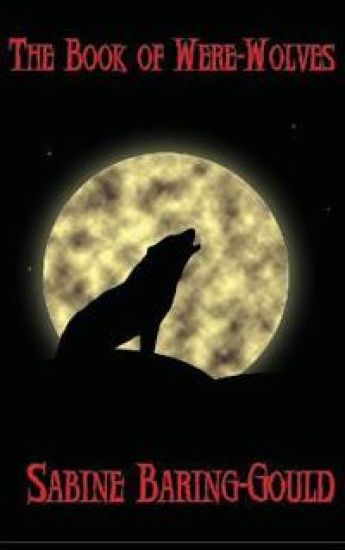
The Book of Were-Wolves By Sabine Baring-Gould was originally published in 1865 and remains the most important and most often cited book on Lycanthropy. It is as compelling today as it was more than one hundred years ago when it was first published.