Kirjojen hintavertailu – 12 859 818 kirjaa ja 27 kauppaa
Kirjailija
Saint Thomas (Aquinas)
Kirjat ja teokset yhdessä paikassa: 30 kirjaa, julkaisuja vuosilta 1988–2025, suosituimpiin kuuluu Catena Aurea, Volume 1, Part 2. Vertaile teosten hintoja ja tarkista saatavuus suomalaisista kirjakaupoista.
Nimi esiintyy myös muodoissa: Saint Thomas Aquinas
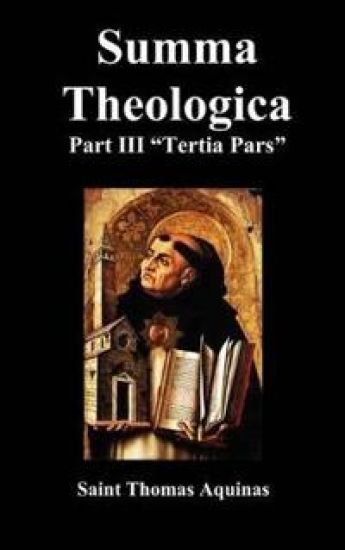
"Summa Theologica" is considered Aquinas' greatest work and most complete explanation of his theology. Part 3 focuses on Christ being the way to God and the necessity of the incarnation.
Among the great works of Thomas Aquinas, the ""Commentary on the Sentences of Peter Lombard"" has suffered almost total neglect among translators. Such neglect is surprising, considering that the massive Commentary - more than 4,000 pages in the last printed edition - is not only Aquinas' first systematic engagement with all the philosophical and theological topics on which he expended his energy over the span of a short career but is also characterized by an exuberance and elaborateness seldom found in his subsequent writings. Although Chenu had already drawn attention decades ago to the importance of studying this youthful tour de force for a fuller understanding of Thomas' more mature work, the ""Commentary on the Sentences"" has remained a closed book for many modern students of Thomistic and medieval thought because of its relative inaccessibility in English or in Latin. The present volume, containing all the major texts on love and charity, makes available what is by far the most extensive translation ever to be made from the Commentary with the added benefit that the better part of the translation is based on the (as yet unpublished) critical edition of the Leonine Commission. The collection of texts from all four books has a tight thematic coherence that makes it invaluable to students of Thomas' moral philosophy, moral theology, and philosophical theology. In addition, the inclusion of parallel texts from Aquinas' first (Parisian) Commentary as well as from his second (Roman) attempt at a commentary, the recently rediscovered ""Lectura Romana"", makes this edition all the more valuable for those who wish to track the internal development of Thomas' thinking on these matters. The new availability of so many rich passages from the ""Commentary on the Sentences"" will encourage and facilitate use of a magnificent resource that deserves to be better known.
In his sixth-century work commonly known as the De hebdomadibus, Boethius (ca. 480-524) poses the question of how created things or substances can be good just as they are - that is, good just by existing - without being the same as the source of all goodness, God, who is understood to be Goodness Itself. In his commentary written in the thirteenth century, St. Thomas Aquinas sets out to explain the problem Boethius is treating as well as to explicate Boethius's solution. In doing so, however, the Angelic Doctor suggests a more developed analysis of goodness, based on his own metaphysical perspective. Still, his view can be seen to continue the emphasis Boethius himself placed on the notion of creation - bringing into being - as crucial to understanding the issues at hand. The introduction to this translation provides critical historical background, including an account of the influence of Cicero and Augustine, for understanding Boethius's view of being, or esse. Based on historical and textual analysis, the authors reaffirm the ""traditional"" interpretation, which holds that for Boethius esse indicates form rather than a distinct act of being. In articulating the difference between Boethius's and Aquinas's positions on esse and on goodness, and hence the relation of esse and goodness, Schultz and Synan show not only that Aquinas was respectful of Boethius's stance, but that his own position could be seen as a development in harmony with his predecessor's thought. The English translation itself, in facing-page format with the 1992 Leonine critical edition of Aquinas's Latin text, remains faithful to the text and at the same time clear and readable.
The essentials of the Catholic Faith-- clearly & beautifully explained by one of the Church's greatest thinkers Although St. Thomas Aquinas was one of the Church's most intellectually powerful theologians, few know that he also wrote a great deal that's well within the reach of ordinary believers. In fact, as you'll find in The Aquinas Catechism, St. Thomas had a remarkable ability to communicate the Faith -- including both its most complex and its simplest elements -- in plain language. Here you'll find his deeply insightful, straightforward, and clear explanations of the Apostles' Creed, the Commandments, and the Sacraments -- as well as of the Our Father and the Hail Mary. In other words, this book will give you a basic course in the Catholic Faith, taught by the Church's greatest theologian. Let him help you: Gain a better grasp of Church doctrinePray with greater fervor and understandingReceive the Sacraments more worthilyLearn what God requires of you and whyExplain Church teachings to non-Catholic friendsDiscover the scriptural sources of our Catholic FaithFind remedies for moral weaknesses that still afflict youGlimpse the greatness of the Church's supernatural missionAnd much more Above all, let St. Thomas teach you how to explain, defend, and live your Faith . . . with the clear-sighted wisdom of a saint
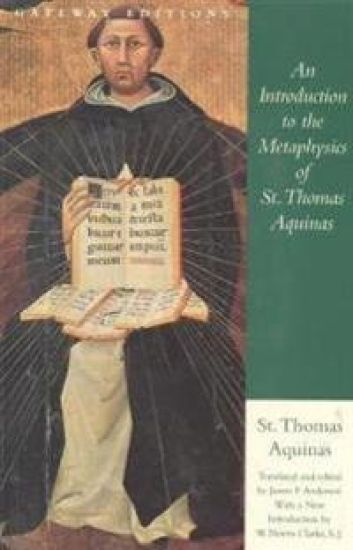
An Introduction to the Metaphysics of St. Thomas Aquinas is an accessible Aquinas and a solid entry into his work. The format is manageable, and the scope, appropriately limited. James F. Anderson's skillful collection and lucid translation makes the pleasure of reading Aquinas available as it has not been before.
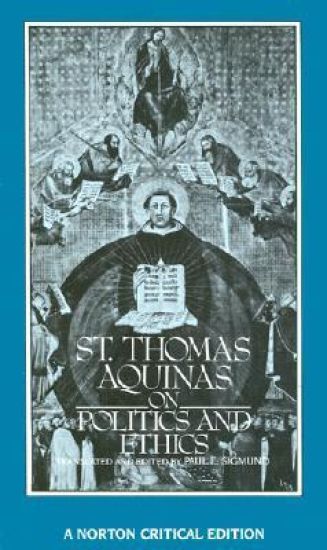
The selections not only include St. Thomas Aquinas’s views on government, law, war, property, and sexual ethics, but also provide the theological, epistemological, and psychological background for his political and ethical thought, including the Five Proofs on the existence of God and Aquinas’s theories of knowledge, the soul, the purpose of man, and the order of the universe. Throughout the book, footnotes explain technical terms and historical, biblical, and classical references. "Backgrounds and Sources" follows the text, with selections from the writings of Aristotle, St. Augustine, and Dionysius the Areopagite. "Interpretations" traces Aquinas’s influence on medieval thought, on Roman Catholicism during the Renaissance, on early modern political thought (Richard Hooker and Francisco Suarez), on nineteenth-and twentieth-century papal social thought, and on contemporary Christian Democratic political parties in Europe and Latin America. The volume concludes with "Contemporary Problems in Thomistic Ethics", which contains eight analyses of the influence of Aquinas's thought on modern debates on war, contraception, and abortion. A Selected Bibliography is included.