
Kirjojen hintavertailu – 12 903 725 kirjaa ja 27 kauppaa

Kirjailija

Sajjad Adeliyan Tous

Kirjat ja teokset yhdessä paikassa: 2 kirjaa, julkaisuja vuodelta 2024, suosituimpiin kuuluu Managing Religion and Religious Changes in Iran. Vertaile teosten hintoja ja tarkista saatavuus suomalaisista kirjakaupoista.

2 kirjaa

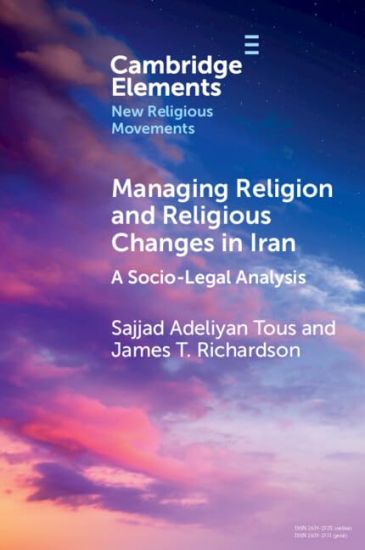
Managing Religion and Religious Changes in Iran

Managing Religion and Religious Changes in Iran

Sajjad Adeliyan Tous; James T. Richardson

Cambridge University Press
2024
pokkari
This Element offers a theoretically informed examination of the manner in which religion, especially alternative and emergent religious and spiritual movements, is managed by law and legal mechanisms in the authoritarian theocracy of Iran. It highlights how these phenomena have been affected by the intersection of law, politics, and Shi?i theology in recent Iranian history. The growing interest of Iranian citizens in new religious movements and spiritual currents, fostered by the cultural diffusion of Western writings and ideas, is described. The development of religious diversity in Iran and a corresponding loss of commitment toward some Islamic doctrines and practices are of considerable concern to both the Iranian religious and political establishments. This has led to social control efforts over any religious and spiritual movement differing from the regime's view of Islam. Those efforts, supported in large part by Western anticult ideas, culminated in the passage of a piece of stringent legislation in 2021. The Element closes with applications of theorizing from the sociology of law and of religion.
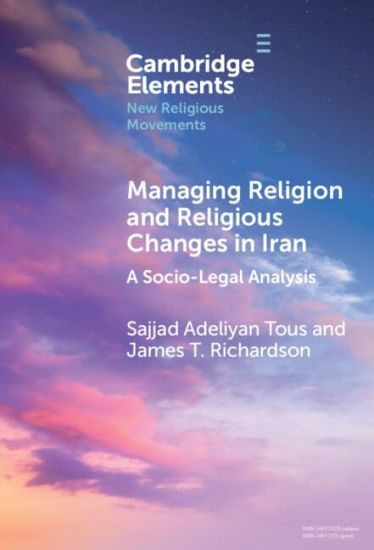
Managing Religion and Religious Changes in Iran

Managing Religion and Religious Changes in Iran

Sajjad Adeliyan Tous; James T. Richardson

Cambridge University Press
2024
sidottu
This Element offers a theoretically informed examination of the manner in which religion, especially alternative and emergent religious and spiritual movements, is managed by law and legal mechanisms in the authoritarian theocracy of Iran. It highlights how these phenomena have been affected by the intersection of law, politics, and Shi?i theology in recent Iranian history. The growing interest of Iranian citizens in new religious movements and spiritual currents, fostered by the cultural diffusion of Western writings and ideas, is described. The development of religious diversity in Iran and a corresponding loss of commitment toward some Islamic doctrines and practices are of considerable concern to both the Iranian religious and political establishments. This has led to social control efforts over any religious and spiritual movement differing from the regime's view of Islam. Those efforts, supported in large part by Western anticult ideas, culminated in the passage of a piece of stringent legislation in 2021. The Element closes with applications of theorizing from the sociology of law and of religion.