Kirjojen hintavertailu – 12 859 818 kirjaa ja 27 kauppaa

Kirjailija

Sakari Tamminen

Kirjat ja teokset yhdessä paikassa: 5 kirjaa, julkaisuja vuosilta 2010–2019, suosituimpiin kuuluu Biogenetic Paradoxes of the Nation. Vertaile teosten hintoja ja tarkista saatavuus suomalaisista kirjakaupoista.

5 kirjaa

Kirjojen julkaisuvuodet: 2010–2019.

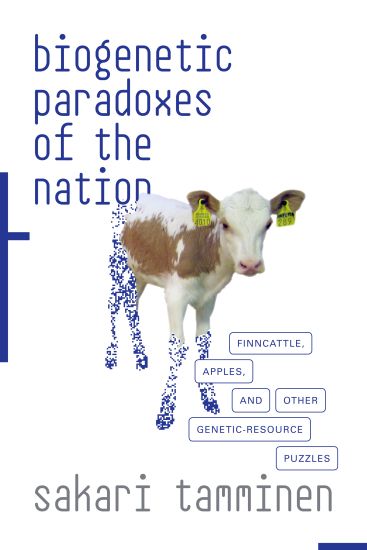
Biogenetic Paradoxes of the Nation

Biogenetic Paradoxes of the Nation

Sakari Tamminen

Duke University Press
2019
pokkari
In 1992, the Convention on Biological Diversity (CBD), signed by over 160 countries and hailed as the key symbol of a common vision for saving Earth's biodiversity, set forth three primary mandates: preserving biodiversity, using biodiversity components sustainably, and enabling economic benefit-sharing. The CBD-which gave signatory countries the ability to claim sovereignty over nonhuman genetic resources native to each nation-defined biodiversity through a politics of nationhood in ways that commodified genetic resources. In Biogenetic Paradoxes of the Nation Sakari Tamminen traces the ways in which the CBD's seemingly compatible yet ultimately paradox-ridden aims became manifest in efforts to create, conserve, and capitalize on distinct animal and plant species. In using Finland as a case study with which to understand the worldwide efforts to convert species into manifestations of national identity, Tamminen shows how the CBD's policies contribute less to biodiversity conservation than to smoothing the way for frictionless operation of biotechnologically assisted circuits of the global bioeconomy. Tamminen demonstrates how an intimate look at the high-level politics and technical processes of defining national genetic resources powerfully illuminates the limits of anthropocentric biopolitical theory.
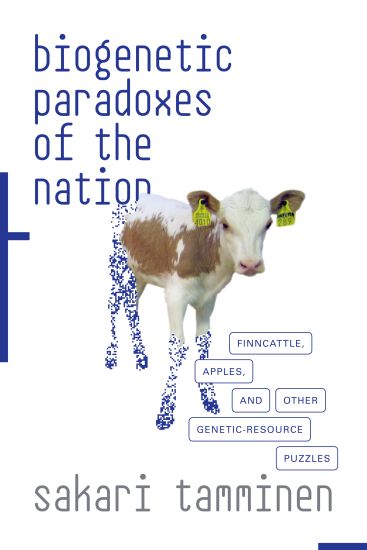
Biogenetic Paradoxes of the Nation

Biogenetic Paradoxes of the Nation

Sakari Tamminen

Duke University Press
2019
sidottu
In 1992, the Convention on Biological Diversity (CBD), signed by over 160 countries and hailed as the key symbol of a common vision for saving Earth's biodiversity, set forth three primary mandates: preserving biodiversity, using biodiversity components sustainably, and enabling economic benefit-sharing. The CBD-which gave signatory countries the ability to claim sovereignty over nonhuman genetic resources native to each nation-defined biodiversity through a politics of nationhood in ways that commodified genetic resources. In Biogenetic Paradoxes of the Nation Sakari Tamminen traces the ways in which the CBD's seemingly compatible yet ultimately paradox-ridden aims became manifest in efforts to create, conserve, and capitalize on distinct animal and plant species. In using Finland as a case study with which to understand the worldwide efforts to convert species into manifestations of national identity, Tamminen shows how the CBD's policies contribute less to biodiversity conservation than to smoothing the way for frictionless operation of biotechnologically assisted circuits of the global bioeconomy. Tamminen demonstrates how an intimate look at the high-level politics and technical processes of defining national genetic resources powerfully illuminates the limits of anthropocentric biopolitical theory.
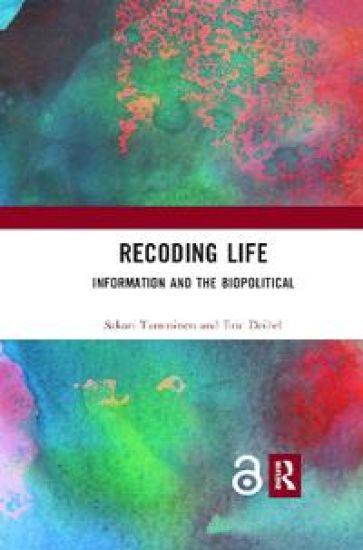
Recoding Life

Recoding Life

Sakari Tamminen; Eric Deibel

Routledge
2019
nidottu
This book addresses the unprecedented convergence between the digital and the corporeal in the life sciences and turns to Foucault’s biopolitics in order to understand how life is being turned into a technological object. It examines a wide range of bioscientific knowledge practices that allow life to be known through codes that can be shared (copied), owned (claimed, and managed) and optimised (remade through codes based on standard language and biotech engineering visions). The book’s approach is captured in the title, which refers to 'the biopolitical'. The authors argue that through discussions of political theories of sovereignty and related geopolitical conceptions of nature and society, we can understand how crucially important it is that life is constantly unsettling and disrupting the established and familiar ordering of the material world and the related ways of thinking and acting politically. The biopolitical dynamics involved are conceptualised as the 'metacode of life', which refers to the shifting configurations of living materiality and the merging of conventional boundaries between the natural and artificial, the living and non-living. The result is a globalising world in which the need for an alternative has become a core part of its political and legal instability, and the authors identify a number of possible alternative platforms to understand life and the living as framed by the 'metacodes' of life. This book will appeal to scholars of science and technology studies, as well as scholars of the sociology, philosophy, and anthropology of science, who are seeking to understand social and technical heterogeneity as a characteristic of the life sciences.
Recoding Life

Recoding Life

Sakari Tamminen; Eric Deibel

Routledge
2018
sidottu
This book addresses the unprecedented convergence between the digital and the corporeal in the life sciences and turns to Foucault’s biopolitics in order to understand how life is being turned into a technological object. It examines a wide range of bioscientific knowledge practices that allow life to be known through codes that can be shared (copied), owned (claimed, and managed) and optimised (remade through codes based on standard language and biotech engineering visions). The book’s approach is captured in the title, which refers to 'the biopolitical'. The authors argue that through discussions of political theories of sovereignty and related geopolitical conceptions of nature and society, we can understand how crucially important it is that life is constantly unsettling and disrupting the established and familiar ordering of the material world and the related ways of thinking and acting politically. The biopolitical dynamics involved are conceptualised as the 'metacode of life', which refers to the shifting configurations of living materiality and the merging of conventional boundaries between the natural and artificial, the living and non-living. The result is a globalising world in which the need for an alternative has become a core part of its political and legal instability, and the authors identify a number of possible alternative platforms to understand life and the living as framed by the 'metacodes' of life. This book will appeal to scholars of science and technology studies, as well as scholars of the sociology, philosophy, and anthropology of science, who are seeking to understand social and technical heterogeneity as a characteristic of the life sciences.
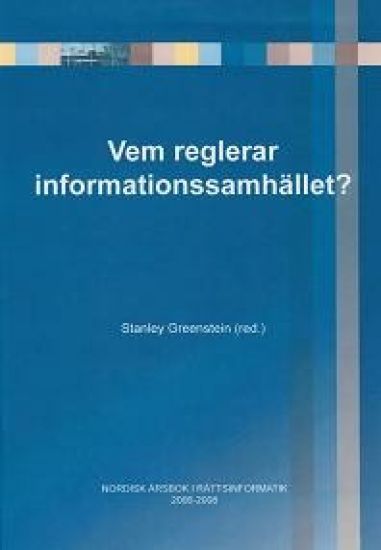
Vem reglerar informationssamhället? : nordisk årsbok i rättsinformatik 2006-2008

Vem reglerar informationssamhället? : nordisk årsbok i rättsinformatik 2006-2008

Cecilia Magnusson Sjöberg; Viveca Still; Ahti Saarenpää; Mårten Ogilwie Edenroth; Tommy Tranvik; Selene M Morrow; Dag Wiese Schartum; Markus Bylund; Mikael Johnson; Asko Lehmuskallio; Peter Seipel; Sakari Tamminen; Peter Blume; Olle Abrahamsson; Lars Klasén; Andrew J I Jones; Christine Kirchberger; Richard V De Mulder; Kees Van Noortwijk; Pieter Kleve; Ruth Nielsen; Erich Schweighofer; Staffan Malmgren; Carolyn Paris; Stanley Greenstein

Jure Förlag
2010
nidottu
Nordisk årsbok i rättsinformatik följer en lång tradition av att belysa den senaste utvecklingen inom området rättsinformatik. Boken följer och rapporterar om utvecklingen i de skandinaviska länder. I den här upplagan av Nordisk årsboken i rättsinformatik bidrar också flera internationella experter. Årsboken belyser aktuella frågor och tendenser i informationssamhället och utgör en värdefull källa för båda akademiker och praktiserande jurister. Professor emeritus Peter Seipel, Professor Peter Blume, Professor Dag Wiese Schartum, Professor Ahti Saarenpää och Professor Cecilia Magnusson Sjöberg är några av de experter som bidrar till boken. Nordisk årsbok i rättsinformatik diskuterar problem som har uppstått i och med samhällets användning av informations- och kommunikationsteknologi, bland annat: · Hur den personliga integriteten ter sig i framtiden. · Hur immaterialrätten påverkas i informationssamhället. · Hur man kan skydda den personliga integriteten och samtidigt främja informationssäkerhet. · Vad begrepp som den semantiska webben och sociala medier har för betydelse för utvecklingen av juristers informationssökning. · Hur kunskapshanteringssystem kommer att fungera i framtiden. Ett centralt tema i boken är hur man bör balansera kraven på ökad juridisk reglering med hur man bör ta hänsyn till de röster som vill ha mindre regler i informationssamhället. Därtill diskuteras vilka juridiska angreppssätt som är mest lämpliga.