Kirjojen hintavertailu – 12 903 725 kirjaa ja 27 kauppaa

Kirjailija

Saleem H. Ali

Kirjat ja teokset yhdessä paikassa: 7 kirjaa, julkaisuja vuosilta 2009–2025, suosituimpiin kuuluu Environmental Diplomacy. Vertaile teosten hintoja ja tarkista saatavuus suomalaisista kirjakaupoista.

Nimi esiintyy myös muodoissa: Saleem H Ali

7 kirjaa

Kirjojen julkaisuvuodet: 2009–2025.

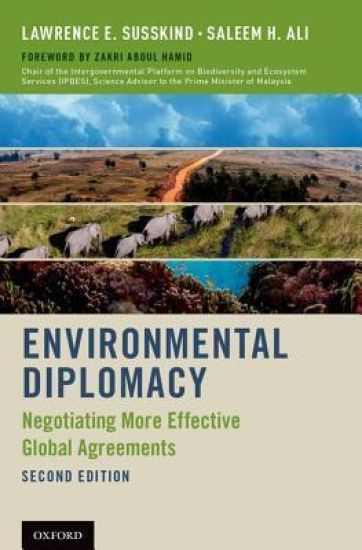
Environmental Diplomacy

Environmental Diplomacy

Lawrence E. Susskind; Saleem H. Ali; Zakri Abdul Hamid

Oxford University Press Inc
2014
sidottu
International environmental agreements have increased exponentially within the last five decades. However, decisions on policies to address key issues such as biodiversity loss, climate change, ozone depletion, hazardous waste transport and numerous other planetary challenges require individual countries to adhere to international norms. What have been the successes and failures in the environmental treaty-making arena? How has the role of civil society and scientific consensus contributed to this maturing process? Why have some treaties been more enforceable than others and which theories of international relations can further inform efforts in this regard? Addressing these questions with renewed emphasis on close case analysis makes this volume a timely and thorough postscript to the Rio-Plus 20 summit's celebrated invocation document, The Future We Want, towards sustainable development. Environmental Diplomacy: Negotiating More Effective Global Agreements provides an accessible narrative on understanding the geopolitics of negotiating international environmental agreements and clear guidance on improving the current system. In this book, authors Lawrence Susskind and Saleem Ali expertly observe international environmental negotiations to effectively inform the reader on the geopolitics of protecting our planet. This second edition offers an additional perspective from the Global South as well as providing a broader analysis of the role of science in environmental treaty-making. It provides a unique contribution as a panoramic analysis of the process of environmental treaty-making.
Sustainability

Sustainability

Saleem H. Ali

Oxford University Press
2025
nidottu

Halvin toimitettuna 18,90 €

Very Short Introductions: Brilliant, Sharp, Inspiring The growing concern about global environmental change and human impacts on the planet has led to the emergence of a broad field of study on the 'sustainability' of human societies. The term's common usage can be traced back to the advent of the Earth Summit in 1992 when 'sustainable development' was broadly embraced by the international community as an ostensibly win-win proposition for economic development, social inclusion, and ecological conservation. Yet both the natural science underpinnings and the social implications of a quest for sustainability have been diffuse. There is a need for a coherent synthesis which draws out key themes from both natural and social analysis of the concept. This Very Short Introduction begins by introducing the concept of sustainability and how it has developed. The central chapters consider four key concepts crucial to sustainability: a) material and energy flows in consumption and production; b) technological interventions for a sustainable society; c) tipping points, and resilience in natural and social systems; and d) renewability and circularity in the economy. In the concluding chapter, Saleem H. Ali explores political means of managing anthropogenic change for a more sustainable society. ABOUT THE SERIES: The Very Short Introductions series from Oxford University Press contains hundreds of titles in almost every subject area. These pocket-sized books are the perfect way to get ahead in a new subject quickly. Our expert authors combine facts, analysis, perspective, new ideas, and enthusiasm to make interesting and challenging topics highly readable.
Adaptive Governance to Manage Human Mobility and Natural Resource Stress

Adaptive Governance to Manage Human Mobility and Natural Resource Stress

Saleem H. Ali; Martin Clifford; Dominic Kniveton; Caroline Zickgraf; Sonja Ayeb-Karlsson

Cambridge University Press
2023
pokkari
Connections between resources and migration operate as a complex adaptive system rather than being premised in linear, causal mechanisms. The systems thinking advocated within this Element increases the inclusion of socio-psychological, financial, demographic, environmental and political dimensions that mediate resource-(im)mobility pathways. The Earth Systems Governance paradigm provides a way to manage global migration flows more effectively, allowing for consideration of networks and interdependencies in addition to its inherent adaptiveness. Resource rushes, hydropower displacement, and climate-induced retreat from coastal areas are all examples of circumstances linking resources and human mobility. Movement can also ameliorate environmental conditions and hence close monitoring of impacts and policies which harness benefits of migration is advocated. Green remittance bonds, and land tenure policies favoring better arable resource usage are key ingredients of a more systems-oriented approach to managing mobility. The Global Compact on Migration offers an opportunity to operationalize such adaptive governance approaches in the Anthropocene.
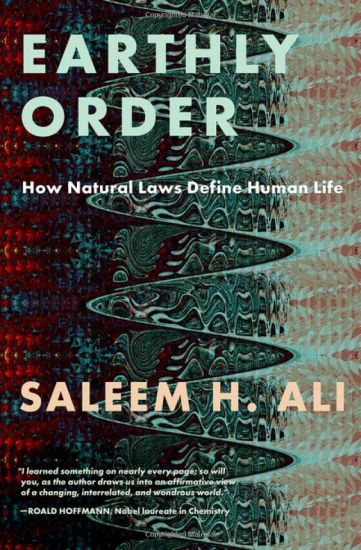
Earthly Order

Earthly Order

Saleem H. Ali

OXFORD UNIVERSITY PRESS INC
2022
sidottu
The Covid-19 Pandemic has brought forth global anxiety about linkages between the environment and society at a fundamental structural level. Earthly Order: How Natural Laws Define Human Life provides an accessible exposition of the latest foundational knowledge on how natural and social systems science can inform planetary crises. Humanity has either tried to conquer or capitulate to natural order, whereas we should be seeking to understand latent structures and patterns that permeate all systems and develop an "earthly order," that is socially functional and sustainable. Current debates in politics often present what should constitute a "world order" while scientists have wrestled with what are fundamental conditions of "natural order." Author Saleem H. Ali provides a readable synthesis of these debates with practical guidance for the public with a host of current examples around environmental decision-making by consumers, the government and industry. Twitter: @saleem_ali
Environmental Diplomacy

Environmental Diplomacy

Lawrence E. Susskind; Saleem H. Ali; Zakri Abdul Hamid

Oxford University Press Inc
2014
nidottu
International environmental agreements have increased exponentially within the last five decades. However, decisions on policies to address key issues such as biodiversity loss, climate change, ozone depletion, hazardous waste transport and numerous other planetary challenges require individual countries to adhere to international norms. What have been the successes and failures in the environmental treaty-making arena? How has the role of civil society and scientific consensus contributed to this maturing process? Why have some treaties been more enforceable than others and which theories of international relations can further inform efforts in this regard? Addressing these questions with renewed emphasis on close case analysis makes this volume a timely and thorough postscript to the Rio-Plus 20 summit's celebrated invocation document, The Future We Want, towards sustainable development. Environmental Diplomacy: Negotiating More Effective Global Agreements provides an accessible narrative on understanding the geopolitics of negotiating international environmental agreements and clear guidance on improving the current system. In this book, authors Lawrence Susskind and Saleem Ali expertly observe international environmental negotiations to effectively inform the reader on the geopolitics of protecting our planet. This second edition offers an additional perspective from the Global South as well as providing a broader analysis of the role of science in environmental treaty-making. It provides a unique contribution as a panoramic analysis of the process of environmental treaty-making.
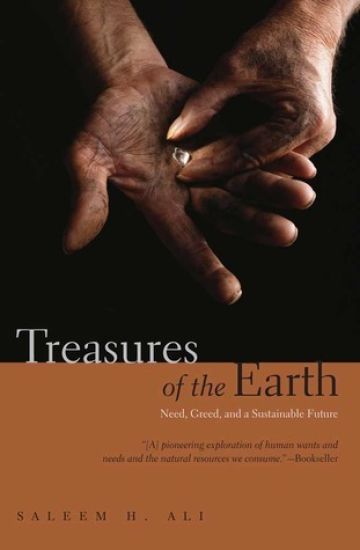
Treasures of the Earth

Treasures of the Earth

Saleem H Ali

Yale University Press
2010
pokkari
A pioneering exploration of human wants and needs and the natural resources we consume. Would the world be a better place if human societies were somehow able to curb their desires for material goods? Saleem Ali's pioneering book links human wants and needs by providing a natural history of consumption and materialism with scientific detail and humanistic nuance. It argues that simply disavowing consumption of materials is not likely to help in planning for a resource-scarce future, given global inequality, development imperatives, and our goals for a democratic global society. Rather than suppress the creativity and desire to discover that is often embedded in the exploration and production of material goods—which he calls “the treasure impulse”—Ali proposes a new environmental paradigm, one that accepts our need to consume “treasure” for cultural and developmental reasons, but warns of our concomitant need to conserve. In evaluating the impact of treasure consumption on resource-rich countries, he argues that there is a way to consume responsibly and alleviate global poverty.
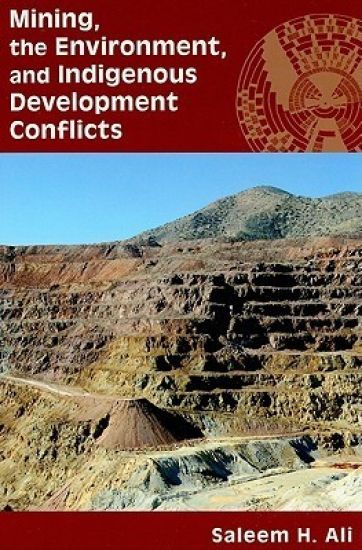
Mining, the Environment, and Indigenous Development Conflicts

Mining, the Environment, and Indigenous Development Conflicts

Saleem H. Ali

University of Arizona Press
2009
nidottu
Examines environmental conflicts between mining companies and indigenous communities and offers a comparative study of the factors leading to those conflicts. Ali presents four cases from the United States and Canada that exemplify different historical relationships with government and industry and provide an instance of high and low levels of Native resistance in each country. Through these cases, Ali analyzes why and under what circumstances tribes agree to negotiated mining agreements on their lands, and why some negotiations are successful and others not. It is refreshing to find a strong work grounded in social science theory that is also engaging for casual readers.? ? Montana, the Magazine of Western History An important contribution to our understanding of the factors influencing decision making among these groups in both nations.? ? Ken Pepion, Harvard University Native American Studies Program