Kirjojen hintavertailu – 12 903 724 kirjaa ja 27 kauppaa

Kirjailija

Saleh Seyedzadeh

Kirjat ja teokset yhdessä paikassa: 4 kirjaa, julkaisuja vuosilta 2021–2022, suosituimpiin kuuluu Data-Driven Modelling of Non-Domestic Buildings Energy Performance. Vertaile teosten hintoja ja tarkista saatavuus suomalaisista kirjakaupoista.

4 kirjaa

Kirjojen julkaisuvuodet: 2021–2022.

Data-Driven Modelling of Non-Domestic Buildings Energy Performance

Data-Driven Modelling of Non-Domestic Buildings Energy Performance

Saleh Seyedzadeh; Farzad Pour Rahimian

Springer Nature Switzerland AG
2022
nidottu
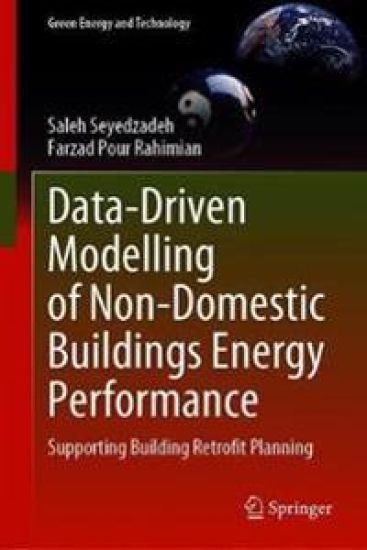
This book outlines the data-driven modelling of building energy performance to support retrofit decision-making. It explains how to determine the appropriate machine learning (ML) model, explores the selection and expansion of a reasonable dataset and discusses the extraction of relevant features and maximisation of model accuracy. This book develops a framework for the quick selection of a ML model based on the data and application. It also proposes a method for optimising ML models for forecasting buildings energy loads by employing multi-objective optimisation with evolutionary algorithms. The book then develops an energy performance prediction model for non-domestic buildings using ML techniques, as well as utilising a case study to lay out the process of model development. Finally, the book outlines a framework to choose suitable artificial intelligence methods for modelling building energy performances. This book is of use to both academics and practising energy engineers, as it provides theoretical and practical advice relating to data-driven modelling for energy retrofitting of non-domestic buildings.
Industry 4.0 Solutions for Building Design and Construction

Industry 4.0 Solutions for Building Design and Construction

Farzad Pour Rahimian; Jack Steven Goulding; Sepehr Abrishami; Saleh Seyedzadeh; Faris Elghaish

TAYLOR FRANCIS LTD
2021
nidottu
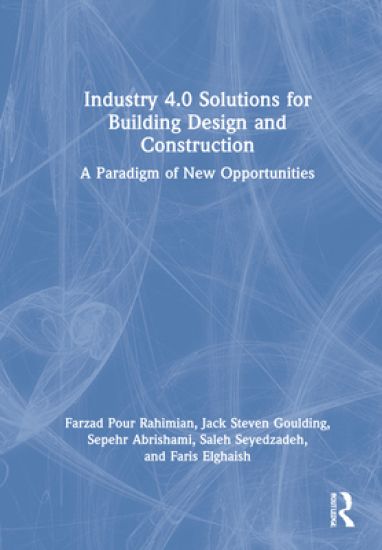
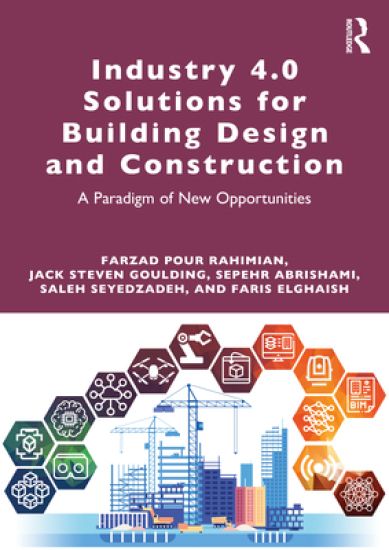
This book provides in-depth results and case studies in innovation from actual work undertaken in collaboration with industry partners in Architecture, Engineering, and Construction (AEC). Scientific advances and innovative technologies in the sector are key to shaping the changes emerging as a result of Industry 4.0. Mainstream Building Information Management (BIM) is seen as a vehicle for addressing issues such as industry fragmentation, value-driven solutions, decision-making, client engagement, and design/process flow; however, advanced simulation, computer vision, Internet of Things (IoT), blockchain, machine learning, deep learning, and linked data all provide immense opportunities for dealing with these challenges and can provide evidenced-based innovative solutions not seen before. These technologies are perceived as the “true” enablers of future practice, but only recently has the AEC sector recognised terms such as “golden key” and “golden thread” as part of BIM processes and workflows. This book builds on the success of a number of initiatives and projects by the authors, which include seminal findings from the literature, research and development, and practice-based solutions produced for industry. It presents these findings through real projects and case studies developed by the authors and reports on how these technologies made a real-world impact. The chapters and cases in the book are developed around these overarching themes: • BIM and AEC Design and Optimisation: Application of Artificial Intelligence in Design • BIM and XR as Advanced Visualisation and Simulation Tools • Design Informatics and Advancements in BIM Authoring • Green Building Assessment: Emerging Design Support Tools • Computer Vision and Image Processing for Expediting Project Management and Operations • Blockchain, Big Data, and IoT for Facilitated Project Management • BIM Strategies and Leveraged Solutions This book is a timely and relevant synthesis of a number of cogent subjects underpinning the paradigm shift needed for the AEC industry and is essential reading for all involved in the sector. It is particularly suited for use in Masters-level programs in Architecture, Engineering, and Construction.
Industry 4.0 Solutions for Building Design and Construction

Industry 4.0 Solutions for Building Design and Construction

Farzad Pour Rahimian; Jack Steven Goulding; Sepehr Abrishami; Saleh Seyedzadeh; Faris Elghaish

TAYLOR FRANCIS LTD
2021
sidottu
This book provides in-depth results and case studies in innovation from actual work undertaken in collaboration with industry partners in Architecture, Engineering, and Construction (AEC). Scientific advances and innovative technologies in the sector are key to shaping the changes emerging as a result of Industry 4.0. Mainstream Building Information Management (BIM) is seen as a vehicle for addressing issues such as industry fragmentation, value-driven solutions, decision-making, client engagement, and design/process flow; however, advanced simulation, computer vision, Internet of Things (IoT), blockchain, machine learning, deep learning, and linked data all provide immense opportunities for dealing with these challenges and can provide evidenced-based innovative solutions not seen before. These technologies are perceived as the “true” enablers of future practice, but only recently has the AEC sector recognised terms such as “golden key” and “golden thread” as part of BIM processes and workflows. This book builds on the success of a number of initiatives and projects by the authors, which include seminal findings from the literature, research and development, and practice-based solutions produced for industry. It presents these findings through real projects and case studies developed by the authors and reports on how these technologies made a real-world impact. The chapters and cases in the book are developed around these overarching themes: • BIM and AEC Design and Optimisation: Application of Artificial Intelligence in Design • BIM and XR as Advanced Visualisation and Simulation Tools • Design Informatics and Advancements in BIM Authoring • Green Building Assessment: Emerging Design Support Tools • Computer Vision and Image Processing for Expediting Project Management and Operations • Blockchain, Big Data, and IoT for Facilitated Project Management • BIM Strategies and Leveraged Solutions This book is a timely and relevant synthesis of a number of cogent subjects underpinning the paradigm shift needed for the AEC industry and is essential reading for all involved in the sector. It is particularly suited for use in Masters-level programs in Architecture, Engineering, and Construction.
Data-Driven Modelling of Non-Domestic Buildings Energy Performance

Data-Driven Modelling of Non-Domestic Buildings Energy Performance

Saleh Seyedzadeh; Farzad Pour Rahimian

Springer Nature Switzerland AG
2021
sidottu
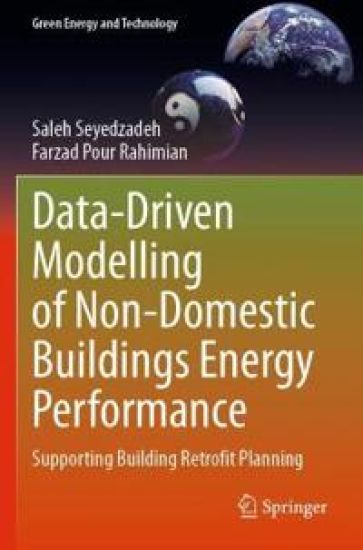
This book outlines the data-driven modelling of building energy performance to support retrofit decision-making. It explains how to determine the appropriate machine learning (ML) model, explores the selection and expansion of a reasonable dataset and discusses the extraction of relevant features and maximisation of model accuracy. This book develops a framework for the quick selection of a ML model based on the data and application. It also proposes a method for optimising ML models for forecasting buildings energy loads by employing multi-objective optimisation with evolutionary algorithms. The book then develops an energy performance prediction model for non-domestic buildings using ML techniques, as well as utilising a case study to lay out the process of model development. Finally, the book outlines a framework to choose suitable artificial intelligence methods for modelling building energy performances. This book is of use to both academics and practising energy engineers, as it provides theoretical and practical advice relating to data-driven modelling for energy retrofitting of non-domestic buildings.