Kirjojen hintavertailu – 12 859 828 kirjaa ja 27 kauppaa
Kirjailija
Salima Ikram
Kirjat ja teokset yhdessä paikassa: 17 kirjaa, julkaisuja vuosilta 2006–2026, suosituimpiin kuuluu Ancient Egypt's Wildlife. Vertaile teosten hintoja ja tarkista saatavuus suomalaisista kirjakaupoista.
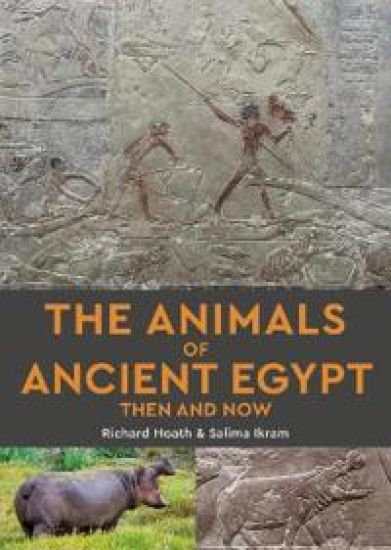
The Animals of Ancient Egypt Then and Now provides a simultaneous guide to some 60 species of mammal, bird, reptile, amphibian, fish and invertebrate recorded in modern Egypt and also portrayed in the tombs and temples or as mummies and gods in ancient Egypt – or even earlier in the case of the cave art from the Gilf Kebir. Accompanied by contemporary photographs of the living animals alongside tomb carvings or paintings, each species is described in terms of its current characteristics (size, habits and habitats, and range in modern Egypt) as well as the animal’s religious and practical significance to ancient Egyptians. The introduction covers biogeography, ancient Egypt and its wildlife, modern developments, a chronology of ancient Egypt, the relevant gods and goddesses of ancient Egypt and a glossary.
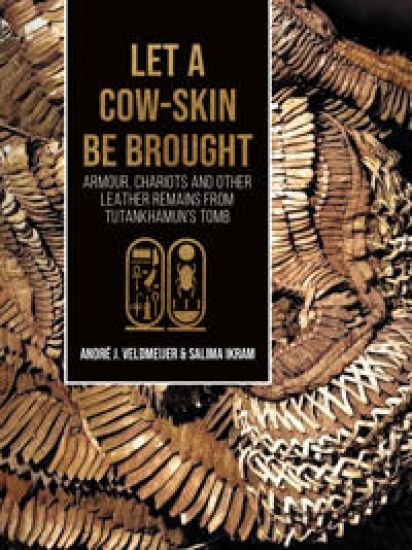
One hundred years ago, Howard Carter, working for Lord Carnarvon, made one of the most important archaeological discoveries of all times in the Valley of the Kings (Luxor, Egypt): the nearly intact tomb of the Egyptian pharaoh Tutankhamun (ca. 1335-1325 BC). In addition to the king’s body, the tomb contained well over 5000 objects, which were recovered, conserved and recorded by Carter and his team. The fabulous treasures, such as the gold coffins, funerary mask, jewellery, as well as the six near complete chariots are well known. The tomb, however, yielded a wide variety of objects, both sacred and secular, including some that are less elaborately decorated with precious materials but which are, from a scientific point of view, perhaps even more interesting (and enigmatic). Many objects from the tomb still remain unstudied; those that have been published consist of specific groups, for example: thrones, chairs and stool; the bows; musical instruments; game boxes; the small gold shrine or the stone vessels. This work examines the tomb and its contents through an unusual lens: leather and other animal soft tissue products that were used in creating some of the tomb’s contents. Through a study of these artefacts, the reader is guided through the surprising and complex world of leatherworking in ancient Egypt, focussing on the numerous different objects from the tomb that are either made entirely from or include leather, such as the chariots and their accoutrements, weapons, gloves, as well as hitherto unpublished finds, as among which leatherworking tools. This approach offers new insights in ancient Egyptian technology as well as in the production and use of specific materials and objects. The findings are discussed in the wider framework of the development and organisation of the leather industry in New Kingdom Egypt.
One hundred years ago, Howard Carter, working for Lord Carnarvon, made one of the most important archaeological discoveries of all times in the Valley of the Kings (Luxor, Egypt): the nearly intact tomb of the Egyptian pharaoh Tutankhamun (ca. 1335-1325 BC). In addition to the king’s body, the tomb contained well over 5000 objects, which were recovered, conserved and recorded by Carter and his team. The fabulous treasures, such as the gold coffins, funerary mask, jewellery, as well as the six near complete chariots are well known. The tomb, however, yielded a wide variety of objects, both sacred and secular, including some that are less elaborately decorated with precious materials but which are, from a scientific point of view, perhaps even more interesting (and enigmatic). Many objects from the tomb still remain unstudied; those that have been published consist of specific groups, for example: thrones, chairs and stool; the bows; musical instruments; game boxes; the small gold shrine or the stone vessels. This work examines the tomb and its contents through an unusual lens: leather and other animal soft tissue products that were used in creating some of the tomb’s contents. Through a study of these artefacts, the reader is guided through the surprising and complex world of leatherworking in ancient Egypt, focussing on the numerous different objects from the tomb that are either made entirely from or include leather, such as the chariots and their accoutrements, weapons, gloves, as well as hitherto unpublished finds, as among which leatherworking tools. This approach offers new insights in ancient Egyptian technology as well as in the production and use of specific materials and objects. The findings are discussed in the wider framework of the development and organisation of the leather industry in New Kingdom Egypt.
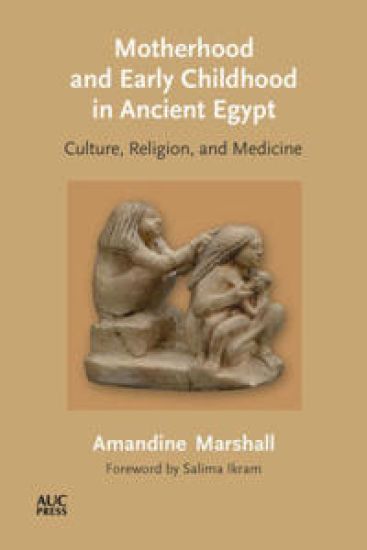
A richly nuanced analysis of how ancient Egyptian society regarded and dealt with pregnancy, mothers, birth, and children In ancient Egypt, a woman’s primary role was that of mother, and as such she ensured her place within both her household and her community. And so, gods, doctor-magicians, as well as ghosts were all called upon to help the woman become pregnant. Pregnancy was not without risks, and the many tests, prescriptions, and spells that have survived to this day help us to understand obstetrics as it was practiced in those distant times. Once the woman had eluded the ill will of Seth—who was held responsible for miscarriages—and had reached her term, she was faced with the much awaited and yet also feared moment of birth. The successful delivery of a child into the world was seen as a gift of the gods, but it did not mean that the parent’s worries were over. Indeed, it has been estimated that a third of all children did not reach the age of five years despite the combined efforts of parents and doctor-magicians to protect them. Amandine Marshall draws upon a wealth of sources, including texts, images, iconography, artefacts, and children’s bodies themselves, as well as medicine, anthropology, and ethnography, to examine these issues and more, and in doing so sheds unprecedented light on the experience of maternity and early childhood in ancient Egypt.
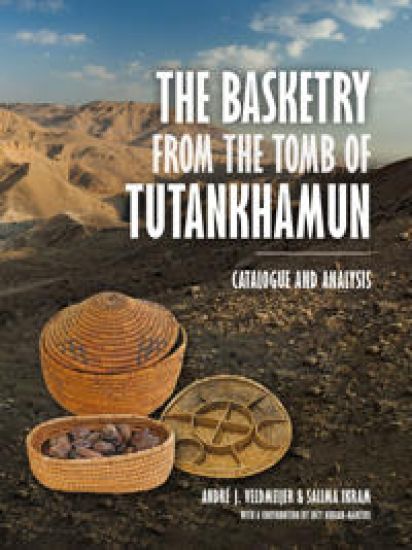
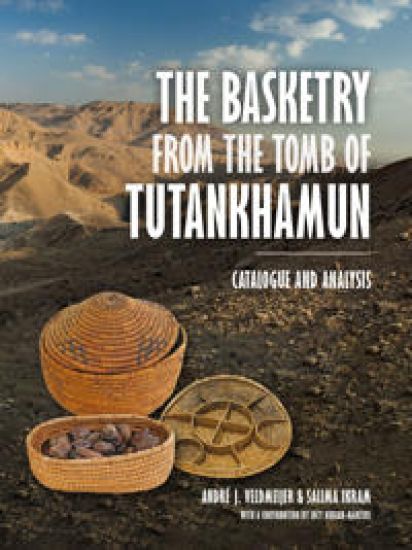
The tomb of Tutankhamun, discovered in 1922 in the Valley of the Kings in Luxor (Egypt) by Howard Carted, yielded over 6000 items. Among the vast number of richly embellished precious objects, such as the solid gold coffin and mask, were also more mundane objects, including the hitherto unpublished basketry objects. Baskets, the ‘plastic bags’ of the ancient world, were used for storage of all sorts of things, including food, clothing and jewellery, and many that were found in the tomb retained their original contents. The present work describes and illustrates the basketry and basketry boxes from the tomb in detail, giving attention to the technology, material, shape, decoration, as well as their contents. The analysis contextualises the basketry in a wider framework, comparing it with other examples and the visual record, with regard to the technology used to make them and their uses. The book will be of interest for those interested in basketry, ancient technology, daily life and burial customs in ancient Egypt and is written for a wide audience.
The tomb of Tutankhamun, discovered in 1922 in the Valley of the Kings in Luxor (Egypt) by Howard Carted, yielded over 6000 items. Among the vast number of richly embellished precious objects, such as the solid gold coffin and mask, were also more mundane objects, including the hitherto unpublished basketry objects. Baskets, the ‘plastic bags’ of the ancient world, were used for storage of all sorts of things, including food, clothing and jewellery, and many that were found in the tomb retained their original contents. The present work describes and illustrates the basketry and basketry boxes from the tomb in detail, giving attention to the technology, material, shape, decoration, as well as their contents. The analysis contextualises the basketry in a wider framework, comparing it with other examples and the visual record, with regard to the technology used to make them and their uses. The book will be of interest for those interested in basketry, ancient technology, daily life and burial customs in ancient Egypt and is written for a wide audience.
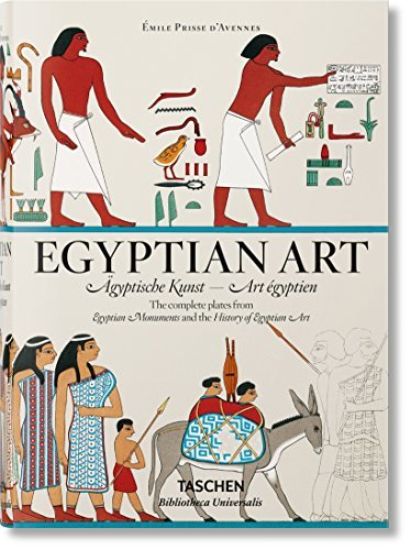
A lifelong devotee of ancient Egyptian and Oriental culture, the French author, artist, and scholar Achille-Constant-Théodore-Émile Prisse d’Avennes (1807–1879) is famed as one of the most influential Egyptologists, long before the discipline was even properly established. Prisse first embarked on his explorations in 1836, documenting sites throughout the Nile Valley, often under his Egyptian pseudonym, Edris Effendi. Prisse’s first publication of notes, drawings, and squeezes (a kind of frottage) came in the form of Les Monuments égyptiens, a modest collection of 51 plates, but one met with considerable acclaim in popular and intellectual circles. Encouraged by his success, Prisse returned to Egypt in the late 1850s to expand his work into the collection L’Histoire de l’art égyptien—together with his first volume, these two tomes make up a truly complete survey of Egyptian art. His albums cover architecture, drawing, sculpture, painting, and industrial or minor arts, with sections, plans, architectural details, and surface decoration all documented with utmost sensitivity and accuracy. Even when compared to the products of the great state-sponsored expeditions to Egypt of this period, Prisse’s compendium remains the largest, single-handed illustrated record of Egyptian art in existence. Discover the complete collection of Prisse’s unsurpassed illustrations in a visual and archaeological feast of symmetry and complexity. Once exclusively available as an XL-sized title, this Bibliotheca Universalis edition captures all the mystery and opulence of Prisse’s groundbreaking collection in an affordable, compact format.
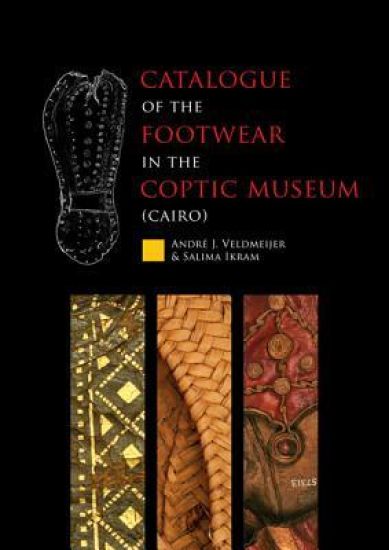
This catalogue presents the ancient Egyptian footwear in the collection of the Coptic Museum in Cairo. The catalogue contains detailed descriptions and measurements, photographs and drawings. Each description of a footwear category is followed by short discussions, addressing topics such as typology and dating. In addition a fairly large corpus of comparative material is presented as well, none of which has been published before. The present work will form an important resource for future study. This catalogue is one of the results of the Nuffic Tailor Made Training for the curators of the Coptic Museum in Cairo, jointly organized by the Netherlands-Flemish Institute in Cairo and the American University in Cairo in close collaboration with the Bibliotheca Alexandrina, the Coptic Museum Authorities and the Ministry of State for Antiquities Affairs.
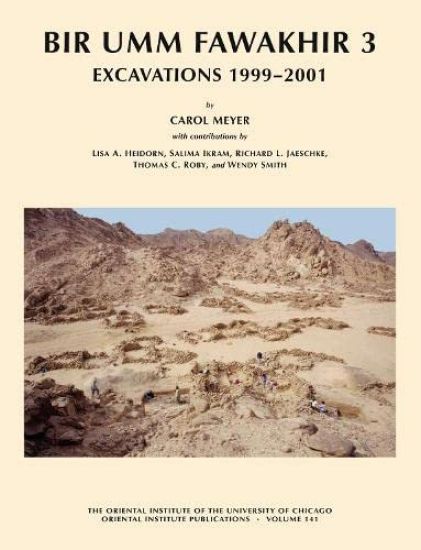
Bir Umm Fawakhir 3 is the last of the final reports on the archaeological surveys and excavations at the Byzantine site of Bir Umm Fawakhir in the central Eastern Desert of Egypt; it remains the only intensively studied ancient Egyptian gold-mining operation, and one of very few completely mapped towns of the era. Along with other recent excavations and surveys, it demonstrates the Byzantine empire's continuing activities in the Eastern Desert, not abandonment, as had long been believed. Four survey seasons, in 1992, 1993, 1996, and 1997, succeeded in dating the site to the fifth- and sixth-century Coptic/Byzantine period, mapping in detail the main settlement and one of the fourteen outlying settlements, and determining that it was a gold-mining operation. The goals of the 1999 excavations and the 2001 study season reported in this volume were to answer questions about the site and its occupants that surveys alone could not address, primarily the history of occupation of the site and the status of its occupants. The 1999 excavations of a sample of the houses and middens were undertaken to provide more information about the occupants and their well-being or lack thereof. Two houses, two middens, and one single-room outbuilding were excavated. Like the earlier Roman-period stone quarries in the desert, the miners seem to have worked intermittently and abandoned, or nearly so, the sitebetween mining campaigns. The pottery study extends the corpora published with previous seasons, and the chapter on small finds discusses the wine jar dockets (dipinti), coins, jewelry, emeralds, metal, glass, and other objects. Analysis of the faunal material during the 2001 study season supports the picture of a town well provided with meat, not only sheep and goats but also an unusual amount of beef. The volume is rounded out by an archaeobotanical study and the conservators' reports, including the construction of a barricade at the entrance to the site to help preserve it. A final chapter summarizes what can now be said about life and work at ancient Bir Umm Fawakhir.
This catalogue presents the ancient Egyptian footwear in the collection of the Coptic Museum in Cairo. The catalogue contains detailed descriptions and measurements, photographs and drawings. Each description of a footwear category is followed by short discussions, addressing topics such as typology and dating. In addition a fairly large corpus of comparative material is presented as well, none of which has been published before. The present work will form an important resource for future study. This catalogue is one of the results of the Nuffic Tailor Made Training for the curators of the Coptic Museum in Cairo, jointly organized by the Netherlands-Flemish Institute in Cairo and the American University in Cairo in close collaboration with the Bibliotheca Alexandrina, the Coptic Museum Authorities and the Ministry of State for Antiquities Affairs. Dr. André J. Veldmeijer is Assistant Director for Egyptology of the Netherlands-Flemish Institute in Cairo and has worked as archaeologist in Egypt since 1995 as specialist in, among others, leatherwork and footwear. He (co-)directs several projects, such as the Ancient Egyptian Leatherwork Project, which includes the Egyptian Museum Chariot Project, and the Tutankhamun Sticks & Staves Project. He has published extensively, both scientifically as popular. Dr. Salima Ikram is Professor of Egyptology at the American University in Cairo, and has worked as an archaeologist in Egypt since 1986, directing the Animal Mummy Project, and co-directing the Predynastic Gallery project, the Egyptian Museum Chariot Project, and the North Kharga Oasis Survey. Dr. Ikram has lectured and published extensively, both for children and adults.
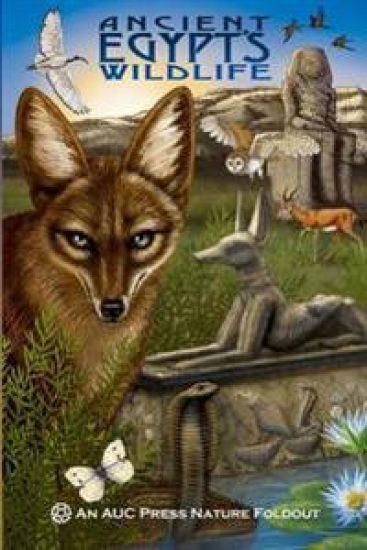
Carved reverently in the walls of the temples and tombs of ancient Egypt, hieroglyphs and sculpted reliefs depict lions and jackals, hawks and owls, cobras and scarabs. This unique new guide explores the hieroglyphs and fauna of the ancient world—species that were idolized and mummified, and those that have since become extinct. From the date palm and the blue lotus to the griffon vulture and the hoopoe, the plants and animals on ancient Egyptian tomb walls spring to life in this lively and useful guide. Water-resistant and compact, filled with gorgeous illustrations and photographs, comprehensive text, diagrams, and maps, this foldout guide is the perfect travel companion. Includes: - 55 species - Depictions of hieroglyphs with their true animal counterparts - Map of Egypt’s most sacred animal temples About the series: The AUC Press Nature Foldout series combine, in beautifully practical form, a wealth of information written by leading experts with striking full-color illustrations on the flora and fauna of Egypt and the Middle East. Designed for nature lovers and outdoor adventurers, as well as for indoor use, the foldouts come in an easily foldable format, at once compact, waterproof, and portable, making them durable and convenient travel guides. Size is 23 x 8.5 in. / 58.5 x 21.5 cm unfolded.
This book provides an introduction to one of the greatest civilizations of all time – ancient Egypt. Beginning with a geographical overview that explains the development of Egyptian belief systems as well as its subsequent political development, it examines methodology, the history of the discipline of Egyptology, religion, social organization, urban and rural life, and death. It also includes a section on how people of all ranks lived. Lavishly illustrated, with many unusual photographs of rarely seen sites that are seldom illustrated, this volume is suitable for use in introductory-level courses on ancient Egypt. It offers a variety of student-friendly features, including a glossary, a bibliography, and a list of sources for those who wish to further their interest in ancient Egypt.
This book provides an introduction to one of the greatest civilizations of all time – ancient Egypt. Beginning with a geographical overview that explains the development of Egyptian belief systems as well as its subsequent political development, it examines methodology, the history of the discipline of Egyptology, religion, social organization, urban and rural life, and death. It also includes a section on how people of all ranks lived. Lavishly illustrated, with many unusual photographs of rarely seen sites that are seldom illustrated, this volume is suitable for use in introductory-level courses on ancient Egypt. It offers a variety of student-friendly features, including a glossary, a bibliography, and a list of sources for those who wish to further their interest in ancient Egypt.
For Egyptophiles everywhere, here is the most authoritative and comprehensive guide ever published on the full range of tombs, their decoration and burial customs.