

Kirjailija
Sally Haslanger
Kirjat ja teokset yhdessä paikassa: 6 kirjaa, julkaisuja vuosilta 2012–2021, suosituimpiin kuuluu Der Wirklichkeit widerstehen. Vertaile teosten hintoja ja tarkista saatavuus suomalaisista kirjakaupoista.
6 kirjaa
Kirjojen julkaisuvuodet: 2012–2021.

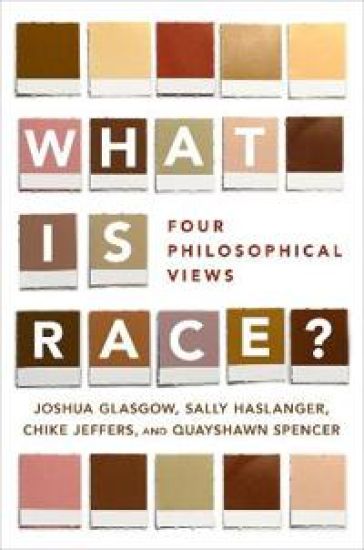
What Is Race?
Joshua Glasgow; Sally Haslanger; Chike Jeffers; Quayshawn Spencer
Oxford University Press Inc
2019
nidottu
Across public discourse, in the media, politics, many branches of academic inquiry, and ordinary daily interactions, we spend a lot time talking about race: race relations, racial violence, discrimination based on race, racial integration, racial progress. It is fair to say that questions about race have vexed our social life. But for all we speak about race, do we know what race is? Is it a social construct or a biological object? Is it a bankrupt holdover from a time before sophisticated scientific understanding and genetics, or can it still hold up in biological, genetic, and other types of research? Most fundamentally, is race real? In this book, four prominent philosophers and race theorists debate how best to answer these difficult questions, applying philosophical tools and the principles of social justice to cutting-edge findings from the biological and social sciences. Each presents a distinct view of race: Sally Haslanger argues that race is a socio-political reality. Chike Jeffers maintains that race is not only political but also, importantly, cultural. Quayshawn Spencer pursues the idea that race is biologically real. And Joshua Glasgow argues that either race is not real, or if it is, it must be real in a way that is neither social nor biological. Each offers an argument for their own view and then replies to the others. Woven together, the result is a lively debate that opens up numerous ways of understanding race. Above all, it is call for sophisticated and principled discussion of something that significantly permeates our lives.
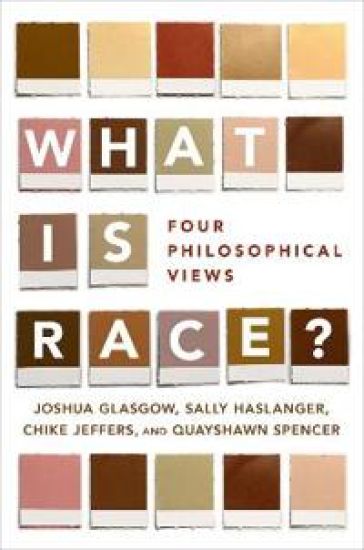
What Is Race?
Joshua Glasgow; Sally Haslanger; Chike Jeffers; Quayshawn Spencer
Oxford University Press Inc
2019
sidottu
Across public discourse, in the media, politics, many branches of academic inquiry, and ordinary daily interactions, we spend a lot time talking about race: race relations, racial violence, discrimination based on race, racial integration, racial progress. It is fair to say that questions about race have vexed our social life. But for all we speak about race, do we know what race is? Is it a social construct or a biological object? Is it a bankrupt holdover from a time before sophisticated scientific understanding and genetics, or can it still hold up in biological, genetic, and other types of research? Most fundamentally, is race real? In this book, four prominent philosophers and race theorists debate how best to answer these difficult questions, applying philosophical tools and the principles of social justice to cutting-edge findings from the biological and social sciences. Each presents a distinct view of race: Sally Haslanger argues that race is a socio-political reality. Chike Jeffers maintains that race is not only political but also, importantly, cultural. Quayshawn Spencer pursues the idea that race is biologically real. And Joshua Glasgow argues that either race is not real, or if it is, it must be real in a way that is neither social nor biological. Each offers an argument for their own view and then replies to the others. Woven together, the result is a lively debate that opens up numerous ways of understanding race. Above all, it is call for sophisticated and principled discussion of something that significantly permeates our lives.
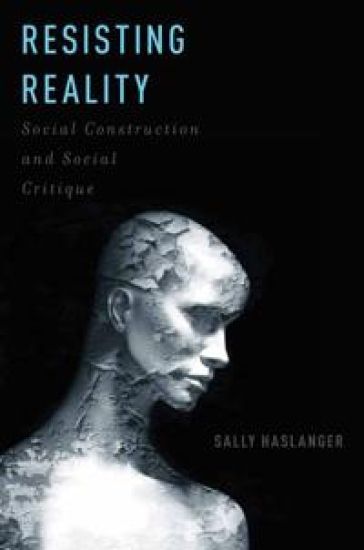
Contemporary theorists use the term "social construction" with the aim of exposing how what's purportedly "natural" is often at least partly social and, more specifically, how this masking of the social is politically significant. In these previously published essays, Sally Haslanger draws on insights from feminist and critical race theory to explore and develop the idea that gender and race are positions within a structure of social relations. On this interpretation, the point of saying that gender and race are socially constructed is not to make a causal claim about the origins of our concepts of gender and race, or to take a stand in the nature/nurture debate, but to locate these categories within a realist social ontology. This is politically important, for by theorizing how gender and race fit within different structures of social relations we are better able to identify and combat forms of systematic injustice. Although the central essays of the book focus on a critical social realism about gender and race, these accounts function as case studies for a broader critical social realism. To develop this broader approach, several essays offer reworked notions of ideology, practice, and social structure, drawing on recent research in sociology and social psychology. Ideology, on the proposed view, is a relatively stable set of shared dispositions to respond to the world, often in ways that also shape the world to evoke those very dispositions. This looping of our dispositions through the material world enables the social to appear natural. Additional essays in the book situate this approach to social phenomena in relation to philosophical methodology, and to specific debates in metaphysics, epistemology, and philosophy of language. The book as a whole explores the interface between analytic philosophy and critical theory.
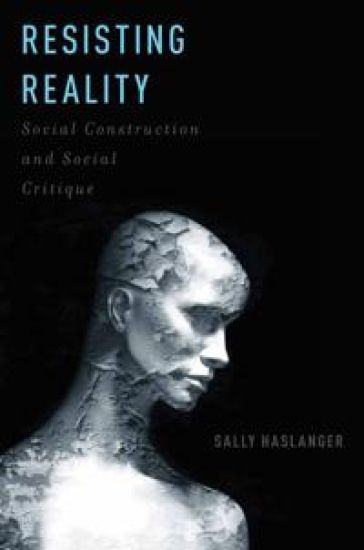
Contemporary theorists use the term "social construction" with the aim of exposing how what's purportedly "natural" is often at least partly social and, more specifically, how this masking of the social is politically significant. In these previously published essays, Sally Haslanger draws on insights from feminist and critical race theory to explore and develop the idea that gender and race are positions within a structure of social relations. On this interpretation, the point of saying that gender and race are socially constructed is not to make a causal claim about the origins of our concepts of gender and race, or to take a stand in the nature/nurture debate, but to locate these categories within a realist social ontology. This is politically important, for by theorizing how gender and race fit within different structures of social relations we are better able to identify and combat forms of systematic injustice. Although the central essays of the book focus on a critical social realism about gender and race, these accounts function as case studies for a broader critical social realism. To develop this broader approach, several essays offer reworked notions of ideology, practice, and social structure, drawing on recent research in sociology and social psychology. Ideology, on the proposed view, is a relatively stable set of shared dispositions to respond to the world, often in ways that also shape the world to evoke those very dispositions. This looping of our dispositions through the material world enables the social to appear natural. Additional essays in the book situate this approach to social phenomena in relation to philosophical methodology, and to specific debates in metaphysics, epistemology, and philosophy of language. The book as a whole explores the interface between analytic philosophy and critical theory.