Kirjojen hintavertailu – 12 859 818 kirjaa ja 27 kauppaa

Kirjailija

Sally K. Fairfax

Kirjat ja teokset yhdessä paikassa: 6 kirjaa, julkaisuja vuosilta 1995–2005, suosituimpiin kuuluu Public Lands and Private Rights. Vertaile teosten hintoja ja tarkista saatavuus suomalaisista kirjakaupoista.

6 kirjaa

Kirjojen julkaisuvuodet: 1995–2005.

Buying Nature

Buying Nature

Sally K. Fairfax; Lauren Gwin; Mary Ann King; Leigh Raymond; Laura A. Watt

MIT Press
2005
pokkari
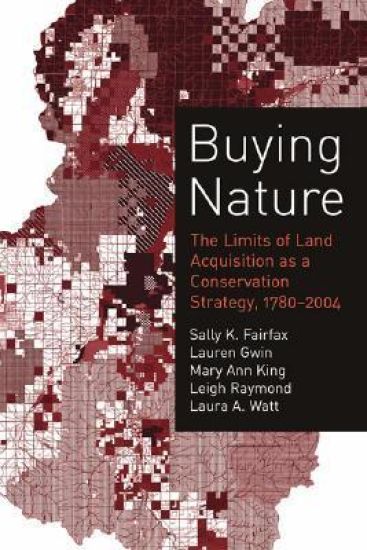
Buying land to conserve it is not a recent phenomenon. Buying Nature chronicles the evolution of land acquisition as a conservation strategy in the United States since the late 1700s. It goes beyond the usual focus on conservation successes to provide a critical assessment of both public and private land acquisition efforts. The book shows that for more than 200 years, both private purchasers-such as the Nature Conservancy and the Trust for Public Land-and governmental agencies have acquired land for conservation. It documents trends of growing complexity in transactions and a blurring of public and private roles. The preservation of Mount Vernon and its grounds, for example, began with a private group-the Mount Vernon Ladies Association of the Union-and continues today with a mosaic of private, state, and federal actors. The current emphasis on private land trust acquisitions, the authors argue, may undercut other effective governmental efforts to preserve the environment and may not be the best way to meet conservation goals. Buying Nature emphasizes the accountability issues that arise when the line between public and private efforts is indistinct. The authors also pay unique attention to how federal land agencies' individual histories shape their participation in modern land acquisition transactions. An unusual mix of scholarship, the book combines political, legal and constitutional, and economic history with rich case studies of land conservation and quantitative analyses of acquisitions over time to provide a new and distinctive perspective on enduring questions of public policy and environmental protection.
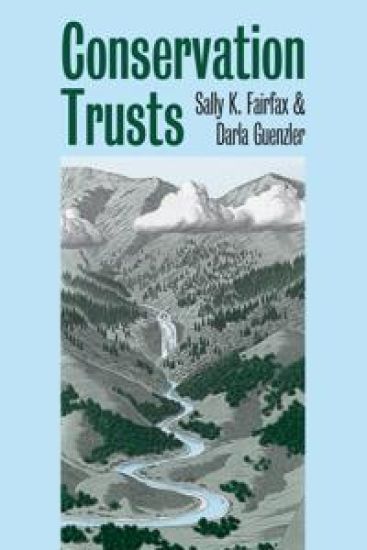
Conservation Trusts

Conservation Trusts

Sally K. Fairfax; Darler Guenzler

University Press of Kansas
2001
nidottu
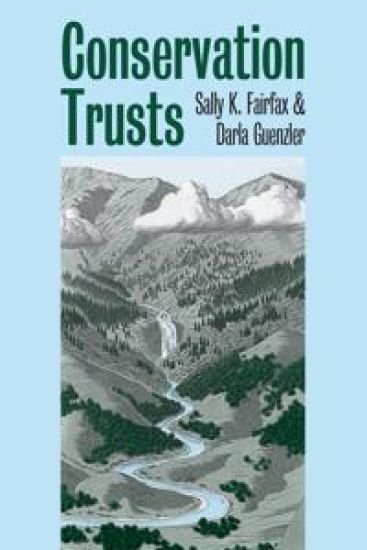
In the wake of the Exxon Valdez oil spill, a conservation trust helped stabilize and regenerate the damaged area. When bird habitats along the Platte River were threatened by Grayrocks Dam, a similar trust came to their rescue. And if a family wants to protect its land for future generations, establishing a trust may be the best solution. For more than a century, bequests of land and funds for environmental protection have been common, but in recent decades the trusts used to address conservation issues and resolve environmental disputes have diversified and grown significantly. This book examines a variety of conservation organizations built on or close to trust principles - some government creations, some private, some combinations of the two - to explain how conservation trusts are created and how they work. It explores strengths and weaknesses of the trust concept, considers the widespread use of land trusts, and presents case studies that both illustrate successes and give instructive examples of potential pitfalls. Drawing on cases from Maine to Hawaii, the authors examine the different kinds and configurations of trusts. They consider government trusts that blend federal, state, and local agencies into a single entity or that derive funding from outside legislative and executive channels; trusts established by government and private cooperation to share responsibility for jointly held and managed resources; and trusts established by private organizations and families. For each type, they explain why each is created, how it operates, and whether it has been proven effective. They also address the important issue of accountability - and consider when a trust is not the answer to a problem. As more Americans reject federal control of land in favor of local determination, land trusts have become the most popular tool for the preservation of land, habitats, and species. And as the sharing of authority among public, private, and diverse government partners becomes more prevalent, sound guidelines for establishing effective trusts are critical. This book shows how the trust template provides an invaluable approach for future conservation efforts and is a primer for anyone involved in environmental management.
Conservation Trusts

Conservation Trusts

Sally K. Fairfax; Darler Guenzler

University Press of Kansas
2001
sidottu
In the wake of the Exxon Valdez oil spill, a conservation trust helped stabilize and regenerate the damaged area. When bird habitats along the Platte River were threatened by Grayrocks Dam, a similar trust came to their rescue. And if a family wants to protect its land for future generations, establishing a trust may be the best solution. For more than a century, bequests of land and funds for environmental protection have been common, but in recent decades the trusts used to address conservation issues and resolve environmental disputes have diversified and grown significantly. This book examines a variety of conservation organizations built on or close to trust principles - some government creations, some private, some combinations of the two - to explain how conservation trusts are created and how they work. It explores strengths and weaknesses of the trust concept, considers the widespread use of land trusts, and presents case studies that both illustrate successes and give instructive examples of potential pitfalls. Drawing on cases from Maine to Hawaii, the authors examine the different kinds and configurations of trusts. They consider government trusts that blend federal, state, and local agencies into a single entity or that derive funding from outside legislative and executive channels; trusts established by government and private cooperation to share responsibility for jointly held and managed resources; and trusts established by private organizations and families. For each type, they explain why each is created, how it operates, and whether it has been proven effective. They also address the important issue of accountability - and consider when a trust is not the answer to a problem. As more Americans reject federal control of land in favor of local determination, land trusts have become the most popular tool for the preservation of land, habitats, and species. And as the sharing of authority among public, private, and diverse government partners becomes more prevalent, sound guidelines for establishing effective trusts are critical. This book shows how the trust template provides an invaluable approach for future conservation efforts and is a primer for anyone involved in environmental management.
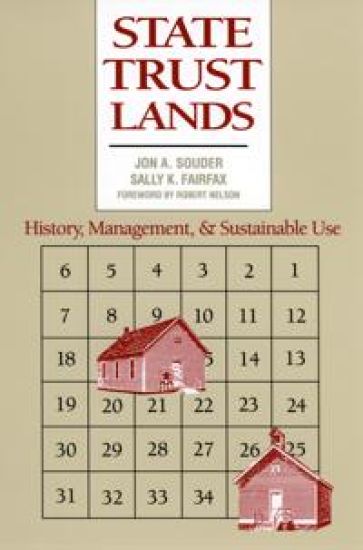
State Trust Lands

State Trust Lands

Jon A. Souder; Sally K. Fairfax

University Press of Kansas
1996
nidottu
Before the federal constitution was written, the Confederate Congress established a policy providing land grants for local and state governments to support public schools. Since 1802, when Ohio joined the Union, every new state has benefited from that policy. Yet today, despite the fact that states still hold 132 million acres in trust, very little is known about the management and use of these lands. Compiling information from the twenty-two states that still own such trust lands, the authors provide a rare look at public land management from a state rather than federal government perspective. Although much has been written on federal management, this is the first comprehensive look at the local administration of state trust lands which cover far more acreage than lands overseen by the National Park Service and nearly as much as those supervised by the U. S. Forest Service. Understanding and analyzing the state trust lands has always been difficult because they consist of twenty-two state programs and 200 years of history. In State Trust Lands, Jon A. Souder and Sally K. Fairfax examine the management programs instituted by each state, exploring them as models for public land administration. They investigate the nature and role of public resources; observe how states regulate grazing lands and mineral leases; provide insight into subsidizations and self-sustaining land uses; illustrate how state and federal policies differ; and evaluate the strength and weaknesses of market-based approaches to public resource management. State trust lands, they contend, tend to be managed more conservatively and with more environmental awareness than federal lands. This book provides an array of tested, viable alternatives to Bureau of Land Management and U. S. Forest Service management models and will be invaluable to anyone interested in the financial, use, and environmental planning of public resources. Exploring the diverse set of experiences of state land trust managers, Souder and Fairfax present successful and less successful management practices and offer new models and data for the debate on the future of public lands.
Public Lands and Private Rights

Public Lands and Private Rights

Robert H. Nelson; Sally K. Fairfax

Rowman Littlefield
1995
sidottu
One of the leading experts on public lands and land rights issues, Robert H. Nelson here brings together a collection of his finest essays. Nelson demonstrates that the 'progressive' goal of achieving scientific management of public lands has not been realized; instead, public land management has been dominated by interest group politics and ideology.
Public Lands and Private Rights

Public Lands and Private Rights

Robert H. Nelson; Sally K. Fairfax

Rowman Littlefield
1995
nidottu
One of the leading experts on public lands and land rights issues, Robert H. Nelson here brings together a collection of his finest essays. Nelson demonstrates that the 'progressive' goal of achieving scientific management of public lands has not been realized; instead, public land management has been dominated by interest group politics and ideology.