Kirjojen hintavertailu – 12 903 725 kirjaa ja 27 kauppaa

Kirjailija

Salomon Resnik

Kirjat ja teokset yhdessä paikassa: 9 kirjaa, julkaisuja vuosilta 1987–2021, suosituimpiin kuuluu Psychanalyse, Lieux de Mémoire Et Traumatismes Collectifs: Frenis Zero. Vertaile teosten hintoja ja tarkista saatavuus suomalaisista kirjakaupoista.

9 kirjaa

Kirjojen julkaisuvuodet: 1987–2021.

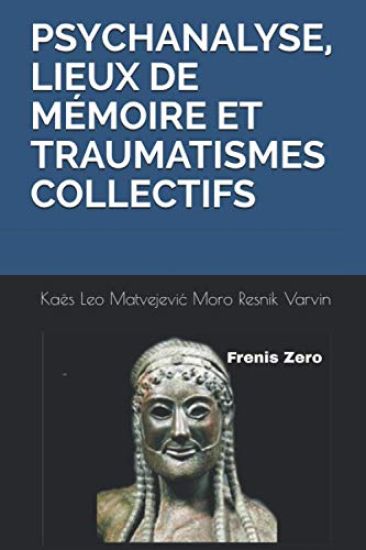
Psychanalyse, Lieux de Mémoire Et Traumatismes Collectifs: Frenis Zero

Psychanalyse, Lieux de Mémoire Et Traumatismes Collectifs: Frenis Zero

Salomon Resnik; Julia Kristeva; René Kaës

Frenis Zero
2021
nidottu
Cette troisi me dition du livre est d di la m moire de Predrag Matvejevic, un historien et crivain qui a consacr beaucoup de ses oeuvres la M diterran e, et Salomon Resnik, le psychanalyste d'origine argentine qui a beaucoup inspir ce livre avec sa notion de "biographie de l'inconscient". Histoire de la M diterran e et psychanalyse sont les deux polarit s de discussion des th mes au centre du livre: l'identit et la m moire collective. L'identit , tant dans sa dimension individuelle que collective, semble une construction et laboration continue de m moires qui sont accueillies dans des lieux qui, en tant que espaces o aller dans un va-et-vient, parcourent les vies des hommes pendant toute la dur e. Mais, en introduisant un tiret, il faut prendre en consid ration le "id" (le a), c'est dire la dimension inconsciente de l'id-entit . Et donc, la question qui se pose est la suivante: "Peut la psychanalyse nous aider comprendre ce dialogue entre lieux de m moire et id-entit ?". Cette question s'inspire de deux diff rentes sources: l'importance des 'biographies de l'inconscient', ainsi que celle du partage de la m moire, voire celle de l'acte de se souvenir ensemble, pour qu'elle maintienne sa significativit . Ce qu'est irrempla able dans l'acte de "se souvenir ensemble", est la configuration d'un climat motionnel unique, on dirait empathique, parfois m me ambivalent. La communaut affective provoqu e par l'acte de "se souvenir ensemble" devient symbolique d'un groupe donn car il se constitue travers des personnes qui ont developp s chacune un itin raire de diff rentes histoires individuelles au cours du temps, mais qui ce moment-l r ussissent se reconna tre et se r unir. Parler de m moire signifie aussi se mesurer avec le probl me de l'usage que un certain groupe, d tenteur d'un pouvoir politique ou conomique, peut faire d'une telle m moire. Cette vision dynamique et conflictuelle des m moires collectives est susceptible, elle seule, d'ouvrir un d bat sur les responsabilit s de la m moire, en d finissant le rapport avec le pass en terme d'une laboration collective, troitement li e la perception sociale des ph nom nes actuels probl matiques tels que ceux des identit s collectives (identit de genre, ethnique, nationale ou locale) ou du pr judice vers les groupes 'autres'. Apr s l'introduction de Giuseppe Leo et le chapitre "Le malaise du monde moderne, les fondements de la vie psychique et le cadre m tapsychique de la souffrance contemporaine", crit par Ren Ka s, la section "La transmission de la m moire des traumatismes collectifs" comprend les crits de Werner Bohleber (sur la rem moration en psychanalyse), de Janine Altounian ("Face au n gationnisme..."), de Silvia Amati Sas ("L'interpr tation dans le trans-subjectif") et de Sverre Varvin (sur le processus de d shumanisation, en particulier concernant notre relation avec les r fugi s). Puis, la section "Les malaises des civilisations du Moyen-Orient" recueille les crits de Yolanda Gampel et de Mayssa El Husseini, et la section "Transmission du f minin, de la culture et malaises des civilisations m diterran ennes" les textes de Julia Kristeva, Anne Loncan, Rita El Khayat et Marie-Rose Moro.
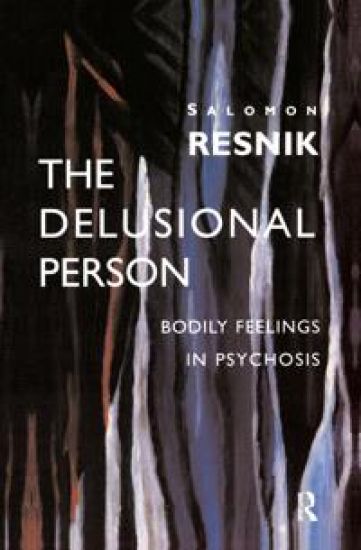
The Delusional Person

The Delusional Person

Salomon Resnik

Routledge
2019
sidottu
In a long and distinguished career the authorhas established himself as a psychoanalyst of international reputation. The present volume gathers together, for the first time in an English translation, writings essential for a fuller understanding of his important and original ideas. Psychosis has been Resnik's central psychoanalytic preoccupation. F
Mental Space

Mental Space

David Alcorn; Salomon Resnik

Routledge
2019
sidottu
This book is a collection of lessons on psychotic experience. A question of experience of living and communicating rather than of lessons in the traditional sense. His contributions are the expression of a culture that is both psychoanalytical and psychiatric but above all bound up with the human sciences.
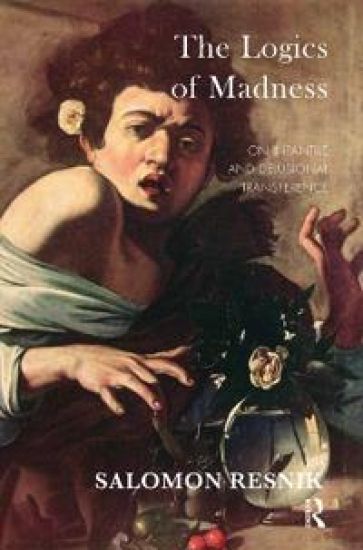
The Logics of Madness

The Logics of Madness

Salomon Resnik

Routledge
2019
sidottu
In this book, the author describes his psychoanalytic work with psychotic patients and the logic that underlies their often-delusional constructions. He explores how the concept of psychosis has evolved over time and shows how the delusional world, with its proto-symbolic equations, may amount to a philosophy of life. Clinical examples taken from his own clinical work, both in individual psychoanalysis and in group therapy with schizophrenic patients, illustrate his theses. In his exploration of the psychotic ego and multi-dimensionality, he shows how his work is a continuation of the ideas initially put forward by psychoanalysts such as D. W. Winnicott, Melanie Klein and Hanna Segal, as well as how much it owes to his own analysis with Herbert Rosenfeld and supervision with Wilfred Bion. For Resnik, working with psychotic patients amounts to an "archaeology of the present". He discusses in detail such concepts as narcissistic depression, the atmosphere of the psychoanalytic encounter, the role and impact of dreams in psychosis, and the dimensionality of the psychotic universe.
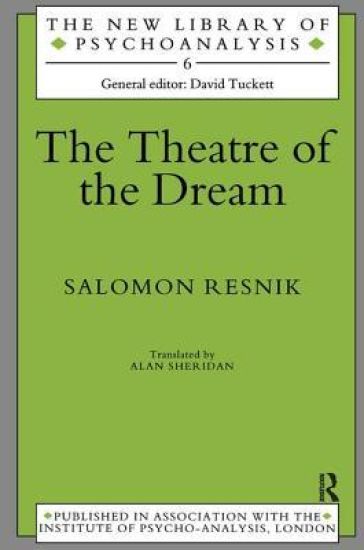
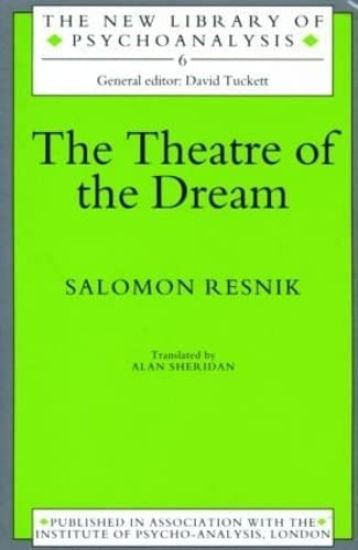
The Theatre of the Dream

The Theatre of the Dream

Salomon Resnik

Routledge
2017
sidottu
The Theatre of the Dream is a profound study of our dream world and its place in everyday life. The author grounds his ideas in Freud and psychoanalysis authors such as Klein, Bion, Rosenfeld and Matte Blanco, but also draws on the approach to dream phenomena in the work of philosophers, artists and poets. He argues that dreams are indeed, as the ancients held, messages. The dream is a theatrical re-recreation of certain unconscious experiences, which are both subjective and objective at the same time. It expresses not only desire but a complex working over of a problematic situation that is not quite resolved. In waking the dream is a new elaboration of everyday experience and one which creates the seeds of oracular awareness. Resnik develops his thesis with ample and enlightening examples of dreams and their significance from his own patients. The author's achievement is a new psychoanalytic reading of dreams one which does justice to Freud's momentous discovery but which broadens it and places it within the wider context of subsequent developments in psychoanalysis, semiotics and social and cultural anthropology. The book will be of great value to the professional psychotherapist or psychoanalyst as well as to students of literature, the arts and linguistics and the wider public interested in the ongoing relationship between dream reality and what is commonly called external reality. As has been remarked, each era can be defined on the basis of relations between dream and life.
The Logics of Madness

The Logics of Madness

Salomon Resnik

Karnac Books
2016
nidottu
In this book, the author describes his psychoanalytic work with psychotic patients and the logic that underlies their often-delusional constructions. He explores how the concept of psychosis has evolved over time and shows how the delusional world, with its proto-symbolic equations, may amount to a philosophy of life. Clinical examples taken from his own clinical work, both in individual psychoanalysis and in group therapy with schizophrenic patients, illustrate his theses. In his exploration of the psychotic ego and multi-dimensionality, he shows how his work is a continuation of the ideas initially put forward by psychoanalysts such as D. W. Winnicott, Melanie Klein and Hanna Segal, as well as how much it owes to his own analysis with Herbert Rosenfeld and supervision with Wilfred Bion. For Resnik, working with psychotic patients amounts to an "archaeology of the present". He discusses in detail such concepts as narcissistic depression, the atmosphere of the psychoanalytic encounter, the role and impact of dreams in psychosis, and the dimensionality of the psychotic universe.
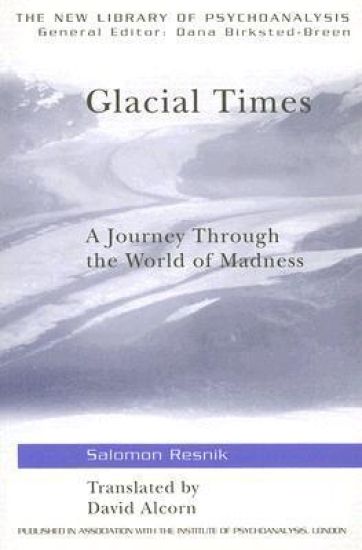
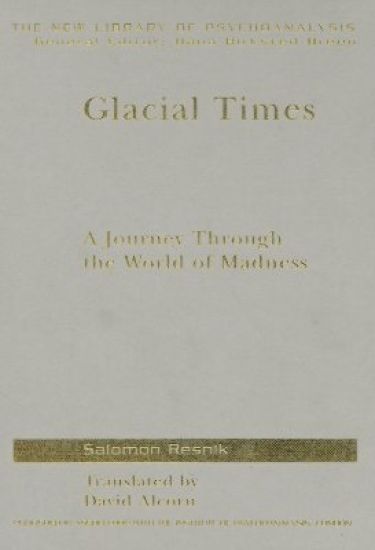
Glacial Times

Glacial Times

Salomon Resnik

Taylor Francis Ltd
2005
nidottu
In Glacial Times, Salomon Resnik brings together various facets of his work as a psychoanalyst and psychiatrist, working in both the private sector and in institutional settings and in a wide range of cultural contexts, to provide a careful summary of a lifetime of clinical work. Drawing on a wide range of psychoanalytic, philosophical and literary sources, and vignettes from the author's extensive clinical experience, this book brings the subject of psychosis to life and demonstrates how the study of psychoanalysis and psychosis forces us to confront fundamental ontological questions. Subjects covered include:Transmission and LearningThe role of the body in psychosisThe Universe of Madness: Frozen words and thoughtsThe Internal world and the philosophy of the unconcsiousPsychotic thinking and languageThe Symbolic order and its deficiencies. This synthesis of over fifty years of experience as a psychoanalyst and psychiatrist treating psychotic patients will fascinate anyone working in these fields.
Glacial Times

Glacial Times

Salomon Resnik

Taylor Francis Ltd
2005
sidottu
In Glacial Times, Salomon Resnik brings together various facets of his work as a psychoanalyst and psychiatrist, working in both the private sector and in institutional settings and in a wide range of cultural contexts, to provide a careful summary of a lifetime of clinical work. Drawing on a wide range of psychoanalytic, philosophical and literary sources, and vignettes from the author's extensive clinical experience, this book brings the subject of psychosis to life and demonstrates how the study of psychoanalysis and psychosis forces us to confront fundamental ontological questions. Subjects covered include:Transmission and LearningThe role of the body in psychosisThe Universe of Madness: Frozen words and thoughtsThe Internal world and the philosophy of the unconcsiousPsychotic thinking and languageThe Symbolic order and its deficiencies. This synthesis of over fifty years of experience as a psychoanalyst and psychiatrist treating psychotic patients will fascinate anyone working in these fields.
The Theatre of the Dream

The Theatre of the Dream

Salomon Resnik

Routledge
1987
nidottu
The Theatre of the Dream is a profound study of our dream world and its place in everyday life. The author grounds his ideas in Freud and psychoanalysis authors such as Klein, Bion, Rosenfeld and Matte Blanco, but also draws on the approach to dream phenomena in the work of philosophers, artists and poets. He argues that dreams are indeed, as the ancients held, messages. The dream is a theatrical re-recreation of certain unconscious experiences, which are both subjective and objective at the same time. It expresses not only desire but a complex working over of a problematic situation that is not quite resolved. In waking the dream is a new elaboration of everyday experience and one which creates the seeds of oracular awareness. Resnik develops his thesis with ample and enlightening examples of dreams and their significance from his own patients. The author's achievement is a new psychoanalytic reading of dreams one which does justice to Freud's momentous discovery but which broadens it and places it within the wider context of subsequent developments in psychoanalysis, semiotics and social and cultural anthropology. The book will be of great value to the professional psychotherapist or psychoanalyst as well as to students of literature, the arts and linguistics and the wider public interested in the ongoing relationship between dream reality and what is commonly called external reality. As has been remarked, each era can be defined on the basis of relations between dream and life.