
Kirjojen hintavertailu – 12 903 725 kirjaa ja 27 kauppaa

Kirjailija

Salvatore Aprea

Kirjat ja teokset yhdessä paikassa: 2 kirjaa, julkaisuja vuosilta 2016–2022, suosituimpiin kuuluu German Concrete, 1819-1877. Vertaile teosten hintoja ja tarkista saatavuus suomalaisista kirjakaupoista.

2 kirjaa

Kirjojen julkaisuvuodet: 2016–2022.

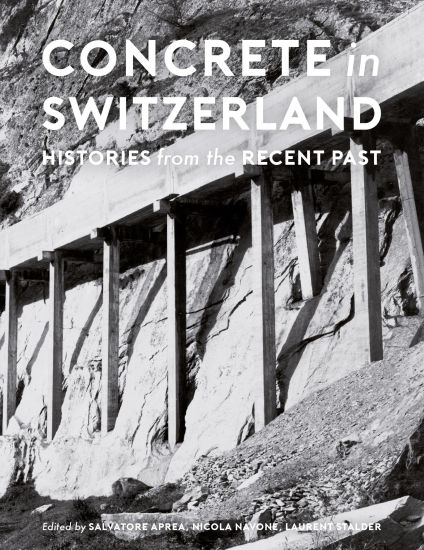
Concrete in Switzerland – Histories from the Recent Past

Concrete in Switzerland – Histories from the Recent Past

Salvatore Aprea; Nicola Navone; Laurent Stalder; Sarah Nichols

Presses Polytechniques et Universitaires Romandes
2022
sidottu
A groundbreaking work resulting from the collaboration between the three major Swiss architectural archives and the Swiss Architecture Museum in Basel. Concrete in Switzerland is a historical assessment of the most controversial building material of our time: concrete. The book addresses a number of issues of global relevance from a particular vantage point: reinforced concrete construction in Switzerland. Through contributions by internationally renowned researchers, Concrete in Switzerland analyzes a series of moments in the Swiss history of reinforced concrete, from the initial phase of its introduction in the country to the most refined applications in architecture and engineering. Groundbreaking and thorough, Concrete in Switzerland explores the history and application of a contentious material.
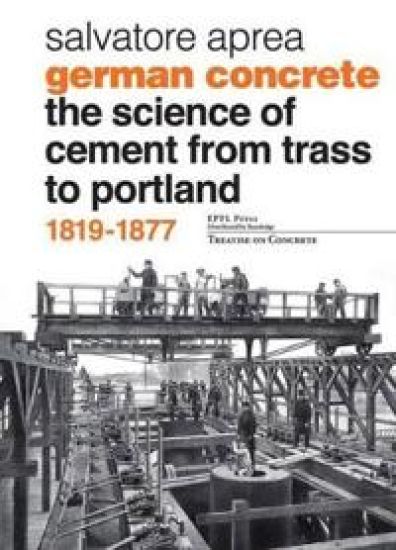
German Concrete, 1819-1877

German Concrete, 1819-1877

Salvatore Aprea

Presses Polytechniques et Universitaires Romandes
2016
sidottu
This book describes for the first time ever, the rise of the modern art of building with concrete in the different German territories stretching from Friesland to Pomerania and southwards from Bavaria to Baden during the first three quarters of the 19th century. Based on careful analyses of historic documents and literature, the book traces an engaging history of master builders, engineers, architects, theoreticians, chemists and inventors tracking the evolution of different building techniques, materials, studies and experiments concerning concrete. It analyses German master builders’ consideration for classical building culture and for contemporaneous constructions observed in neighbouring countries. This narration starts at the turn of the 19th century with early scientific studies on cement, examples of rudimentary concrete used as filling material in small hydraulic foundations and attempts at producing mortar-based artificial stones and moulded objects. The account then follows the progression of cement and the abilities of master builders who worked with concrete until crucial evolutionary stages were reached in the 1870s. Early scientific theories about the chemical reactions in the production and hardening of cement were developed; concrete was finally used to build huge underwater foundations as well as entire houses; the production of mortar-based artificial stones and moulded objects became a significant manufacturing branch; the first standards for the production and sale of Portland cement were defined and officially implemented.