Kirjojen hintavertailu – 12 874 833 kirjaa ja 26 kauppaa

Kirjailija

Sam Kean

Kirjat ja teokset yhdessä paikassa: 30 kirjaa, julkaisuja vuosilta 2006–2026, suosituimpiin kuuluu Geschichte zum Anfassen. Vertaile teosten hintoja ja tarkista saatavuus suomalaisista kirjakaupoista.

30 kirjaa

Kirjojen julkaisuvuodet: 2006–2026.

Caesar's Last Breath: And Other True Tales of History, Science, and the Sextillions of Molecules in the Air Around Us
The Guardian's Best Science Book of 2017: the fascinating science and history of the air we breathe. It's invisible. It's ever-present. Without it, you would die in minutes. And it has an epic story to tell. In Caesar's Last Breath, New York Times bestselling author Sam Kean takes us on a journey through the periodic table, around the globe, and across time to tell the story of the air we breathe, which, it turns out, is also the story of earth and our existence on it. With every breath, you literally inhale the history of the world. On the ides of March, 44 BC, Julius Caesar died of stab wounds on the Senate floor, but the story of his last breath is still unfolding; in fact, you're probably inhaling some of it now. Of the sextillions of molecules entering or leaving your lungs at this moment, some might well bear traces of Cleopatra's perfumes, German mustard gas, particles exhaled by dinosaurs or emitted by atomic bombs, even remnants of stardust from the universe's creation. Tracing the origins and ingredients of our atmosphere, Kean reveals how the alchemy of air reshaped our continents, steered human progress, powered revolutions, and continues to influence everything we do. Along the way, we'll swim with radioactive pigs, witness the most important chemical reactions humans have discovered, and join the crowd at the Moulin Rouge for some of the crudest performance art of all time. Lively, witty, and filled with the astounding science of ordinary life, Caesar's Last Breath illuminates the science stories swirling around us every second.
The Tale of the Dueling Neurosurgeons: The History of the Human Brain as Revealed by True Stories of Trauma, Madness, and Recovery
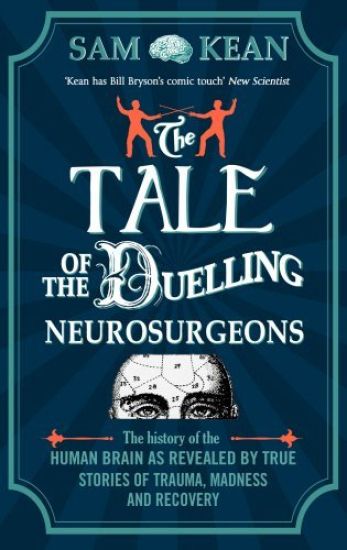
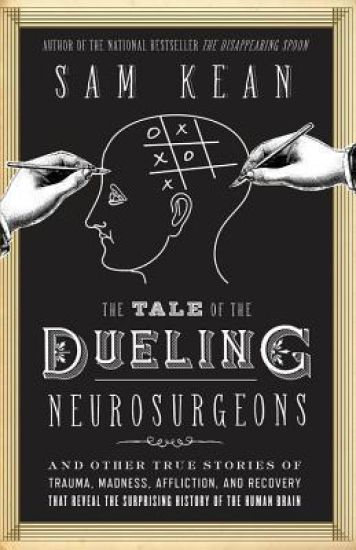
The author of the bestseller The Disappearing Spoon reveals the secret inner workings of the brain through strange but true stories. Early studies of the human brain used a simple method: wait for misfortune to strike -- strokes, seizures, infectious diseases, horrendous accidents -- and see how victims coped. In many cases their survival was miraculous, if puzzling. Observers were amazed by the transformations that took place when different parts of the brain were destroyed, altering victims' personalities. Parents suddenly couldn't recognize their own children. Pillars of the community became pathological liars. Some people couldn't speak but could still sing. In The Tale of the Dueling Neurosurgeons, Sam Kean travels through time with stories of neurological curiosities: phantom limbs, Siamese twin brains, viruses that eat patients' memories, blind people who see through their tongues. He weaves these narratives together with prose that makes the pages fly by, to create a story of discovery that reaches back to the 1500s and the high-profile jousting accident that inspired this book's title. With the lucid, masterful explanations and razor-sharp wit his fans have come to expect, Kean explores the brain's secret passageways and recounts the forgotten tales of the ordinary people whose struggles, resilience, and deep humanity made neuroscience possible.
The Tale of the Dueling Neurosurgeons

The Tale of the Dueling Neurosurgeons

Sam Kean

Little, Brown Company
2014
sidottu

Halvin toimitettuna 45,70 €

The author of the bestseller The Disappearing Spoon reveals the secret inner workings of the brain through strange but true stories. Early studies of the human brain used a simple method: wait for misfortune to strike -- strokes, seizures, infectious diseases, horrendous accidents -- and see how victims coped. In many cases their survival was miraculous, if puzzling. Observers were amazed by the transformations that took place when different parts of the brain were destroyed, altering victims' personalities. Parents suddenly couldn't recognize their own children. Pillars of the community became pathological liars. Some people couldn't speak but could still sing. In The Tale of the Dueling Neurosurgeons, Sam Kean travels through time with stories of neurological curiosities: phantom limbs, Siamese twin brains, viruses that eat patients' memories, blind people who see through their tongues. He weaves these narratives together with prose that makes the pages fly by, to create a story of discovery that reaches back to the 1500s and the high-profile jousting accident that inspired this book's title.* With the lucid, masterful explanations and razor-sharp wit his fans have come to expect, Kean explores the brain's secret passageways and recounts the forgotten tales of the ordinary people whose struggles, resilience, and deep humanity made neuroscience possible. *"The Tale of the Dueling Neurosurgeons" refers to the case of French king Henri II, who in 1559 was lanced through the skull during a joust, resulting in one of the most significant cases in neuroscience history. For hundreds of years scientists have gained important lessons from traumatic accidents and illnesses, and such misfortunes still represent their greatest resource for discovery.
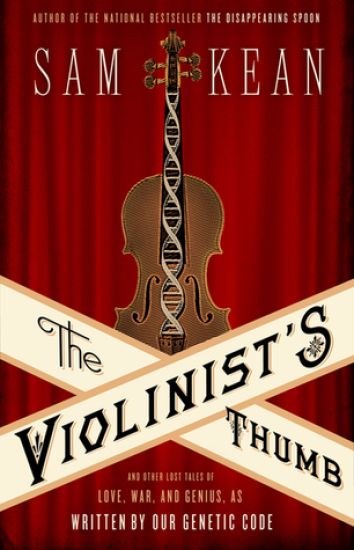
The Violinist's Thumb: And Other Lost Tales of Love, War, and Genius, as Written by Our Genetic Code
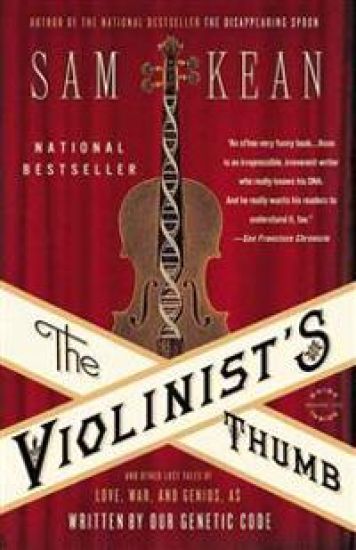
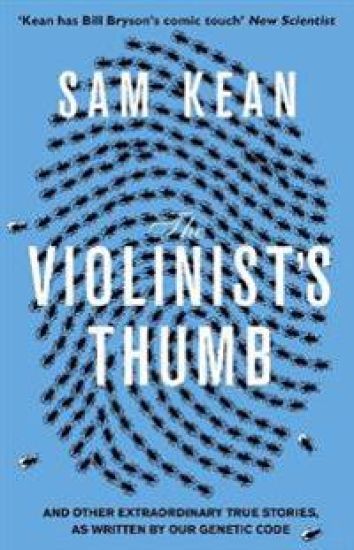
From New York Times bestselling author Sam Kean comes incredible stories of science, history, language, and music, as told by our own DNA. In The Disappearing Spoon, bestselling author Sam Kean unlocked the mysteries of the periodic table. In The Violinist's Thumb, he explores the wonders of the magical building block of life: DNA. There are genes to explain crazy cat ladies, why other people have no fingerprints, and why some people survive nuclear bombs. Genes illuminate everything from JFK's bronze skin (it wasn't a tan) to Einstein's genius. They prove that Neanderthals and humans bred thousands of years more recently than any of us would feel comfortable thinking. They can even allow some people, because of the exceptional flexibility of their thumbs and fingers, to become truly singular violinists. Kean's vibrant storytelling once again makes science entertaining, explaining human history and whimsy while showing how DNA will influence our species' future.
Violinist's Thumb

Violinist's Thumb

Sam Kean

Transworld Publishers Ltd
2013
pokkari
Did the human race almost go extinct? Can genetics explain a cat lady's love for felines? And how did the right combination of genes create the exceptionally flexible thumbs and fingers of a truly singular violinist? This title explains how genetics has shaped our past and how DNA will determine humankind's future.
The Violinist's Thumb

The Violinist's Thumb

Sam Kean

Little, Brown Company
2012
sidottu
From New York Times bestselling author Sam Kean comes incredible stories of science, history, language, and music, as told by our own DNA. In The Disappearing Spoon, bestselling author Sam Kean unlocked the mysteries of the periodic table. In The Violinist's Thumb, he explores the wonders of the magical building block of life: DNA. There are genes to explain crazy cat ladies, why other people have no fingerprints, and why some people survive nuclear bombs. Genes illuminate everything from JFK's bronze skin (it wasn't a tan) to Einstein's genius. They prove that Neanderthals and humans bred thousands of years more recently than any of us would feel comfortable thinking. They can even allow some people, because of the exceptional flexibility of their thumbs and fingers, to become truly singular violinists. Kean's vibrant storytelling once again makes science entertaining, explaining human history and whimsy while showing how DNA will influence our species' future.
The Disappearing Spoon: And Other True Tales of Madness, Love, and the History of the World from the Periodic Table of the Elements
From New York Times bestselling author Sam Kean comes incredible stories of science, history, finance, mythology, the arts, medicine, and more, as told by the Periodic Table. Why did Gandhi hate iodine (I, 53)? How did radium (Ra, 88) nearly ruin Marie Curie's reputation? And why is gallium (Ga, 31) the go-to element for laboratory pranksters? The Periodic Table is a crowning scientific achievement, but it's also a treasure trove of adventure, betrayal, and obsession. These fascinating tales follow every element on the table as they play out their parts in human history, and in the lives of the (frequently) mad scientists who discovered them. The Disappearing Spoon masterfully fuses science with the classic lore of invention, investigation, and discovery -- from the Big Bang through the end of time. Though solid at room temperature, gallium is a moldable metal that melts at 84 degrees Fahrenheit. A classic science prank is to mold gallium spoons, serve them with tea, and watch guests recoil as their utensils disappear.