Kirjailija
Samuel Alexander
Kirjat ja teokset yhdessä paikassa: 44 kirjaa, julkaisuja vuosilta 2003–2026, suosituimpiin kuuluu Dario. Vertaile teosten hintoja ja tarkista saatavuus suomalaisista kirjakaupoista.
44 kirjaa
Kirjojen julkaisuvuodet: 2003–2026.
Dario suffers from anxiety and depression mixed with a toxic desire to please his parents. Although an overachiever in all things, he can't get the approval he craves; never believing he could be good enough for them. His friends try to help him realise he's okay as is, but nothing they do works. Eventually, something beyond his control forces Dario to the conclusion that all he'd worked for no longer mattered. Will the damage of Dario's past stop him from full acceptance or will he push through to find the man he buried.
This collection of essays presents an aesthetics of existence called the 'Will to Art'. Readers will be invited to consider the possibility that the universe is fundamentally an aesthetic phenomenon, understood as a process of creative evolution that is moving, albeit agonistically, towards ever-increasing opportunities for artistic expression and aesthetic experience. Art is defined broadly and openly as the meaningful and pleasurable expression of creative labour, and human experience can be considered 'aesthetic' if it flows from the sensuous engagement with art or nature. To speak of the Will to Art is to interpret the world as having an underlying tendency toward artistic and aesthetic flourishing, even though the outcome of this evolutionary process, due to its indeterminate nature, is unknowable in advance. Two premises guide the development of this vision: first, that material sufficiency is all that is needed for human beings to live rich, meaningful, and artful lives; and second, that material sufficiency is all that is possible, over the long term, on a finite planet in an age of environmental limits. Based on those premises, Samuel Alexander proposes and defends a conception of ecological civilisation which he calls SMPLCTY. This is not a utopian prediction about what is a likely future for our species. Rather, it is an orienting vision, one in which individuals and communities thrive in humble conditions of material sufficiency but cultural richness, meaningfully engaged in pleasurable and creative labour in collaboration with others. According to this vision, life itself would become an aesthetic project, a never-ending process of creative activity, sensuous experience, aesthetic engagement, and spiritual exploration. Such a society would be structured with the aim of sustainably providing opportunities for all people to find meaning and pleasure through creative labour and aesthetic experience.


Smple-Koin: A Buddhist Cryptocurrency Optimised for Material Sufficiency within Game Theory Dynamics
Samuel Alexander
Simplicity Institute
2025
nidottu
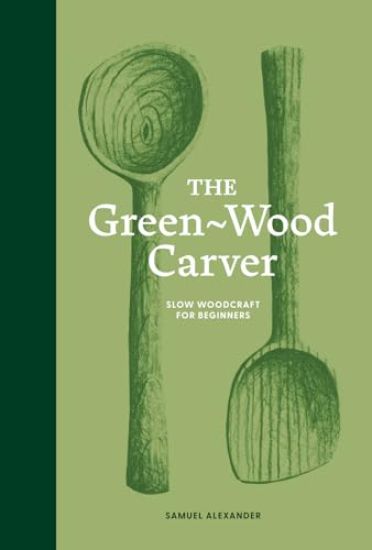
Discover the absorbing art of whittling. An immersive and peaceful craft that rewards calm focus with beautiful objects. Samuel Alexander quickly built a strong following sharing his own compelling story about the healing power of carving. Now, in his first book he introduces this calm and gentle craft. Teaching beginners how to responsibly source fresh green wood, master the basic techniques for using a knife and sharing a range of step-by-step projects to work through at your own pace, The Green-Wood Carver is an important reminder of the therapeutic benefits of exploring a new craft. After learning the basics of how to get started, you can work through projects as varied as spoons, vases, simple buttons and household hooks. Working with the grain, you'll create tactile curves and textures, slowly revealing the character of each piece as you whittle. With Samuel's thoughtful reflections on the joy of small movements and personal creativity charmingly woven throughout this how-to guide, his aim is not only to teach you how to create a beautiful object but to find the beauty in the process itself.
Reprint of the original, first published in 1872. The publishing house Anatiposi publishes historical books as reprints. Due to their age, these books may have missing pages or inferior quality. Our aim is to preserve these books and make them available to the public so that they do not get lost.
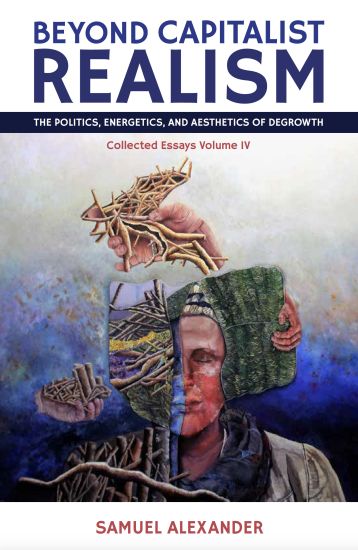
Beyond Capitalist Realism
Samuel Alexander
Simplicity Institute
2021
pokkari
Halvin toimitettuna 25,00 €