
Kirjailija
Samuel Eliot Morison
Kirjat ja teokset yhdessä paikassa: 65 kirjaa, julkaisuja vuosilta 1932–2026, suosituimpiin kuuluu Builders of the Bay Colony. Vertaile teosten hintoja ja tarkista saatavuus suomalaisista kirjakaupoista.
65 kirjaa
Kirjojen julkaisuvuodet: 1932–2026.
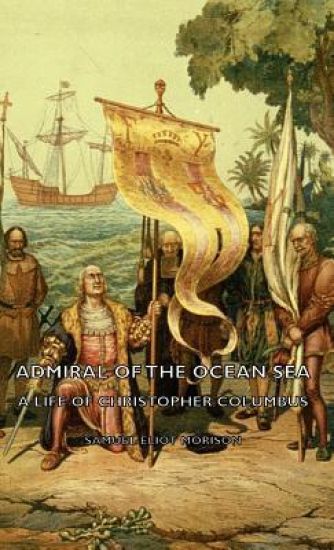
Admiral Of The Ocean Sea - A Life Of Christopher Columbus
Samuel Eliot Morison
READ BOOKS
2008
sidottu
Admiral of the Ocean Sea: A Life of Christopher Columbus
Samuel Eliot Morison
ACLS History E-Book Project
2008
nidottu

Originally published in 1963, this classic, single-volume history draws on Morison's definitive 15-volume History of United States Naval Operations in World War II. More than a condensation, The Two-Ocean War highlights the major components of the larger work: the preparation for war, the Japanese attack on Pearl Harbor, the long war of attrition between submarines and convoys in the Atlantic, the battles of the Coral Sea and Midway, the long grind of Guadalcanal, the leapfrogging campaigns among the Pacific islands, the invasion of continental Europe, the blazes of glory at Leyte and Okinawa, and the final grudging surrender of the Japanese. About the Author RADM Samuel Eliot Morison wrote many popular and award-winning books on maritime history, including Admiral of the Ocean Sea: A Life of Christopher Columbus. He was the recipient of two Pulitzer Prizes, two Bancroft Prizes, and the Presidential Medal of Freedom.
Admiral Of The Ocean Sea - A Life Of Christopher Columbus
Samuel Eliot Morison
Read Books
2007
pokkari


The Life and Letters of Harrison Gray Otis, Federalist 1765-1848
Samuel Eliot Morison
Kessinger Pub
2006
pokkari
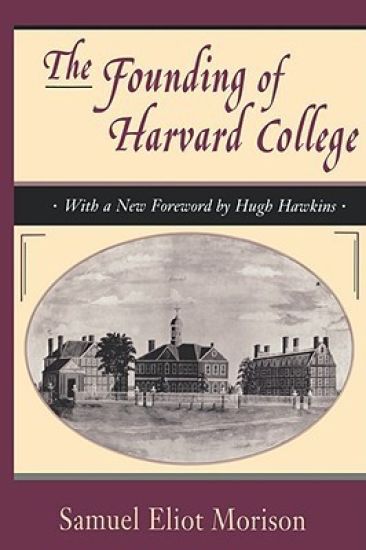
The Founding of Harvard College
Samuel Eliot Morison; Hugh Hawkins
Harvard University Press
1998
nidottu
Pulitzer Prize–winning author Samuel Eliot Morison traces the roots of American universities back to Europe, providing “a lively contemporary perspective…a realistic picture of the founding of the first American university north of the Rio Grande” [Lewis Gannett, New York Herald Tribune].

New England Life in the Eighteenth Century
Clifford Kenyon Shipton; Samuel Eliot Morison
The Belknap Press
1995
nidottu
In 1859 John Langdon Sibley projected and began a series of biographical sketches of all Harvard graduates; at his death in 1885 he had published three volumes, covering the Classes from 1642 through 1689. In 1930 the work was resumed by Clifford K. Shipton, who carried the series through Volume XII and the Class of 1750. This book offers a representative selection from the nine volumes of Shipton’s biographies. In these sketches there appear royal governors, counterfeiters, college presidents, bootleggers, Indian fighters, Revolutionary leaders, Loyalists, mariners, lawyers, drunkards, and clergymen of four persuasions. Together they form a cross-section of Colonial life in which the Harvard tie is often only incidental.
Completing Morison's monumental study of the explorers who discovered and journeyed through the coasts of the Americas, ths volume covers not only all of Latin America, including theCaribbean area and South America, but also Bermuda, Florida and California.
This is an abridgement of Samuel Morison's magnum opus, The European Discovery of America, in which he describes the early voyages that led to the discovery of the New World. All the acclaimed Morison touches are here - the meticulous research and authoritative scholarship, along with the personal and compelling narrative style that gives the reader the feeling of having been there. Morison, of course, has been there, and The Great Explorers is enriched with photographs and maps he made while personally retracing the great voyages.
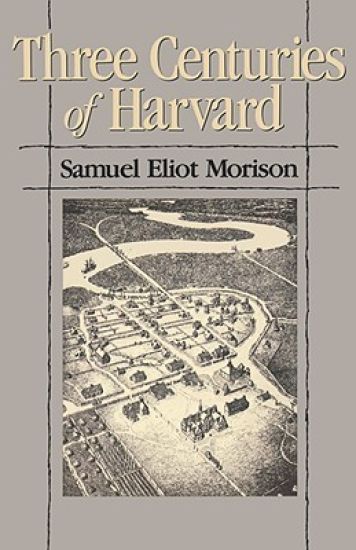
This one-volume history of Harvard is not so much a summary of Samuel Eliot Morison’s monumental work [The Tercentennial History of Harvard College and University, 1636–1936] as it is an entirely fresh handling of his vast material. With a mind saturated in the lore and tradition at his command, Professor Morison has sat down to tell the whole story of Harvard informally and briefly. Documentation and all the learned apparatus of scholarly research are therefore omitted; but the same genial humor, the same ability to see the human implications of past events, that characterize his larger, multi-volume series on Harvard are preserved in this. The result is a marvelously entertaining volume, the history of Harvard that everyone has been waiting for, a model of vitalized historical writing.
Recognizing the need to say something concerning the conservative nature of the Revolution, the author believes that a balance between the radical view of the Revolution and a strong injection of conservatism should be redressed in order to make our Revolution's achievement 'stick.' Co-published with the Society of the Cincinnati.
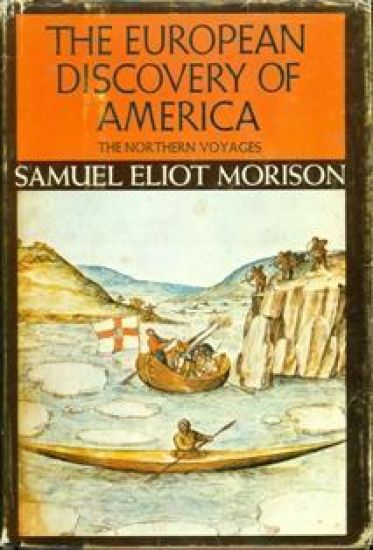
The late Samuel Eliot Morison, a former U. S. Navy admiral, was also one of America's premier historians. Combining a first-hand knowledge of the sea and transatlantic travel with a brilliantly readable narrative style, he produced what has become nothing less than the definitive account of the great age of European exploration. In his riveting and richly illustrated saga, Morison offers a comprehensive account of all the known voyages by Europeans to the New World from 500 A. D. to the seventeenth century. Together, the two volumes of The European Discovery of America tell the compelling stories of the many intrepid explorers who made what was then a journey frought with danger--figures as diverse as Leif Ericsson, Columbus, John Cabot, Jacques Cartier, Martin Frobisher, Magellan, Sir Walter Raleigh, and Sir Francis Drake to name but a few. They also follow the adventures of lesser-known but no less interesting mariners and offer a detailed look at those who set them forth on their travels. In the first volume, The Nrthern Voyages--winner of the prestigious Bancroft Prize for History--Morison re-creates the lives and perilous times of those who claimed to have seen the shores of North America in the 600 years after the Norsemen first landed. He brings to his account a rare immediacy, making the drama and unpredictability of their voyages as significant in relation to the people of their era as the astronauts' journeys have been for our own times. Morison also offers a fascinating look at the imaginary lands reported by early travelers (such mythical places as Antilia and the Seven Cities, the glorious Kingdoms of Norumbega and Saguenay, and Hy-Brasil the Isle of the Blest) and examines as well the alleged discoverers of these lands. With warmth and wit he distinguishes fact from fiction, and imaginary explorers and their exploits from actual men and events. In the second volume, Morison turns his attention to the navigators who negotiated the waters of the Caribbean and the treacherous coasts of South America, even following them as they ventured ashore to the dark inland of the southern continent. The Southern Voyages begins with the events leading up to Columbus's arrival in San Salvador in 1492 and concludes with the discovery of the southernmost bit of land, Cape Horn, by Dutch explorers in 1616. In between, Morison retraces the routes of all the great mariners, including a step-by-step account of Magellan's voyage that would take him around the world. Morison has enlivened his narrative with a wide range of source material from Italy, Spain, Portugal, and South America, in the process shedding new light on questions that have divided scholars througout history: Did Sir Francis Drake discover San Francisco Bay? Was Amerigo Vespucci a great explorer or a fraud--or a little of both? What role did the French have in the European discovery of Brazil? Each volume brims with contemporary illustrations, maps (many of them specially drawn for this history) and photographs (often taken by Morison himself as he flew at low altitude along the coastal routes of explorers), which together identify virtually every allusion to land and sea made by the great European navigators in their ship logs and their later accounts. With the 500th anniversary of the European arrival in America came much controversy over Columbus's true legacy. With its lively and engaging style, and with its unsurpassed understanding of the age, The European Discovery of America helps put the era of exploration in much-needed perspective. Anyone interested in the history of America, indeed, in the history of Western Civilization, will find these volumes absolutely essential.

Dissent in Three American Wars
Samuel Eliot Morison; Frederick Merk; Frank Freidel
Harvard University Press
1970
sidottu

Sources and Documents Illustrating the American Revolution, 1764-1788
Samuel Eliot Morison
Oxford University Press Inc
1965
nidottu
The sources and documents presented in this book reflect the ideological revolution in America, encompassing the growth of independent sentiment in the colonies, the break with the mother country, and the establishment of a federal government by the states. All the essential documents are included as well as some important acts, resolves, letters, pamphlets, and instructions not readily available elsewhere.

Harvard Guide to American History
Oscar Handlin; Arthur Meier Schlesinger; Samuel Eliot Morison; Frederick Merk; Arthur Meier Schlesinger Jr; Paul Herman Buck
Harvard University Press
1954
sidottu

Some Early Tools of American Science
I Bernard Cohen; Samuel Eliot Morison
Harvard University Press
1950
sidottu
How Harvard College looked, from its beginnings to 1860, is shown in this collection of views, many heretofore unpublished, of its buildings and grounds. These lithographs, watercolors, charcoal drawings, and engravings on copper, steel, and wood include works by Paul Revere, Justice Joseph Story, and Jonathan Fisher. The accompanying text describes the changing scene and the buildings as they appear, and gives a description of all known Harvard views prior to the age of photography. This is an interesting book for anyone interested in early New England buildings, as well as for bibliophiles and collectors of prints.