Kirjojen hintavertailu – 12 859 828 kirjaa ja 27 kauppaa

Kirjailija

Samuel Farber

Kirjat ja teokset yhdessä paikassa: 7 kirjaa, julkaisuja vuosilta 1990–2023, suosituimpiin kuuluu America as Overlord. Vertaile teosten hintoja ja tarkista saatavuus suomalaisista kirjakaupoista.

7 kirjaa

Kirjojen julkaisuvuodet: 1990–2023.

America as Overlord

America as Overlord

Hal Draper; Samuel Farber

Haymarket Books
2023
pokkari
From 1932 until his death in 1990, Hal Draper was a prolific Marxist writer and socialist organizer who successfully combined rigorous research and passionate outrage to assess his political era. In this still-indispensable collection of essays written in the 1950s and 60s, Draper grapples with the role of the United States in the world, situating post-war American imperialism in a global picture of capitalist competition and expansion. The essays in this volume include Draper’s discussions of the United States' involvement in Guatemala, Guam, Samoa, Cuba, Vietnam, and elsewhere, as well as his, more general, socialist guide to national liberation movements.
The Politics Of Che Guevara

The Politics Of Che Guevara

Samuel Farber

Haymarket Books
2016
nidottu
A political portrait focused on Guevara's thought and political record aimed at dispelling many of the myths about the revolutionary. This re-examination of Ernesto 'Che' Guevara's thoughts on socialism, democracy and revolution is a must-read for today's activists - or anyone longing to fight for a better world. Fifty years after his death, Guevara remains a symbol to legions of young rebels and revolutionaries. This unique book provides a way to critically engage with Guevara's economic views, his ideas about revolutionary agency and more.
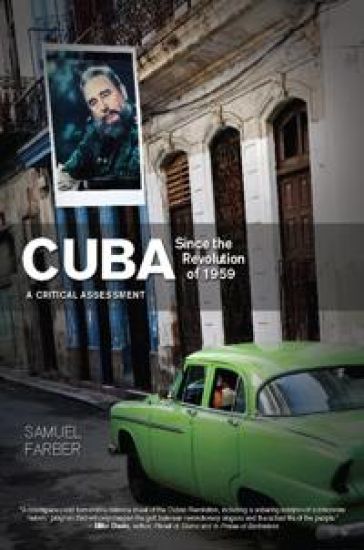
Cuba Since The Revolution Of 1959

Cuba Since The Revolution Of 1959

Samuel Farber

Haymarket Books
2011
nidottu
Uncritically lauded by the left and impulsively denounced by the right, the Cuban Revolution is almost universally viewed one-dimensionally. It is high time for a more balanced approach to the subject - a critical, left-wing approach. Having grown up in Cuba in the 1950s, Samuel Farber is one of the only left-wing historians who is not enamoured the Cuban Revolution, but sees it in all its complexity. Cuba Since the Revolution of 1959 thus takes a fresh approach to the political legacy of the Cuban Revolution, analysing both its positive and negative implications for the left.
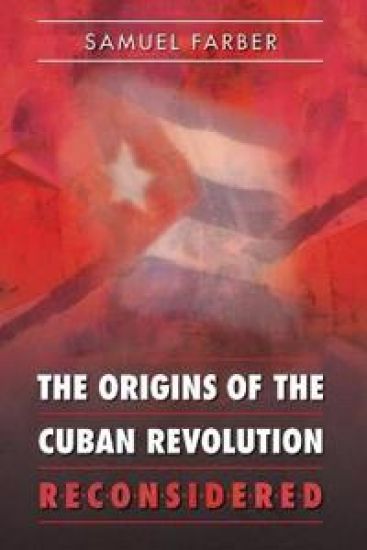
The Origins of the Cuban Revolution Reconsidered

The Origins of the Cuban Revolution Reconsidered

Samuel Farber

The University of North Carolina Press
2006
nidottu

Halvin toimitettuna 60,00 €

Analyzing the crucial period of the Cuban Revolution from 1959 to 1961, Samuel Farber challenges dominant scholarly and popular views of the revolution's sources, shape, and historical trajectory. Unlike many observers, who treat Cuba's revolutionary leaders as having merely reacted to U. S. policies or domestic socioeconomic conditions, Farber shows that revolutionary leaders, while acting under serious constraints, were nevertheless autonomous agents pursuing their own independent ideological visions, although not necessarily according to a master plan. Exploring how historical conflicts between U. S. and Cuban interests colored the reactions of both nations' leaders after the overthrow of Fulgencio Batista, Farber argues that the structure of Cuba's economy and politics in the first half of the twentieth century made the island ripe for radical social and economic change, and the ascendant Soviet Union was on hand to provide early assistance. Taking advantage of recently declassified U. S. and Soviet documents as well as biographical and narrative literature from Cuba, Farber focuses on three key years to explain how the Cuban rebellion rapidly evolved from a multiclass, antidictatorial movement into a full-fledged social revolution.
Before Stalinism

Before Stalinism

Samuel Farber

Verso Books
1990
nidottu

Halvin toimitettuna 27,60 €

Before Stalinism is a historical study of democratic life and institutions and their decline in the early years of the Russian Revolution. While attempting to synthesize a wealth of available historical material, the author assesses the extent to which the disappearance of Soviet democracy was due to objective circumstances, for example the impact of the Civil War, and the extent to which it was the result of Bolshevik politics and ideology. The author shows how there were, contrary to later Stalinist and Cold War mythologies, significant disputes within the pre-Stalinist Bolshevik camp about the preservation of the substantial democratic elements of the October upheaval.
Before Stalinism

Before Stalinism

Samuel Farber

Polity Press
1990
sidottu
This book provides an historical study of democratic life and institutions and their decline in the early years of the Russian Revolution. Rather than an event-by-event description of this period, it is an attempt at interpretation and synthesis of the vast and relatively recent specialist literature on a subject usually neglected by those analysing Soviet politics for the public at large. While attempting to synthesize a wealth of historical materials, Farber also assesses the extent to which the disappearance of Soviet democracy was due to objective circumstances, for example, the impact of the Civil War, and the extent to which it was the result of Bolshevik politics and ideology. In this context, the author shows how there were, contrary to later Stalinist and Cold War mythologies, considerable and significant disputes within the pre-Stalinist Bolshevik camp on matters relevant to the preservation of the substantial democratic elements of the October upheaval. As the processes of glasnost and perestroika in the Soviet Union find a response from below in a movement for democracy that may not be willing to respect the limits of Gorbachev's programme, Farber's work acquires a timely quality for those who, inside or outside the Soviet Union, are searching for a usable past in which to root the new Soviet Spring. In presenting data known only to specialists to a larger public ion an original, novel and accessible interpretative framework, Farber adds an important new dimension to our thinking about the Russian Revolution and the origins of the Soviet state.