Kirjojen hintavertailu – 12 903 725 kirjaa ja 27 kauppaa

Kirjailija

Samuel Hahnemann

Kirjat ja teokset yhdessä paikassa: 146 kirjaa, julkaisuja vuosilta 1922–2026, suosituimpiin kuuluu Unterricht für Wundärzte über die Venerischen Krankheiten. Vertaile teosten hintoja ja tarkista saatavuus suomalaisista kirjakaupoista.

146 kirjaa

Kirjojen julkaisuvuodet: 1922–2026.

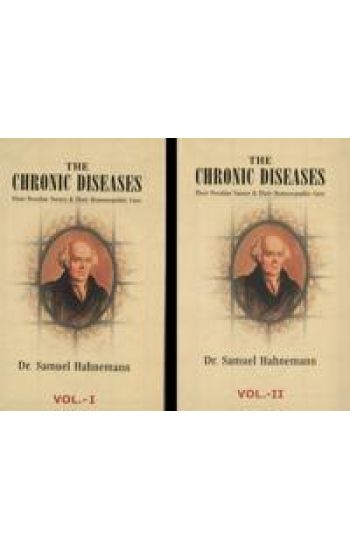
Chronic Diseases

Chronic Diseases

Samuel Hahnemann

B Jain Publishers Pvt Ltd
2005
sidottu
Originally published in four volumes from 1828-1830, this work compiles the original literature as given by the founder of the healing art. It covers the chronic diseases with their peculiar nature and their homeopathic cure. Detailed work of the basic concepts of miasms are given together with 48 antipsoric remedies with their original provings.
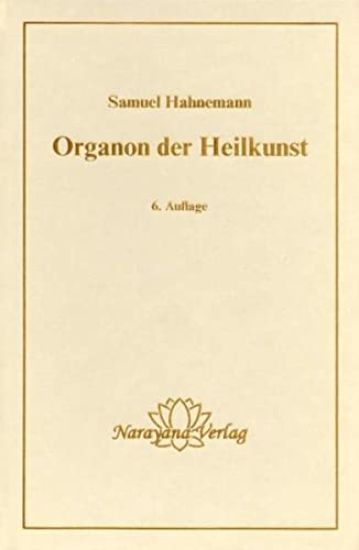
Organon der Heilkunst

Organon der Heilkunst

Samuel Hahnemann

Narayana Verlag GmbH
2004
sidottu
Originalgetreuer Nachdruck der 6. Auflage des Organon der Heilkunst von Samuel Hahnemann. Der Text des Originals und das ursprüngliche, gut lesbare Schriftbild wurden beibehalten. Die 6. Auflage des Organon war als Handschrift über viele Jahrzehnte im Verborgenen geblieben (daher waren der amerikanischen Schule die LM-Potenzen nicht bekannt). 1921 hat Richard Haehl die handschriftliche Neubearbeitung des Organons durch Hahnemann für die 6. Auflage herausgegeben. Das Vorwort Hahnemanns zu dieser 6. Ausgabe datiert von 1842.
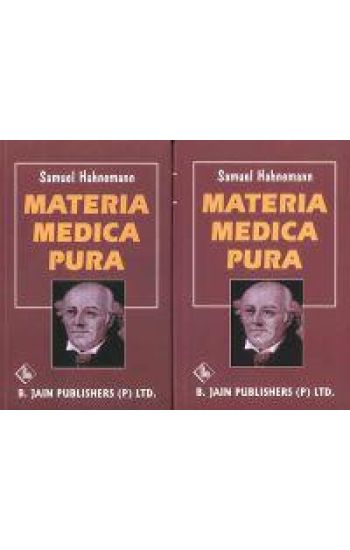
Materia Medica Pura

Materia Medica Pura

Samuel Hahnemann

B Jain Publishers Pvt Ltd
2004
sidottu
"The Materia Medica Pura", needs no introduction. It is Dr Samuel Hahnemann's magnum opus. It is the source book of all subsequent materia medicas. It contains the original provings conducted by Dr Hahnemann on himself and his patients. All the symptoms are given in the language of the prover. It has an exhaustive symptom list. The study of the "Materia Medica Pura" is a very important part of the study of homeopathy. Here, the reader can go back to the origin of the symptom in the prover. Since the language of this book is the language of the prover, there is no scope for any erroneous interpretations. Everything written by Dr Hahnemann is of historical importance and the same applies to this book also. It is the first ever recorded materia medica in the world. A wealth of knowledge can be gleaned by it, if one studies it seriously.
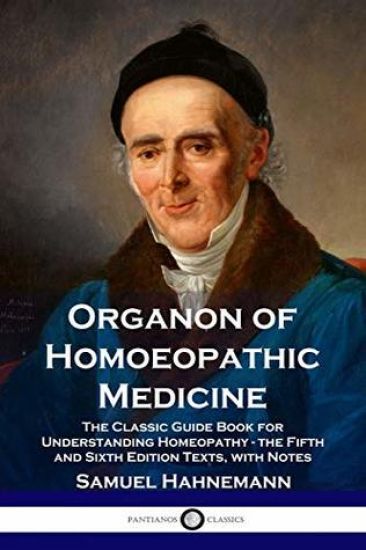
Organon of Homoeopathic Medicine

Organon of Homoeopathic Medicine

Samuel Hahnemann

Pantianos Classics
1922
pokkari
Samuel Hahnemann was a German physician who created and introduced homeopathy, a system of alternative medicine which claims that a substance which causes diseases in some individuals can cure it in others. Writing in the early 19th century, Hahnemann set out the principles of homoeopathic medicine in a total of 297 aphorisms. Each of these discussed the various attributes of healing that underpin homeopathy as a method of curing. The notion of 'miasms' as the origin and cause of all chronic disease, and how such can be alleviated, is elaborated upon by the author. Today, homeopathy has been widely discredited, with its methodology and teachings contrasted with established discoveries in biology and chemistry. Numerous studies of homeopathy's efficacy have shown that the results of treatment are no better than placebo. In the 19th century however, its use was popular with Hahnemann himself contrasting his methods by terming conventional medicine 'allopathic'. This edition combines side-by-side two editions of the Organon; the fifth, translated in late 19th century by R. E. Dudgeon, and the sixth, translated in 1922 by William Boericke. Both translators were practising homeopaths who added their own discoveries and annotations to Hahnemann's principle text.

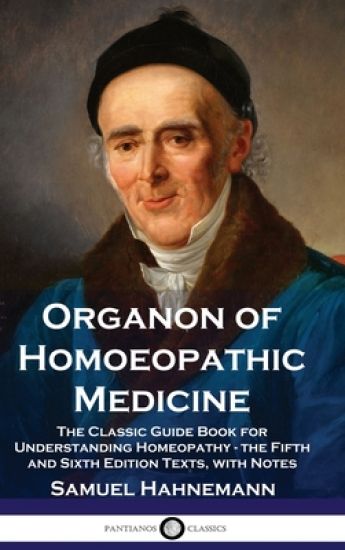
Organon of Homoeopathic Medicine

Organon of Homoeopathic Medicine

Samuel Hahnemann

Pantianos Classics
1922
sidottu
Samuel Hahnemann was a German physician who created and introduced homeopathy, a system of alternative medicine which claims that a substance which causes diseases in some individuals can cure it in others. Writing in the early 19th century, Hahnemann set out the principles of homoeopathic medicine in a total of 297 aphorisms. Each of these discussed the various attributes of healing that underpin homeopathy as a method of curing. The notion of 'miasms' as the origin and cause of all chronic disease, and how such can be alleviated, is elaborated upon by the author. Today, homeopathy has been widely discredited, with its methodology and teachings contrasted with established discoveries in biology and chemistry. Numerous studies of homeopathy's efficacy have shown that the results of treatment are no better than placebo. In the 19th century however, its use was popular with Hahnemann himself contrasting his methods by terming conventional medicine 'allopathic'. This edition combines side-by-side two editions of the Organon; the fifth, translated in late 19th century by R. E. Dudgeon, and the sixth, translated in 1922 by William Boericke. Both translators were practising homeopaths who added their own discoveries and annotations to Hahnemann's principle text.