

Kirjailija
Samuel Jay Keyser
Kirjat ja teokset yhdessä paikassa: 6 kirjaa, julkaisuja vuosilta 2002–2025, suosituimpiin kuuluu Prolegomenon to a Theory of Argument Structure. Vertaile teosten hintoja ja tarkista saatavuus suomalaisista kirjakaupoista.
6 kirjaa
Kirjojen julkaisuvuodet: 2002–2025.
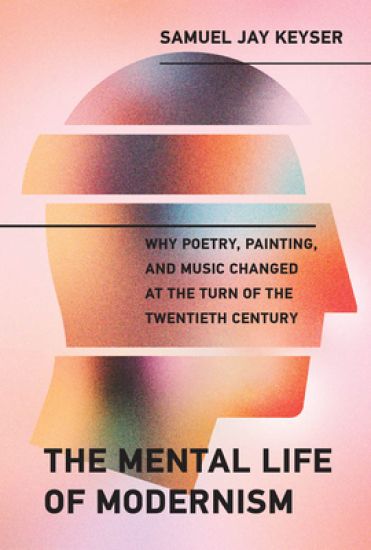
An argument that Modernism is a cognitive phenomenon rather than a cultural one. At the beginning of the twentieth century, poetry, music, and painting all underwent a sea change. Poetry abandoned rhyme and meter; music ceased to be tonally centered; and painting no longer aimed at faithful representation. These artistic developments have been attributed to cultural factors ranging from the Industrial Revolution and the technical innovation of photography to Freudian psychoanalysis. In this book, Samuel Jay Keyser argues that the stylistic innovations of Western modernism reflect not a cultural shift but a cognitive one. Behind modernism is the same cognitive phenomenon that led to the scientific revolution of the seventeenth century: the brain coming up against its natural limitations. Keyser argues that the transformation in poetry, music, and painting (the so-called sister arts) is the result of the abandonment of a natural aesthetic based on a set of rules shared between artist and audience, and that this is virtually the same cognitive shift that occurred when scientists abandoned the mechanical philosophy of the Galilean revolution. The cultural explanations for Modernism may still be relevant, but they are epiphenomenal rather than causal. Artists felt that traditional forms of art had been exhausted, and they began to resort to private formats-Easter eggs with hidden and often inaccessible meaning. Keyser proposes that when artists discarded their natural rule-governed aesthetic, it marked a cognitive shift; general intelligence took over from hardwired proclivity. Artists used a different part of the brain to create, and audiences were forced to play catch up.

A memoir of MIT life, from being Noam Chomsky's boss to negotiating with student protesters. When Jay Keyser arrived at MIT in 1977 to head the Department of Linguistics and Philosophy, he writes, he "felt like a fish that had been introduced to water for the first time." At MIT, a colleague grabbed him by the lapels to discuss dark matter; Noam Chomsky called him "boss" (double SOB spelled backward?); and engaging in conflict resolution made him feel like "a marriage counselor trying to reconcile a union between a Jehovah's witness and a vampire." In Mens et Mania, Keyser recounts his academic and administrative adventures during a career of more than thirty years. Keyser describes the administrative side of his MIT life, not only as department head but also as Associate Provost and Special Assistant to the Chancellor. Keyser had to run a department ("budgets were like horoscopes") and negotiate student grievances-from the legality of showing Deep Throat in a dormitory to the uproar caused by the arrests of students for anti-apartheid demonstrations. Keyser also describes a visiting Japanese delegation horrified by the disrepair of the linguistics department offices (Chomsky tells them "Our motto is: Physically shabby. Intellectually first class."); convincing a student not to jump off the roof of the Green Building; and recent attempts to look at MIT through a corporate lens. And he explains the special faculty-student bond at MIT: the faculty sees the students as themselves thirty years earlier. Keyser observes that MIT is hard to get into and even harder to leave, for faculty as well as for students. Writing about retirement, Keyser quotes the song Groucho Marx sang in Animal Crackers as he was leaving a party-"Hello, I must be going." Students famously say "Tech is hell." Keyser says,"It's been a helluva party." This entertaining and thought-provoking memoir will make readers glad that Keyser hasn't quite left.

The Fat Abbot, No. 4, Fall-Winter, 1962
Samuel Jay Keyser; John Vincent Canfield; Lou Brierly
Literary Licensing, LLC
2013
nidottu

The Fat Abbot, Fall, 1960
Samuel Jay Keyser; John Vincent Canfield
Literary Licensing, LLC
2013
nidottu

This work is the culmination of an 18-year collaboration between Ken Hale and Samuel Jay Keyser on the study of the syntax of lexical items. It examines the hypothesis that the behaviour of lexical items may be explained in terms of a very small number of very simple principles.