Kirjojen hintavertailu – 12 903 742 kirjaa ja 27 kauppaa

Kirjailija

Samuel Kernell

Kirjat ja teokset yhdessä paikassa: 4 kirjaa, julkaisuja vuosilta 2014–2021, suosituimpiin kuuluu Party Ballots, Reform, and the Transformation of America's Electoral System. Vertaile teosten hintoja ja tarkista saatavuus suomalaisista kirjakaupoista.

4 kirjaa

Kirjojen julkaisuvuodet: 2014–2021.

The Politics Of Divided Government

The Politics Of Divided Government

Gary Cox; Samuel Kernell

Routledge
2021
nidottu
Partisan conflict between the White House and Congress is now a dominant feature of national politics in the United States. What the Constitution sought to institute—a system of checks and balances—divided government has taken to extremes: institutional divisions so deep that national challenges like balancing the federal budget or effectively regulating the nation's savings and loans have become insurmountable. In original essays written especially for this volume, eight of the leading scholars in American government address the causes and consequences of divided party control. Their essays, written with a student audience in mind, take up such timely questions as: Why do voters consistently elect Republican presidents and Democratic congresses? How does divided control shape national policy on crucial issues such as the declaration of war? How have presidents adapted their leadership strategies to the circumstance of divided government? And, how has Congress responded in the way it writes laws and oversees departmental performance? These issues and a host of others are addressed in this compact yet comprehensive volume. The distinguished lineup of contributors promises to make this book "must" reading for both novice and serious students of elections, Congress, and the presidency.

The Politics Of Divided Government

The Politics Of Divided Government

Gary Cox; Samuel Kernell

Routledge
2019
sidottu
Partisan conflict between the White House and Congress is now a dominant feature of national politics in the United States. What the Constitution sought to institute—a system of checks and balances—divided government has taken to extremes: institutional divisions so deep that national challenges like balancing the federal budget or effectively regulating the nation's savings and loans have become insurmountable. In original essays written especially for this volume, eight of the leading scholars in American government address the causes and consequences of divided party control. Their essays, written with a student audience in mind, take up such timely questions as: Why do voters consistently elect Republican presidents and Democratic congresses? How does divided control shape national policy on crucial issues such as the declaration of war? How have presidents adapted their leadership strategies to the circumstance of divided government? And, how has Congress responded in the way it writes laws and oversees departmental performance? These issues and a host of others are addressed in this compact yet comprehensive volume. The distinguished lineup of contributors promises to make this book "must" reading for both novice and serious students of elections, Congress, and the presidency.
Party Ballots, Reform, and the Transformation of America's Electoral System

Party Ballots, Reform, and the Transformation of America's Electoral System

Erik J. Engstrom; Samuel Kernell

Cambridge University Press
2016
pokkari
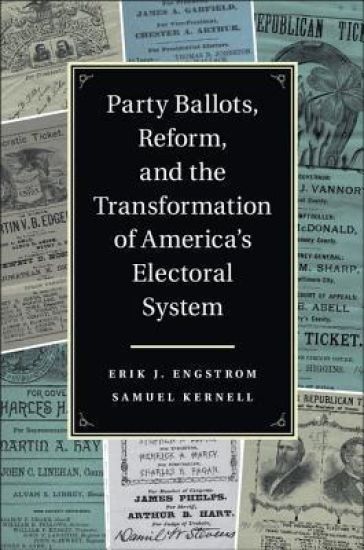
This book explores the fascinating and puzzling world of nineteenth- and early twentieth-century American elections. It examines the strategic behavior of nineteenth-century party politicians and shows how their search for electoral victory led them to invent a number of remarkable campaign practices. Why were parties dedicated to massive voter mobilization? Why did presidential nominees wage front-porch campaigns? Why did officeholders across the country tie their electoral fortunes to the popularity of presidential candidates at the top of the ticket? Erik J. Engstrom and Samuel Kernell demonstrate that the defining features of nineteenth-century electoral politics were the product of institutions in the states that prescribed how votes were cast and how those votes were converted into political offices. Relying on a century's worth of original data, this book uncovers the forces propelling the nineteenth-century electoral system, its transformation at the end of the nineteenth century, and the implications of that transformation for modern American politics.
Party Ballots, Reform, and the Transformation of America's Electoral System

Party Ballots, Reform, and the Transformation of America's Electoral System

Erik J. Engstrom; Samuel Kernell

Cambridge University Press
2014
sidottu
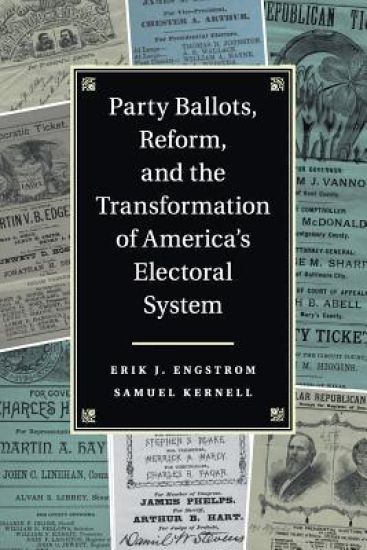
This book explores the fascinating and puzzling world of nineteenth- and early twentieth-century American elections. It examines the strategic behavior of nineteenth-century party politicians and shows how their search for electoral victory led them to invent a number of remarkable campaign practices. Why were parties dedicated to massive voter mobilization? Why did presidential nominees wage front-porch campaigns? Why did officeholders across the country tie their electoral fortunes to the popularity of presidential candidates at the top of the ticket? Erik J. Engstrom and Samuel Kernell demonstrate that the defining features of nineteenth-century electoral politics were the product of institutions in the states that prescribed how votes were cast and how those votes were converted into political offices. Relying on a century's worth of original data, this book uncovers the forces propelling the nineteenth-century electoral system, its transformation at the end of the nineteenth century, and the implications of that transformation for modern American politics.