Kirjojen hintavertailu – 12 903 724 kirjaa ja 27 kauppaa

Kirjailija

Samuel L. Odom

Kirjat ja teokset yhdessä paikassa: 4 kirjaa, julkaisuja vuosilta 2011–2023, suosituimpiin kuuluu Autism Program Environment Rating Scale - Middle/High School (APERS-MH). Vertaile teosten hintoja ja tarkista saatavuus suomalaisista kirjakaupoista.

4 kirjaa

Kirjojen julkaisuvuodet: 2011–2023.

Autism Program Environment Rating Scale - Middle/High School (APERS-MH)

Autism Program Environment Rating Scale - Middle/High School (APERS-MH)

Samuel L. Odom; Ann Sam; Ann Cox

BROOKES PUBLISHING CO
2023
nidottu
The Autism Program Environment Rating Scale – Middle/High School (APERS-MH) is an assessment used to evaluate the quality of educational programs for preschool/elementary students with autism. The APERS-MH contains 69 assessment items organized in 11 domains (e.g., Learning Environments, Curriculum and Instruction, Post-Secondary Transition Planning etc.). To complete the assessment, a trained APERS rater visits the school program. The rater 1) reviews student records for 2-3 focal students with autism, 2) interviews school personnel and parents of the focal students, and 3) observes these students throughout their school day, taking notes throughout the process, before completing an electronic scoring tool. The rater then shares the results with school personnel to use in improving program quality.

Autism Program Environment Rating Scale - Preschool/Elementary (APERS-PE)

Autism Program Environment Rating Scale - Preschool/Elementary (APERS-PE)

Samuel L. Odom; Ann M. Sam; Ann W. Cox

BROOKES PUBLISHING CO
2023
nidottu
The Autism Program Environment Rating Scale – Preschool/Elementary (APERS-PE) is an assessment used to evaluate the quality of educational programs for preschool/elementary students with autism. The APERS-PE contains 62 assessment items organized in 10 domains (e.g., Learning Environments, Curriculum and Instruction, Family Involvement, etc.). To complete the assessment, a trained APERS rater visits the school program. The rater 1) reviews student records for 2-3 focal students with autism, 2) interviews school personnel and parents of the focal students, and 3) observes these students throughout their school day, taking notes throughout the process, before completing an electronic scoring tool. The rater then shares the results with school personnel to use in improving program quality.
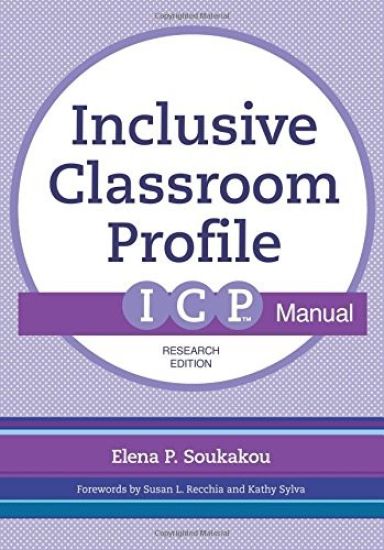
The Inclusive Classroom Profile (ICP™) Manual

The Inclusive Classroom Profile (ICP™) Manual

Elena P. Soukakou; Susan L. Recchia; Kathy Sylva; Samuel L. Odom

Brookes Publishing Co
2016
nidottu
The ICP™ manual guides users on understanding, implementing, and scoring the ICP. How well is your early childhood program implementing quality inclusive practices? Now there’s a comprehensive, field-tested observational tool that uncovers the answers. A one-of-a-kind tool for classrooms serving children ages 2–5, the Inclusive Classroom Profile (ICP™) assesses 12 key practices with the strongest research base for supporting the education and development of young children in inclusive programs:•Adaptations of Space, Materials, and Equipment•Adult Involvement in Peer Interactions•Adults' Guidance of Children’s Free-Choice Activities and Play•Conflict Resolution•Membership•Relationships between Adults and Children•Support for Communication•Adaptation of Group Activities•Transitions between Activities•Feedback•Family-Professional Partnerships•Monitoring Children's LearningBenefits The in-depth ICP™ evaluation process gives you the rich information and insights you need to:•assess your program’s current inclusive practices•establish a baseline for measuring future progress•apply recommended inclusive practices for young children•guide quality improvement efforts by linking assessment data with instructional decision-making•tailor professional development to teachers' specific needs
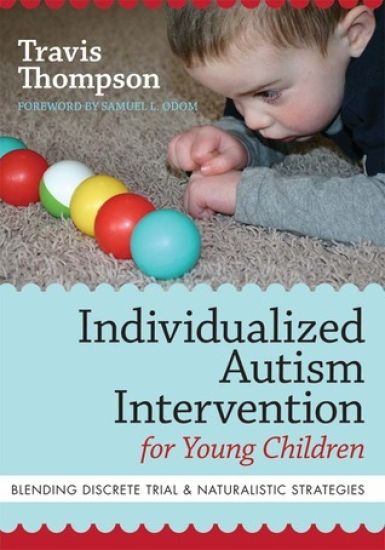
Individualized Autism Intervention for Young Children

Individualized Autism Intervention for Young Children

Travis Thompson; Samuel L. Odom

Brookes Publishing Co
2011
nidottu
Discrete trial instruction or naturalistic, incidental teaching: How do you choose which approach to use with young children with autism? Now there's no need to "pick a side"—this groundbreaking book helps professionals skillfully blend the best of both behavioral approaches to respond to each child's individual needs. Developed by one of the nation's leading experts on autism, this innovative, evidence-based guidebook cuts through the chaos of conflicting information and gives readers a logical, child-centered way to plan and implement intervention. Professionals will begin with an in-depth guide to creating an autism intervention profile. for each child, based on the type and severity of the child's autism characteristics and common predictors of how the child will respond to intervention (such as anxiety level, language, and social interest). Once the profile is complete, readers will learn how to match the child's individual characteristics and needs with a specially tailored blend of DTI and naturalistic teaching. To help them select and implement the right interventions for each child, professionals will get more than a dozen practical tools, including the Autism Intervention Responsiveness Scale, sample data collection forms, schedules, intervention plans, and progress reports. Readers will also learn from detailed before-and-after case studies of five children with very different characteristics and intervention needs. Through vivid accounts of their diverse intervention plans and first-person stories from their parents, readers will see exactly what individualized, child-centered interventions look like and how they help children make improvements in key areas (see below). A must for early childhood educators and interventionists, this book will demystify competing autism treatments and help readers create custom-tailored interventions that really improve child outcomes. Develop child-centered individualized interventions that help children:join in playread nonverbal cuescommunicate more effectivelyovercome social anxietyincrease empathy