Kirjojen hintavertailu – 12 859 829 kirjaa ja 27 kauppaa
Kirjailija
Samuel Noble
Kirjat ja teokset yhdessä paikassa: 11 kirjaa, julkaisuja vuosilta 2008–2023, suosituimpiin kuuluu Arab Orthodox Christians Under the Ottomans 1516-1831. Vertaile teosten hintoja ja tarkista saatavuus suomalaisista kirjakaupoista.
Reprint of the original, first published in 1859. The publishing house Anatiposi publishes historical books as reprints. Due to their age, these books may have missing pages or inferior quality. Our aim is to preserve these books and make them available to the public so that they do not get lost.
Reprint of the original, first published in 1859. The publishing house Anatiposi publishes historical books as reprints. Due to their age, these books may have missing pages or inferior quality. Our aim is to preserve these books and make them available to the public so that they do not get lost.
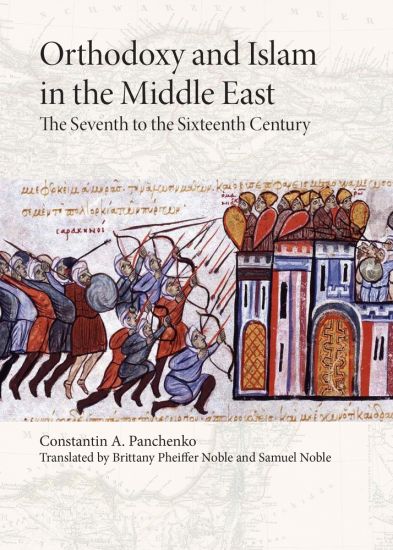
Conflict or concord? Histories of Islam from its early seventh century beginnings in Arabia often portray its explosive growth into the wider Middle East as a story of struggle and conquest of the Christian people of Greater Syria, Palestine and Egypt. Alternatively these histories suggest that as often as not the conquerors were welcomed by the conquered and their existing monotheistic faiths of Christianity and Judaism tolerated and even allowed to flourish. In this short but in depth survey of the almost nine centuries that passed from the beginning of the spread of Islam up to the Ottoman Turkish conquest of Syria and Egypt beginning in 1516, Constantin Panchenko offers a more complex portrayal that opens up fresh vistas of understanding of these centuries focusing on the impact that the coming of Islam had on the Orthodox Christian communities of the Middle East and in particular the interplay of their Greek cultural heritage and experience of increasing Arabization. This work is drawn from the author's much larger work, Arab Orthodox Christians Under the Ottomans, being an updated and expanded version of the first chapter of that book which set the historical context for the period after 1516. It will deepen the readers understanding both of the history of the Middle East in these centuries and of how the faith of Orthodox Christians in these lands is lived today.
Following the so called "Arab Spring" the world's attention has been drawn to the presence of significant minority religious groups within the predominantly Islamic Middle East. Of these minorities Christians are by far the largest, comprising over 10% of the population in Syria and as much as 40% in Lebanon. The largest single group of Christians are the Arabic-speaking Orthodox. This work fills a major lacuna in the scholarship of wider Christian history and more specifically that of lived religion within the Ottoman empire. The author draws on archaeological evidence and previously unpublished primary sources uncovered in Russian archives and Middle Eastern monastic libraries to present a vivid and compelling account of this vital but little-known spiritual and political culture, situating it within a complex network of relations reaching throughout the Mediterranean, the Caucasus and Eastern Europe. The work is made more accessible to a non-specialist reader by the addition of a glossary, whilst the scholar will benefit from a detailed bibliography of both primary and secondary sources.
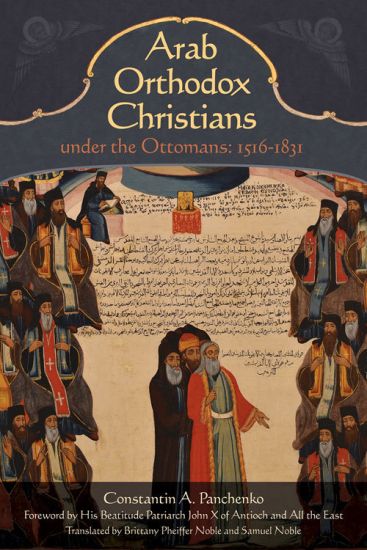
Following the so called "Arab Spring" the world's attention has been drawn to the presence of significant minority religious groups within the predominantly Islamic Middle East. Of these minorities Christians are by far the largest, comprising over 10% of the population in Syria and as much as 40% in Lebanon. The largest single group of Christians are the Arabic-speaking Orthodox. This work fills a major lacuna in the scholarship of wider Christian history and more specifically that of lived religion within the Ottoman empire. Beginning with a survey of the Christian community during the first nine hundred years of Muslim rule, the author traces the evolution of Arab Orthodox Christian society from its roots in the Hellenistic culture of the Byzantine Empire to a distinctly Syro-Palestinian identity. There follows a detailed examination of this multi-faceted community, from the Ottoman conquest of Syria, Palestine and Egypt in 1516 to the Egyptian invasion of Syria in 1831. The author draws on archaeological evidence and previously unpublished primary sources uncovered in Russian archives and Middle Eastern monastic libraries to present a vivid and compelling account of this vital but little-known spiritual and political culture, situating it within a complex network of relations reaching throughout the Mediterranean, the Caucasus and Eastern Europe. The work is made more accessible to a non-specialist reader by the addition of a glossary, whilst the scholar will benefit from a detailed bibliography of both primary and secondary sources. A foreword has been contributed to this first English language edition by the Patriarch of Antioch, John X. It contextualizes the history found in this work within the ongoing struggle to preserve the ancient Christian cultures of the Arabic speaking peoples from extinction within their ancestral homeland.
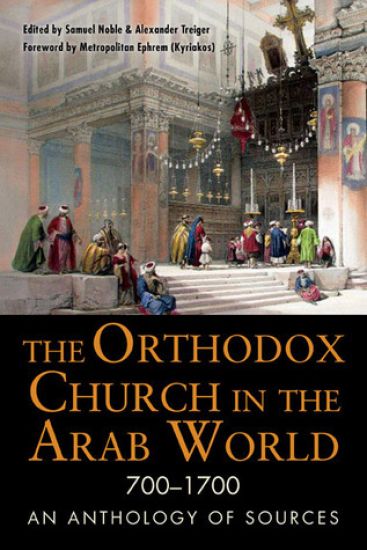
All of the texts chosen for this volume are interesting in their own right, but the collection of these sources into a single volume, with helpful introductions and bibliographies, makes this book an invaluable resource for the study of Arabic Christianity and, indeed, the history of Christianity more broadly. - Hugoye: Journal of Syriac StudiesArabic was among the first languages in which the Gospel was preached. The Book of Acts mentions Arabs as being present at the first Pentecost in Jerusalem, where they heard the Christian message in their native tongue. Christian literature in Arabic is at least 1,300 years old, the oldest surviving texts dating from the 8th century. Pre-modern Arab Christian literature embraces such diverse genres as Arabic translations of the Bible and the Church Fathers, biblical commentaries, lives of the saints, theological and polemical treatises, devotional poetry, philosophy, medicine, and history. Yet in the Western historiography of Christianity, the Arab Christian Middle East is treated only peripherally, if at all. The first of its kind, this anthology makes accessible in English representative selections from major Arab Christian works written between the eighth and eigtheenth centuries. The translations are idiomatic while preserving the character of the original. The popular assumption is that in the wake of the Islamic conquests, Christianity abandoned the Middle East to flourish elsewhere, leaving its original heartland devoid of an indigenous Christian presence. Until now, several of these important texts have remained unpublished or unavailable in English. Translated by leading scholars, these texts represent the major genres of Orthodox literature in Arabic. Noble and Treiger provide an introduction that helps form a comprehensive history of Christians within the Muslim world. The collection marks an important contribution to the history of medieval Christianity and the history of the medieval Near East.
Emanuel Swedenborg (1688-1772) wrote extensively how the New Jerusalem indicated in The Revelation, Chapter 21, should be regarded as a New Church, not a replacement Earth. This church, moreover, has already begun, following reorganization of the spiritual world in the mid 1700s. This spiritual rearrangement is responsible for the new freedoms of thought and politics manifest since that time. Most importantly, Swedenborg's writings have made available many new rational insights into the nature of spirituality and religion. Samuel Noble explains and defends these new doctrines concerning the Second Coming of the Lord, the resurrection, and the last judgement, and relates them the principles of faith and life held by those that now call themselves the New Church. This Church has a new understanding of the Trinity within the Person Of The Lord Jesus Christ, as well as of his Atonement, Sacrifice, and Mediation. He shows how this new framework yields a New Church Doctrine of Life, a Doctrine of Genuine Holiness. This is a new typesetting of the 13th edition of his "Appeal", the first edition of which appeared in 1830.