Kirjojen hintavertailu – 12 903 742 kirjaa ja 27 kauppaa
Kirjailija
Samuel P. Huntington
Kirjat ja teokset yhdessä paikassa: 17 kirjaa, julkaisuja vuosilta 1976–2023, suosituimpiin kuuluu The Clash of Civilizations and the Remaking of World Order. Vertaile teosten hintoja ja tarkista saatavuus suomalaisista kirjakaupoista.
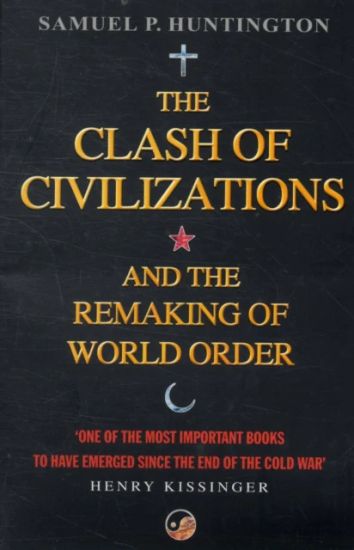
När den amerikanske statsvetaren Samuel Huntingtons artikel Civilisationernas kamp ( The Clash of Civilizations ) publicerades för 30 år sedan uppstod en global debatt. Intresset blev så stort att den utvecklades till en bok. Uppståndelsen berodde på sprängkraften i Huntingtons tes. Världspolitiken var på väg in i en ny era där kulturella konflikter skulle bli de viktigaste. Efter kalla krigets slut väntade en civilisationernas kamp. Budskapet provocerade många som sett framför sig en mer fredlig och harmonisk utveckling efter kommunismens kollaps och demokratins utbredning. Huntingtons resonemang om en värld med konkurrerande kulturkretsar och civilisationer kallades fördomsfullt och okunnigt. Men utvecklingen har stärkt hans tes. Genom terrordåden den 11 september 2001, krigen i Afghanistan och Irak och i forna Jugoslavien började just konflikter mellan kulturer att dominera internationell politik. Det blev än tydligare när Kina och Ryssland alltmer kom in i bilden. Kriget i Ukraina har givit ytterligare aktualitet åt Huntingtons uppfattning att nya konflikter väntar. Debatten om Civilisationernas kamp är långtifrån avslutad. Boken som nu utkommer i ny utgåva, är nödvändig för att förstå vår samtid och framtid. Nyutgåvan har även ett reviderat förord av Svante Nordin, professor emeritus i idé- och lärdomshistoria vid Lunds universitet.

The classic study of post-Cold War international relations, more relevant than ever in the post-9/11 world, with a new foreword by Zbigniew Brzezinski. Since its initial publication, The Clash of Civilizations and the Remaking of World Order has become a classic work of international relations and one of the most influential books ever written about foreign affairs. An insightful and powerful analysis of the forces driving global politics, it is as indispensable to our understanding of American foreign policy today as the day it was published. As former National Security Adviser Zbigniew Brzezinski says in his new foreword to the book, it "has earned a place on the shelf of only about a dozen or so truly enduring works that provide the quintessential insights necessary for a broad understanding of world affairs in our time." Samuel Huntington explains how clashes between civilizations are the greatest threat to world peace but also how an international order based on civilizations is the best safeguard against war. Events since the publication of the book have proved the wisdom of that analysis. The 9/11 attacks and wars in Iraq and Afghanistan have demonstrated the threat of civilizations but have also shown how vital international cross-civilization cooperation is to restoring peace. As ideological distinctions among nations have been replaced by cultural differences, world politics has been reconfigured. Across the globe, new conflicts--and new cooperation--have replaced the old order of the Cold War era. The Clash of Civilizations and the Remaking of World Order explains how the population explosion in Muslim countries and the economic rise of East Asia are changing global politics. These developments challenge Western dominance, promote opposition to supposedly "universal" Western ideals, and intensify intercivilization conflict over such issues as nuclear proliferation, immigration, human rights, and democracy. The Muslim population surge has led to many small wars throughout Eurasia, and the rise of China could lead to a global war of civilizations. Huntington offers a strategy for the West to preserve its unique culture and emphasizes the need for people everywhere to learn to coexist in a complex, multipolar, muliticivilizational world.
De viktigste historiske drivkreftene i øyeblikket er hverken stater eller ideologier, men sivilisasjoner, hevdet Samuel P. Huntington i «Sammenstøt mellom sivilisasjoner?». Huntington hadde rett, og den som vil forstå hvordan verden henger sammen, kommer ikke utenom denne udødelige politiske analysen.
This now-classic examination of the development of viable political institutions in emerging nations is a major and enduring contribution to modern political analysis. In a new Foreword, Francis Fukuyama assesses Huntington’s achievement, examining the context of the book’s original publication as well as its lasting importance.“This pioneering volume, examining as it does the relation between development and stability, is an interesting and exciting addition to the literature.”—American Political Science Review“’Must’ reading for all those interested in comparative politics or in the study of development.”—Dankwart A. Rustow, Journal of International Affairs
In his seminal work The Clash of Civilizations and the Remaking of World Order, Samuel Huntington argued provocatively and presciently that with the end of the cold war, "civilizations" were replacing ideologies as the new fault lines in international politics. Now in his controversial new work, Who Are We?, Huntington focuses on an identity crisis closer to home as he examines the impact other civilizations and their values are having on our own country. America was founded by British settlers who brought with them a distinct culture, says Huntington, including the English language, Protestant values, individualism, religious commitment, and respect for law. The waves of immigrants that later came to the United States gradually accepted these values and assimilated into America's Anglo-Protestant culture. More recently, however, our national identity has been eroded by the problems of assimilating massive numbers of primarily Hispanic immigrants and challenged by issues such as bilingualism, multiculturalism, the devaluation of citizenship, and the "denationalization" of American elites. September 11 brought a revival of American patriotism and a renewal of American identity, but already there are signs that this revival is fading. Huntington argues the need for us to reassert the core values that make us Americans. Timely and thought-provoking, Who Are We? is an important book that is certain to shape our national conversation about who we are.
This stunningly persuasive book examines the persistent, radical gap between the promise of American ideals and the performance of American politics. Samuel P. Huntington shows how Americans, throughout their history as a nation, have been united by the democratic creed of liberty, equality, and hostility to authority. At the same time he reveals how, inevitably, these ideals have been perennially frustrated through the institutions and hierarchies required to carry on the essential functions of governing a democratic society. From this antagonism between the ideals of democracy and the realities of power have risen four great political upheavals in American history. Every third generation, Huntington argues, Americans have tried to reconstruct their institutions to make them more truly reflect deeply rooted national ideals. Moving from the clenched fists and mass demonstrations of the 1960s, to the moral outrage of the Progressive and Jacksonian Eras, back to the creative ideological fervor of the American Revolution, he incisively analyzes the dissenters’ objectives. All, he pungently writes, sought to remove the fundamental disharmony between the reality of government in America and the ideals on which the American nation was founded. Huntington predicts that the tension between ideals and institutions is likely to increase in this country in the future. And he reminds us that the fate of liberty and democracy abroad is intrinsically linked to the strength of our power in world affairs. This brilliant and controversial analysis deserves to rank alongside the works of Tocqueville, Bryce, and Hofstadter and will become a classic commentary on the meaning of America.
Much discussed but poorly understood, globalization is at once praised as the answer to all the world's problems and blamed for everything from pollution to poverty. Here Berger and Huntington bring together an array of experts who paint a subtle and richly shaded portrait, showing both the power and the unexpected consequences of this great force. The stereotypes of globalization--characterized as American imperialism on the one hand, and as an economic panacea on the other--fall apart under close scrutiny. Surveying globalization from individual countries of the five major continents, Many Globalizations shows that an emerging global culture does indeed exist. While globalization is American in origin and content, the authors point out that it is far from a centrally directed force like classic imperialism. They examine the currents that carry this culture, from a worldwide class of young professionals to non-governmental organizations, and define globalization's many variations as well as sub-globalizations that bind regions together. Analytical, incisive and stimulating, Many Globalizations offers rare insight into perhaps the central issue of modern times, one that is changing the West as much as the developing world. "Provocative.... Taken together, the trenchant, well-written essays included in this collection provide indisputable evidence that an identifiable global culture is indeed emerging."--World Policy Journal "Analytical and penetrating, belongs...on the desks of anyone with an abiding interest in the forces shaping the world."--Publishers Weekly
Nicht mehr ideologische oder wirtschaftliche Auseinandersetzungen werden die zukünftige Weltpolitik bestimmen, sondern die Konflikte zwischen den großen Kulturkreisen, so lautet Huntingtons These. Sind die Grenzen zwischen den Kulturen die Fronten der Zukunft? Provokant, spannend und international heftig diskutiert - ein Muss für jeden politisch interessierten Leser! "Es gibt zur Zeit keinen anderen, der so viel Verschiedenes so brillant in einer so originellen Synthese zusammenführen könnte ... Wetzen Sie Ihre intellektuellen Zähne an Huntington. Einen besseren Gegner und Lehrer werden Sie nicht finden." Süddeutsche Zeitung "Ein eminent interessantes Buch ... Viele Phänomene der Gegenwart und wahrscheinlich auch der Zukunft werden auf einleuchtende Weise untersucht und beschrieben." Neue Zürcher Zeitung "Betrachtet man die gegenwärtigen Konflikte, drängt sich Huntingtons Erklärung geradezu auf ... Eine faszinierende Lektüre." FAZ
Prominent scholars and journalists ponder the question of why, at the beginning of the twenty-first century, the world is more divided than ever between the rich and the poor, between those living in freedom and those under oppression.
Between 1974 and 1990 more than thirty countries in southern Europe, Latin America, East Asia, and Eastern Europe shifted from authoritarian to democratic systems of government. This global democratic revolution is probably the most important political trend in the late twentieth century. In The Third Wave, Samuel P. Huntington analyzes the causes and nature of these democratic transitions, evaluates the prospects for stability of the new democracies, and explores the possibility of more countries becoming democratic. The recent transitions, he argues, are the third major wave of democratization in the modem world. Each of the two previous waves was followed by a reverse wave in which some countries shifted back to authoritarian government. Using concrete examples, empirical evidence, and insightful analysis, Huntington provides neither a theory nor a history of the third wave, but an explanation of why and how it occurred. Factors responsible for the democratic trend include the legitimacy dilemmas of authoritarian regimes; economic and social development; the changed role of the Catholic Church; the impact of the United States, the European Community, and the Soviet Union; and the ""snowballing"" phenomenon: change in one country stimulating change in others. Five key elite groups within and outside the nondemocratic regime played roles in shaping the various ways democratization occurred. Compromise was key to all democratizations, and elections and nonviolent tactics also were central. New democracies must deal with the ""torturer problem"" and the ""praetorian problem"" and attempt to develop democratic values and processes. Disillusionment with democracy, Huntington argues, is necessary to consolidating democracy. He concludes the book with an analysis of the political, economic, and cultural factors that will decide whether or not the third wave continues. Several ""Guidelines for Democratizers"" offer specific, practical suggestions for initiating and carrying out reform. Huntington's emphasis on practical application makes this book a valuable tool for anyone engaged in the democratization process. At this volatile time in history, Huntington's assessment of the processes of democratization is indispensable to understanding the future of democracy in the world.
This collection, marking the 25th anniversary of Harvard's Center for International Affairs, represents central issues for research in international affairs during this decade. Some issues carry over from themes that have been central to the Center's research programs since its founding; other issues represent the evolution of new areas of interest and concern.
At the request of the President of Harvard University, six Harvard scholars have joined forces to write a book that lays out the facts about nuclear weapons for all concerned citizens who want to think through the nuclear dilemma for themselves. Living with Nuclear Weapons is written by specialists for the general reader. It conveys crucial information clearly, concisely, and without technical jargon. Living with Nuclear Weapons presents all sides of the nuclear debate while explaining what everyone needs to know to develop informed and reasoned opinions about the issues. Among the specifics are a history of nuclear weaponry; an examination of current nuclear arsenals; scenarios of how a nuclear war might begin; a discussion of what can be done to promote arms control and disarmament; a study of the hazards of nuclear proliferation; an analysis of various nuclear strategies; and an explanation of how public opinion can influence policy on the nuclear arms question.
In a classic work, Samuel P. Huntington challenges most of the old assumptions and ideas on the role of the military in society. Stressing the value of the military outlook for American national policy, Huntington has performed the distinctive task of developing a general theory of civil–military relations and subjecting it to rigorous historical analysis. Part One presents the general theory of the "military profession," the "military mind," and civilian control. Huntington analyzes the rise of the military profession in western Europe in the eighteenth and nineteenth centuries, and compares the civil–military relations of Germany and Japan between 1870 and 1945. Part Two describes the two environmental constants of American civil–military relations, our liberal values and our conservative constitution, and then analyzes the evolution of American civil–military relations from 1789 down to 1940, focusing upon the emergence of the American military profession and the impact upon it of intellectual and political currents. Huntington describes the revolution in American civil–military relations which took place during World War II when the military emerged from their shell, assumed the leadership of the war, and adopted the attitudes of a liberal society. Part Three continues with an analysis of the problems of American civil–military relations in the era of World War II and the Korean War: the political roles of the Joint Chiefs of Staff, the difference in civil–military relations between the Truman and Eisenhower administrations, the role of Congress, and the organization and functioning of the Department of Defense. Huntington concludes that Americans should reassess their liberal values on the basis of a new understanding of the conservative realism of the professional military men.