Kirjojen hintavertailu – 12 903 725 kirjaa ja 27 kauppaa

Kirjailija

Samuel Smiles

Kirjat ja teokset yhdessä paikassa: 411 kirjaa, julkaisuja vuosilta 1866–2026, suosituimpiin kuuluu Jasmin. Vertaile teosten hintoja ja tarkista saatavuus suomalaisista kirjakaupoista.

411 kirjaa

Kirjojen julkaisuvuodet: 1866–2026.

The Huguenots in France

The Huguenots in France

Samuel Smiles

Createspace Independent Publishing Platform
2014
nidottu
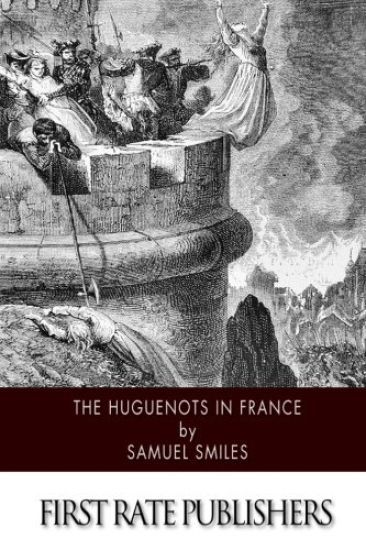
This is a history of the Huguenots, persecuted Christians who underwent a turbulent time in France. From the preface: "Though the greatest number of Huguenots banished from France at the Revocation of the Edict of Nantes were merchants and manufacturers, who transferred their skill and arts to England, which was not then a manufacturing country; a large number of nobles and gentry emigrated to this and other countries, leaving their possessions to be confiscated by the French king. The greater number of the nobles entered the armies of the countries in which they took refuge. In Holland, they joined the army of the Prince of Orange, afterwards William III., King of England. After driving the armies of Louis XIV. out of Ireland, they met the French at Ramilies, Blenheim, and Malplacquet, and other battles in the Low Countries. A Huguenot engineer directed the operations at the siege of Namur, which ended in its capture. Another conducted the siege of Lille, which was also taken. But perhaps the greatest number of Huguenot nobles entered the Prussian service. Their descendants revisited France on more than one occasion. They overran the northern and eastern parts of France in 1814 and 1815; and last of all they vanquished the descendants of their former persecutors at Sedan in 1870. Sedan was, prior to the Revocation of the Edict of Nantes, the renowned seat of Protestant learning; while now it is known as the scene of the greatest military catastrophe which has occurred in modern history. The Prime Minister of France, M. Jules Simon, not long ago recorded the fateful effects of Louis XIV.'s religious intolerance. In discussing the perpetual ecclesiastical questions which still disturb France, he recalled the fact that not less than eighty of the German staff in the late war were representatives of Protestant families, driven from France by the Revocation of the Edict of Nantes. The first of the appended memoirs is that of Samuel de P chels, a noble of Languedoc, who, after enduring great privations, reached England through Jamaica, and served as a lieutenant in Ireland under William III. Many of his descendants have been distinguished soldiers in the service of England. The second is Captain Rapin, who served faithfully in Ireland, and was called away to be tutor to the young Duke of Portland. He afterwards spent his time at Wesel on the Rhine, where he wrote his "History of England." The third is Captain Riou, "the gallant and the good," who was killed at the battle of Copenhagen. These memoirs might be multiplied to any extent; but those given are enough to show the good work which the Huguenots and their descendants have done in the service of England."

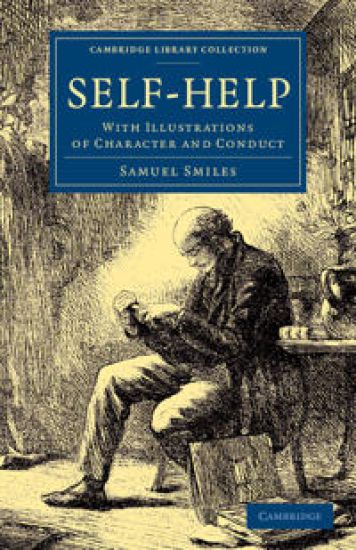
Self-Help

Self-Help

Samuel Smiles

Cambridge University Press
2014
pokkari
One of the most popular and prolific writers during the Victorian age, Samuel Smiles (1812–1904) emphasised individual responsibility in the pursuit of personal and social improvement. Among other titles, his acclaimed Lives of the Engineers (1861–2) and insightful Autobiography (1905) are also reissued in the Cambridge Library Collection. He is best known, however, for the present work. First published in 1859, it sold 20,000 copies in its first year, more than a quarter of a million by 1905, and was widely translated. Using hundreds of biographical examples, ranging from George Stephenson to Josiah Wedgwood, Smiles champions the virtues of hard work, perseverance and character in achieving success. While these values appealed to a large readership in the book's heyday, later critics saw the work as promoting a form of selfish materialism. However interpreted, this remains a crucial text for those fascinated by the Victorian drive for self-improvement.
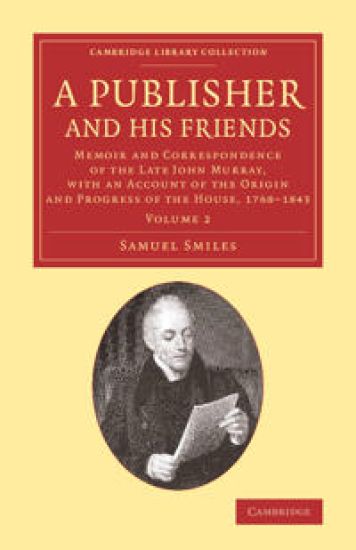
A Publisher and his Friends

A Publisher and his Friends

Samuel Smiles

Cambridge University Press
2014
pokkari
This two-volume account of the life and friendships of the publisher John Murray (1778–1843), told largely through his voluminous correspondence, was published in 1891 by Samuel Smiles (1812–1904), whose Lives of the Engineers, Self-Help, and other works are also reissued in the Cambridge Library Collection. Murray was only fifteen when his father, the founder of the famous firm, died, but after a period of apprenticeship he took sole control of the business, becoming the friend as well as the publisher of a range of the most important writers of the first half of the nineteenth century, in both literature and science. Perhaps his most famous author was Lord Byron, whose memoir of his own life, considered unpublishable, was burned in the fireplace at Murray's office in Albemarle Street, London. Volume 2 describes innovations including the famous travel guides, and ends with an assessment of Murray's publishing career.
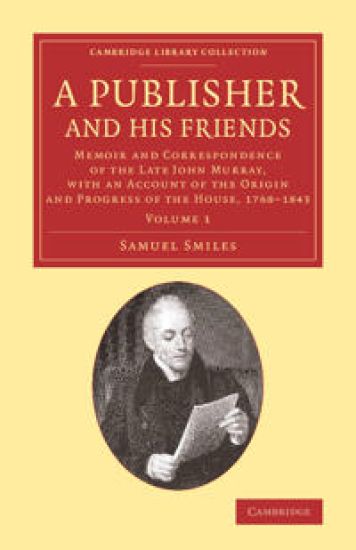
A Publisher and his Friends: Volume 1

A Publisher and his Friends: Volume 1

Samuel Smiles

Cambridge University Press
2014
pokkari
This two-volume account of the life and friendships of the publisher John Murray (1778–1843), told largely through his voluminous correspondence, was published in 1891 by Samuel Smiles (1812–1904), whose Lives of the Engineers, Self-Help, and other works are also reissued in the Cambridge Library Collection. Murray was only fifteen when his father, the founder of the famous firm, died, but after a period of apprenticeship he took sole control of the business, becoming the friend as well as the publisher of a range of the most important writers of the first half of the nineteenth century, in both literature and science. Perhaps his most famous author was Lord Byron, whose memoir of his own life, considered unpublishable, was burned in the fireplace at Murray's office in Albemarle Street, London. Volume 1 commences with the beginnings of the firm in Scotland, and takes the story up to 1818.
Industrial Biography: Iron Workers and Tool Makers

Industrial Biography: Iron Workers and Tool Makers

Samuel Smiles

Literary Licensing, LLC
2014
sidottu
""Industrial Biography: Iron Workers and Tool Makers"" by Samuel Smiles is a comprehensive account of the lives and achievements of some of the most important figures in the ironworking and tool-making industries in the 19th century. In this book, Smiles profiles the lives of several key individuals, including John Wilkinson, Henry Maudslay, James Nasmyth, and Joseph Whitworth, among others. He explores their backgrounds, education, and early careers, as well as their contributions to the development of new technologies and manufacturing processes. Smiles also provides insight into the social and economic conditions of the time, and how these factors influenced the growth and success of the ironworking and tool-making industries. Overall, ""Industrial Biography"" is a fascinating and informative read for anyone interested in the history of industry and technology, as well as the lives of some of the most innovative and influential figures of the 19th century. This Is A New Release Of The Original 1883 Edition. This scarce antiquarian book is a facsimile reprint of the old original and may contain some imperfections such as library marks and notations. Because we believe this work is culturally important, we have made it available as part of our commitment for protecting, preserving, and promoting the world's literature in affordable, high quality, modern editions, that are true to their original work.
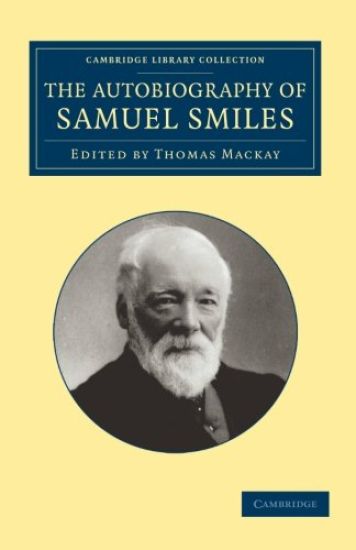
The Autobiography of Samuel Smiles, LL.D.

The Autobiography of Samuel Smiles, LL.D.

Samuel Smiles

Cambridge University Press
2013
pokkari
One of the most popular Victorian writers, Samuel Smiles (1812–1904) made his name in 1859 with the original self-improvement manual Self-Help. His highly successful multi-volume Lives of the Engineers (also reissued in this series) contained biographies of men who had, like him, achieved greatness not through privilege but through hard work. Left incomplete at his death, edited by the social theorist Thomas Mackay (1849–1912) and first published in 1905, his autobiography opens with a vivid description of the Scottish garrison town of his birth during the Napoleonic wars. In his later years he was a vocal supporter of state education, and the value of education was a constant theme throughout his life. He remembers his schooldays here with clarity, writing that 'a good education is equivalent to a good fortune'. Straightforward and unpretentious, this book will be of interest to historians and readers fascinated by the Victorian drive for self-improvement.