Kirjojen hintavertailu – 12 859 818 kirjaa ja 27 kauppaa
Kirjailija
Samuel Taylor Coleridge
Kirjat ja teokset yhdessä paikassa: 550 kirjaa, julkaisuja vuosilta 1927–2026, suosituimpiin kuuluu The Notebooks of Samuel Taylor Coleridge, Volume 4. Vertaile teosten hintoja ja tarkista saatavuus suomalaisista kirjakaupoista.
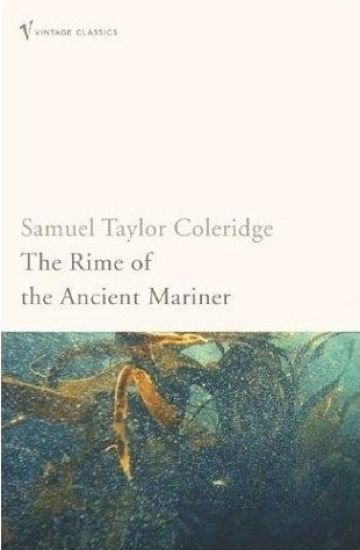
With an introduction by Marina WarnerColeridge's celebrated poem was written at the suggestion of William Wordsworth in the early days of their friendship, and published for the first time in 1798.
A new and original edition of Coleridge’s famous poem, with an introduction by Adrian Blamires, is brought to life with Peter Hay’s printing and Pip Hall’s hand-lettering – this ‘miracle of rare device’, these ‘sinuous rills’. In Xanadu did Kubla KhanA stately pleasure-dome decree:Where Alph, the sacred river, ranThrough caverns measureless to manDown to a sunless sea.
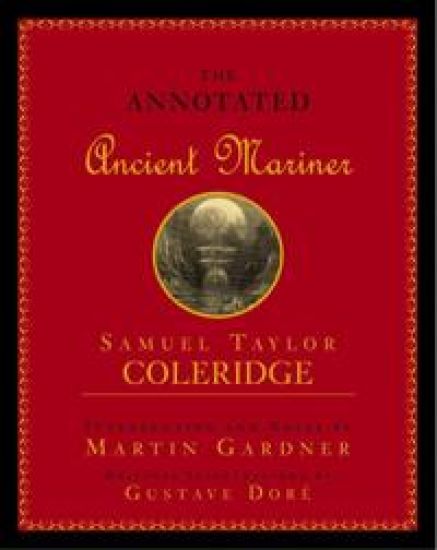
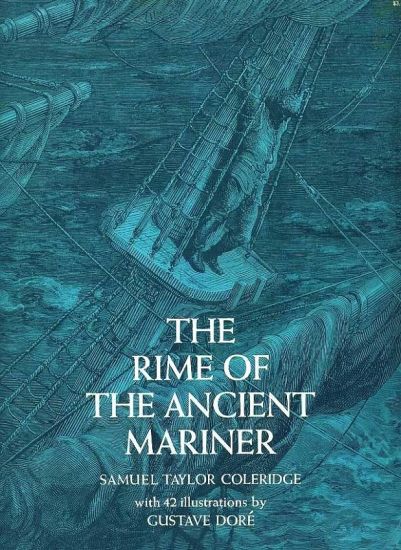
Coleridge's greatest work, The Rime of the Ancient Mariner, is utterly unique, unlike any other ballad. No narrative poem has rivaled it in combining scenes of terror with scenes of incomparable beauty. Although enormously popular in the nineteenth century, it is seldom read or studied today. This annotated version by Martin Gardner will help to renew the appreciation and deepen the understanding of Coleridge's unjustly neglected masterpiece. Preceding the poem is a biographical sketch of the great poet, which emphasizes those aspects of his many-sided life and personality that have the strongest bearing on the poem, especially on circumstances surrounding its composition. Both the 1798 and 1834 versions of the poem are presented, with notes on words, lines, and stanzas that Coleridge later excised. Following the poem, Gardner summarizes major critical attitudes toward the ballad, discusses possible higher levels of meaning, and closes with questions concerning the poem's much-debated moral. Many artists have illustrated the Rime, but none as skillfully as Gustave Dore. He was far and away the most popular and prolific book illustrator of all time, and though his work has been out of fashion for some time, it is becoming harder and harder to dismiss him as a mere yeoman illustrator. Here is your chance to read, or reread, Coleridge's classic Rime, to fully understand it, and to relish Dore's magnificent illustrations.
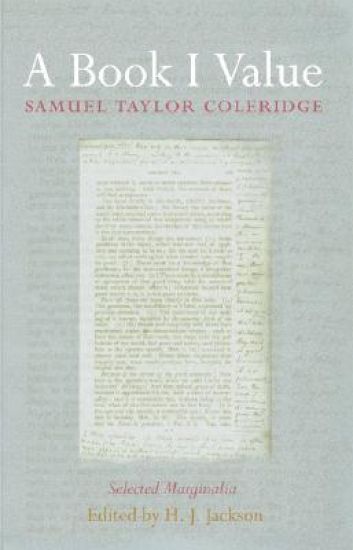
Coleridge is such a celebrity that many who have never read "The Rime of the Ancient Mariner" have a fair idea who he was, and yet the common impression of him is not flattering. He is typically seen as a youthful genius transformed by drugs and philosophy into a tedious sage. It is time for a change of image. A Book I Value offers a one-volume sampling of Coleridge's encyclopedic marginalia, revealing a figure more complex but also more humanly attractive--clever, curious, playful, intense--than the one we are used to. This book makes a convenient introduction to Coleridge's life, the intellectual issues and contemporary concerns that held his attention, and the workings of his mind. The marginalia represent an unintimidating sort of writing that Coleridge famously excelled at (often in books borrowed from friends). "A book, I value," he wrote, "I reason & quarrel with as with myself when I am reasoning." Unlike the complete Marginalia in six volumes arranged alphabetically by author, this representative selection is chronological and footnote-free, with a contextualizing introduction and brief headnotes that outline Coleridge's circumstances year by year and provide essential historical information. Our own cultural taboo against writing in books is slackening in light of new interest in the history of the book. It will be weakened further by the extraordinary and now accessible example of Coleridge, who was a remarkably shrewd but at the same time a remarkably charitable reader.
His writings are wide-ranging in form and content, and vast in number. Norton’s long-awaited edition is the most comprehensive and user-friendly student edition available. Supporting apparatus includes detailed headnotes, footnotes (both Coleridge’s and the editors’), biographical register, glossary, and an index of poems and first lines. "Criticism" includes twenty assessments of Coleridge’s poetry and prose by British and American authors. A Chronology and Selected Bibliography are also included.
The Opus Maximum gathers the last major body of unpublished prose writings by Samuel Taylor Coleridge. Consisting primarily of fragments dictated to Joseph Henry Green, probably between 1819 and 1823, these writings represent all that exists of what Coleridge considered to be "the principal Labour" and "the great Object" of his life, which he called variously the Logosophia and Magnum Opus. Dedicated to "the reconcilement of the moral faith with the Reason," Coleridge's envisioned Magnum Opus was supposed to "reduce all knowledges into harmony." While such a synthesis finally eluded him, and the Magnum Opus remained unfinished, the surviving fragments nonetheless bear powerful witness to Coleridge's engagement with theology, moral philosophy, natural philosophy, and logic, among other disciplines. Among the subjects that will particularly interest readers are Coleridge's criticisms of Epicureanism, pantheism, and German Naturphilosophie; his attempt to ground reason in faith; and his reflections on personhood (especially in the relationship between mother and child), on will, on language, and on the Logos. Previously unknown to all but a handful of scholars, the manuscripts presented here provide valuable insight into a crucial period of Coleridge's intellectual development, as he became increasingly dissatisfied with Naturphilosophie and struggled to affirm Trinitarian Christianity on a rational basis. With this volume, The Collected Works of Samuel Taylor Coleridge, begun forty years ago under the sponsorship of the Bollingen Foundation and the editorship of the late Kathleen Coburn, is now complete.
This final volume of Bollingen Series L covers the material Coleridge wrote in his notebooks between January 1827 and his death in 1834. In these years, Coleridge made use of the notebooks for his most sustained and far-reaching inquiries, very little of which resulted in publication in any form during his lifetime. Twenty-eight notebooks are here published in their entirety for the first time; entries dated 1827 or later from several more notebooks also appear in this volume. Following previous practice for the edition, notes appear in a companion volume. Coleridge's intellectual interests were wide, encompassing not only literature and philosophy but the political crises of his time, scientific and medical breakthroughs, and contemporary developments in psychology, archaeology, philology, biblical criticism, and the visual arts. In these years, he met and conversed with eminent writers, scholars, scientists, churchmen, politicians, physicians, and artists. He planned a major work on Logic (still unpublished at his death), and an outline of Christian doctrine, also unfinished, though his work toward this project contributed to On the Constitution of the Church and State (1830) and the revised Aids to Reflection (1831). The reader of these notebooks has the opportunity to see what one of the most admired minds of the English-speaking world thought on several issues--such as race and empire, science and medicine, democracy (particularly in reaction to the Reform Bills introduced in 1831 and 1832), and the authority of the Bible--when he wrote without fear of public disapprobation or controversy.
In his introduction to this edition of Coleridge's Marginalia, the late George Whalley wrote, "There is no body of marginalia--in English, or perhaps in any other language--comparable with Coleridge's in range and variety and in the sensitiveness, scope, and depth of his reaction to what he was reading." The Princeton edition of the Marginalia, of which this is the sixth volume, brings together over eight thousand notes, many never before printed, varying from a single word to substantial essays. In alphabetical order of authors, the notes are presented literatim from the original manuscripts whenever the annotated volumes can be found. Each note is preceded by the passage of the original text that appears to have provoked Coleridge's comment. Texts in foreign languages are followed by translations. The present volume comprises annotations on more than fifty books and manuscripts (from Valckenaer to Zwick, plus Addenda), including comments on Wordsworth's "Benjamin the Waggoner," "The Prelude," and "Translation of Virgil's Aeneid," as well as on William Godwins's verse drama "Abbas." A key-word index to the six volumes of Marginalia, provided here, will give readers ready access to Coleridge's ideas on subjects ranging from literature and philosophy through religion, politics, history, biography, and science.
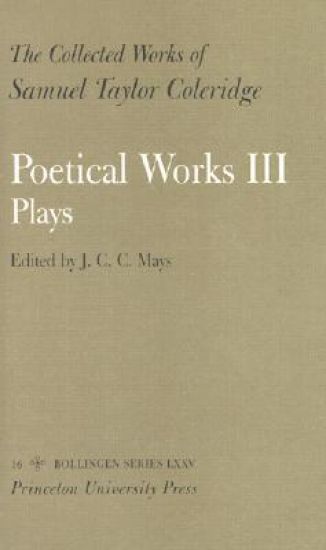
Poetry in its many guises is at the center of Coleridge's multifarious interests, and this long-awaited new edition of his complete poetical works marks the pinnacle of the Bollingen Collected Coleridge. The three parts of Volume 16 confirm and expand the sense of the Coleridge who has emerged over the past half-century, with implications for English Romantic writing as a whole. Setting new standards of comprehensiveness in the presentation of Romantic texts, they will interest historians and editorial theorists, as well as readers and students of poetry. They represent a work of truly monumental importance. Coleridge's plays form a vital part of his poetic achievement. This part covers all of them--twelve altogether, including collaborations, adaptations, and plays left unrevised or in note form. It considers his drama translations as well. Coleridge's practical engagement with theater over a span of twenty years influenced his approach to other, lyric forms as well as, for example, his assessments of Shakespeare and of public taste. As in the first and second parts, all known manuscript, printed, and annotated versions have been collated to produce reading texts, and much new information, historical as well as textual, is presented in the commentary. The index covers proper names and prominent themes and features of all three parts. The presentation of four plays is of particular interest. Coleridge's translations of Schiller's Piccolomini and Death of Wallenstein are accompanied by facing texts of the German originals (the first reconstructed by Joyce Crick, the second from a manuscript authorized by Schiller himself) so that, for the first time, Coleridge's practice as translator can be properly assessed. Secondly, Remorse is presented in stage and printed-text versions; the former demonstrates how Coleridge's play evolved in the course of the rehearsal process and during performance, how it was received and how it enjoyed an afterlife in contemporary theatres, whereas the printed-text version developed quite differently. This authoritative volume offers a revealing and comprehensive portrait of Coleridge's work in the dramatic form.
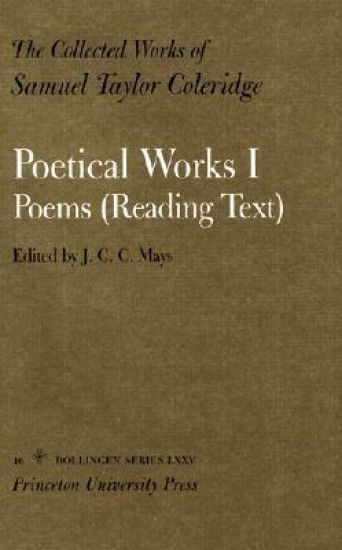
Poetry in its many guises is at the center of Coleridge's multifarious interests, and this long-awaited new edition of his complete poetical works marks the pinnacle of the Bollingen Collected Coleridge. The three parts of Volume 16 confirm and expand the sense of the Coleridge who has emerged over the past half-century, with implications for English Romantic writing as a whole. Setting new standards of comprehensiveness in the presentation of Romantic texts, they will interest historians and editorial theorists, as well as readers and students of poetry. They represent a work of truly monumental importance. The first part presents the reading texts of 706 poems in chronological sequence. Its blend of newly discovered and newly collected poems, presented in light of all known evidence and where practicable in unrevised forms, offers a fresh and original Coleridge: less inhibited by Victorian ideas about what poetry should be, moving easily and productively between genres and levels of seriousness. In texts that remained fluid and exploratory to the end, Coleridge alternates between lyric and satire, prophecy and conversation, symbol and allegory. Each poem is accompanied by a headnote and commentary that together provide its historical-biographical context and offer key textual variants. The book opens with an introduction and chronological tables. The three appendixes position individual poems in the contexts in which they appeared during Coleridge's lifetime. Illustrations such as contemporary scenes and portraits bring this rich collection, like the companion volumes, all the more to life.
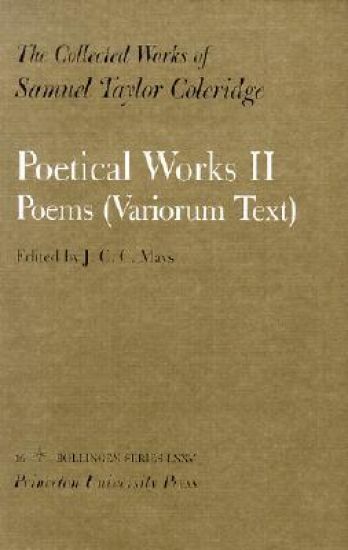
Poetry in its many guises is at the center of Coleridge's multifarious interests, and this long-awaited new edition of his complete poetical works marks the pinnacle of the Bollingen Collected Coleridge. The three parts of Volume 16 confirm and expand the sense of the Coleridge who has emerged over the past half-century, with implications for English Romantic writing as a whole. Setting new standards of comprehensiveness in the presentation of Romantic texts, they will interest historians and editorial theorists, as well as readers and students of poetry. They represent a work of truly monumental importance. The second part presents the same 706 poems as the first, in the same chronological sequence, but differently records in each case all known textual information in collated form--allowing for alternative construals of the reading texts. An additional 135 items are inserted into the same sequence, comprising poems mistakenly ascribed to Coleridge or of dubious authenticity and poems that remained only in the planning stage or that are referred to but have not been recovered. The index of titles and first lines incorporates the full range of variants. All told, the Collected Coleridge variorum sequence collates over a third more additional texts--in more detailed and accurate form--than those found in the previous standard edition, by E. H. Coleridge. The presentation method in this second part will interest editorial theorists as well as those interested primarily in Coleridge and/or the making of poetry. The unusually detailed textual information also reveals changes in such areas as linguistic and grammatical usage, patterns of transcription and circulation among anthologists, and contemporary publishers' house styles.
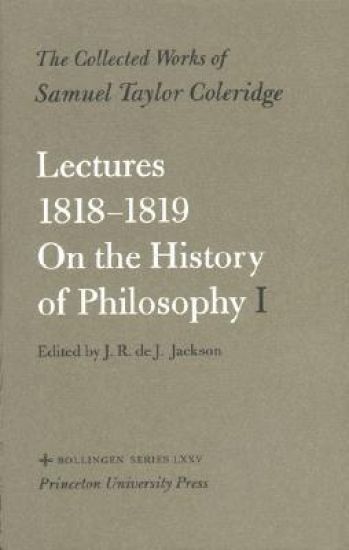
During the winter of 1818-1819, Samuel Taylor Coleridge gave fourteen lectures on the history of philosophy. A shorthand writer took down twelve of them in the most detailed version of Coleridge's lectures known to exist. The transcriptions are imperfect and inaccurate in various ways, but, when they are combined with Coleridge's own notes, as in this edition, the result is a coherent and largely complete whole. The lectures contain Coleridge's interpretation of the history of philosophy. He opposed the idea, widely accepted at the time, that the philosophy of the Enlightenment had advanced by conquering religion. He believed that this view had doomed philosophy to the low esteem in which it was held in Britain, and he wanted to counter it by showing that the philosophy of the Enlightenment was largely derivative and that neither philosophy nor religion could stand alone. This series of lectures was his most systematic attempt to survey the relationship of philosophy to religion from Thales to Kant. The edition presents a fully annotated and indexed text of the lecture series, and it provides in addition the complete texts of the shorthand reports and of Coleridge's own notes (which were omitted from the Coleridge Notebooks), along with newspaper and manuscript reports by people who attended the lectures. The volume includes an appendix by Owen Barfield, which is drawn from his incomplete manuscript edition of the lectures.
Gustave Dore's magnificent engravings for The Rime of the Ancient Mariner are among the later works of the great French illustrator. The intensely evocative poem provided Dore with the long-awaited opportunity to convey limitless space on a gigantic scale, and he exploited the poem's fantastic range of atmosphere to the limits of its possibilities. The terrifying space of the open sea, the storms and whirlpools of an unknown ocean, the vast icy caverns of Antarctica, the hot equatorial sea swarming with monsters, all of the amazing visual elements that make Coleridge's masterpiece one of the most exciting and most memorable poems in the English language are unforgettably engraved in Dore's plates. This edition reproduces all of the plates to perfection, in their original size. The illustrations and the text of the poem appear on facing pages, so that the imaginative kinship of Dore and Coleridge is delightfully evident on every page: the illustrations capture all the moods of the poem in their full intensity, bringing the images evoked by the words into clear visual focus. Unabridged and slightly rearranged republication of the 1878 American edition. Text slightly amended to conform to the authoritative 1834 edition of the poem.
Great title poem plus "Kubla Khan," "Christabel," 20 other sonnets, lyrics, odes: "Sonnet: To a Friend who asked how I felt when the Nurse first presented my Infant to me," "Frost at Midnight," "The Nightingale," "The Pains of Sleep," "To William Wordsworth," "Youth and Age," many more. Alphabetical lists of titles and first lines.
In his introduction to this edition of Coleridge's Marginalia, the late George Whalley wrote, "There is no body of marginalia--in English, or perhaps in any other language--comparable with Coleridge's in range and variety and in the sensitiveness, scope, and depth of his reaction to what he was reading." The Princeton edition of the Marginalia, of which this is the fifth volume, will bring together over eight thousand notes, many never before printed, varying from a single word to substantial essays. In alphabetical order of authors, the notes are presented literatim from the original manuscripts whenever the annotated volumes can be found. Each note is preceded by the passage of the original text that appears to have provoked Coleridge's comment. Texts in foreign languages are followed by translations. The present volume comprises annotations on more than sixty books (from Sherlock to "Unidentified"), including well-known works by Sir Philip Sidney, Southey, Spinoza, Swift, and Tennyson. There are extensive notes on texts by Heinrich Steffens, Emanuel Swedenborg, and Jeremy Taylor; on two histories of philosophy by Thomas Stanley and W. G. Tennemann; and also on the writings of St. Teresa of Avila. The subjects addressed range from literature and philosophy through religion, politics, history, and biography, to travel-writing and science.