Kirjojen hintavertailu – 12 903 724 kirjaa ja 27 kauppaa

Kirjailija

Sander Griffioen

Kirjat ja teokset yhdessä paikassa: 5 kirjaa, julkaisuja vuosilta 1992–1998, suosituimpiin kuuluu Bringing Into Captivity Every Thought. Vertaile teosten hintoja ja tarkista saatavuus suomalaisista kirjakaupoista.

5 kirjaa

Kirjojen julkaisuvuodet: 1992–1998.

Geography and Worldview

Geography and Worldview

Henk Aay; Sander Griffioen

University Press of America
1998
sidottu
Co-published with the Calvin Center for Christian Scholarship (CLC), Geography and Worldview contains eight essays on the theme of geography and Christian worldview based on papers presented at a conference held at Calvin College in August 1996. The essays included are grouped to show the distinction between two approaches to Christian Scholarship. The first approach looks at the discipline of geography itself, and explores the work of geographers to determine their implicit beliefs about the world. For example, an essay by David Livingstone lays bare the persistent relevance of assumptions once derived from natural theology, and essays by David Ley, Iain Wallace and Janel Curry-Roper analyze the breakdown of postitivism and postmodernism in the current worldview in geography. The second approach begins outside geography and asks what consequences geographers' basic beliefs or fundamental notions have for geographic scholarship. Here, Gerda Hoekveld-Meijer explores the significance of externality fields and borders for geography, Gerard Hoekveld looks at the implications of a biblical understanding of citizenship on geography, and Henk Aay presents the impact of neo-Calvinism on geographic education in the Netherlands. Includes two maps.
Geography and Worldview

Geography and Worldview

Henk Aay; Sander Griffioen

University Press of America
1998
nidottu
Co-published with the Calvin Center for Christian Scholarship (CLC), Geography and Worldview contains eight essays on the theme of geography and Christian worldview based on papers presented at a conference held at Calvin College in August 1996. The essays included are grouped to show the distinction between two approaches to Christian Scholarship. The first approach looks at the discipline of geography itself, and explores the work of geographers to determine their implicit beliefs about the world. For example, an essay by David Livingstone lays bare the persistent relevance of assumptions once derived from natural theology, and essays by David Ley, Iain Wallace and Janel Curry-Roper analyze the breakdown of postitivism and postmodernism in the current worldview in geography. The second approach begins outside geography and asks what consequences geographers' basic beliefs or fundamental notions have for geographic scholarship. Here, Gerda Hoekveld-Meijer explores the significance of externality fields and borders for geography, Gerard Hoekveld looks at the implications of a biblical understanding of citizenship on geography, and Henk Aay presents the impact of neo-Calvinism on geographic education in the Netherlands. Includes two maps.
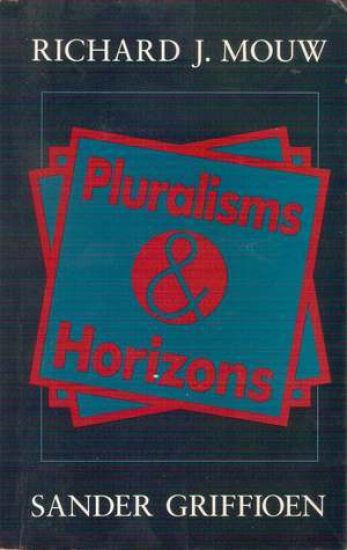
Pluralisms and Horizons: An Essay in Christian Public Philosophy

Pluralisms and Horizons: An Essay in Christian Public Philosophy

Richard J. Mouw; Sander Griffioen

William B. Eerdmans Publishing Company
1993
nidottu
How should Christians respond to pluralism in public life? Christians have often clashed with the pluralism that characterizes life in modern America. In this classic essay in political philosophy, Richard J. Mouw and Sander Griffioen show how Christians can engage with pluralism productively. Thoroughly engaging with leading voices in the debate, Mouw and Griffioen wrestle with pluralism and its consequences for Christian public life. Ultimately, the authors endorse cooperation and tolerance, without sliding into moral relativism. Christian readers will find their carefully reasoned argument a compelling solution toward promoting the common good.
Bringing Into Captivity Every Thought

Bringing Into Captivity Every Thought

Jacob Klapwijk; Sander Griffioen; Gerben Groenewoud

University Press of America
1992
sidottu
What Clement of Alexandria, Calvin of Geneva and Gutierrez of Peru, and all the other thinkers discussed in this book have in common is at least this: they all bear witness to their struggle with the relation between Christian faith and non-Christian thought. This relation is the theme of the collection of essays presented here by way of case studies. The struggle of the early church with the philosophy of the late antiquity was one of life and death. Faced with a despising Greco-Roman elite, Christians were forced to take a stand with respect to the Greek mind very existentially. As Christianity gained influence in the highly developed intellectual culture of the Roman Empire, the church wavered between acceptance and rejection of that culture. Such hesitance between antithesis and synthesis also marked the church in the Middle Ages. The tensions left a wide track of power struggles. How did Christians throughout the ages, actually find their way through the tension-fraught terrain of faith and culture? The issue far surpasses mere academic or historical interest: we ourselves are involved, and we are unable not to choose. This book is one of the results of the research and discussions of an interdisciplinary team at the Free University of Amsterdam. Co-published with the Institute for Christian Studies.
Bringing Into Captivity Every Thought

Bringing Into Captivity Every Thought

Jacob Klapwijk; Sander Griffioen; Gerben Groenewoud

University Press of America
1992
nidottu
What Clement of Alexandria, Calvin of Geneva and Gutierrez of Peru, and all the other thinkers discussed in this book have in common is at least this: they all bear witness to their struggle with the relation between Christian faith and non-Christian thought. This relation is the theme of the collection of essays presented here by way of case studies. The struggle of the early church with the philosophy of the late antiquity was one of life and death. Faced with a despising Greco-Roman elite, Christians were forced to take a stand with respect to the Greek mind very existentially. As Christianity gained influence in the highly developed intellectual culture of the Roman Empire, the church wavered between acceptance and rejection of that culture. Such hesitance between antithesis and synthesis also marked the church in the Middle Ages. The tensions left a wide track of power struggles. How did Christians throughout the ages, actually find their way through the tension-fraught terrain of faith and culture? The issue far surpasses mere academic or historical interest: we ourselves are involved, and we are unable not to choose. This book is one of the results of the research and discussions of an interdisciplinary team at the Free University of Amsterdam. Co-published with the Institute for Christian Studies.