Kirjailija
Sandor Ferenczi
Kirjat ja teokset yhdessä paikassa: 34 kirjaa, julkaisuja vuosilta 1916–2025, suosituimpiin kuuluu The Problem of Lay-Analyses. Vertaile teosten hintoja ja tarkista saatavuus suomalaisista kirjakaupoista.
Nimi esiintyy myös muodoissa: Sándor Ferenczi
34 kirjaa
Kirjojen julkaisuvuodet: 1916–2025.
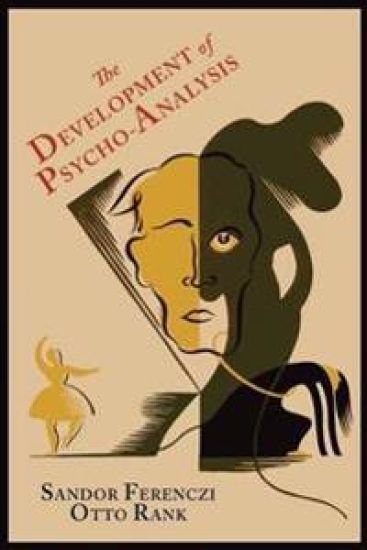




Further Contributions To The Theory And Technique Of Psychoanalysis
Sandor Ferenczi
READ BOOKS
2008
sidottu

Further Contributions To The Theory And Technique Of Psychoanalysis
Sandor Ferenczi
Read Books
2007
pokkari

The Development of Psychoanalysis
Sandor Ferenczi; Otto Rank; Caroline (TRN) Newton
Kessinger Pub
2006
pokkari
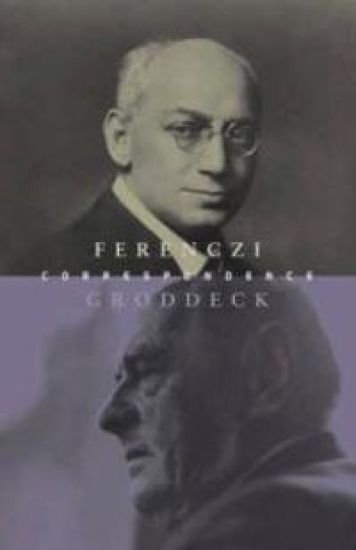
Ferenczi-Groddeck Letters, 1921-1933
Sandor Ferenczi; Georg Groddeck
Open Gate Press
2002
pokkari
Halvin toimitettuna 30,70 €
A volume of the correspondence between Ferenczi and Grodeck, two psychoanalysts within the circle of Sigmund Freud. The letters bear witness to the friendship between the two men and reflect the history of psychoanalysis.
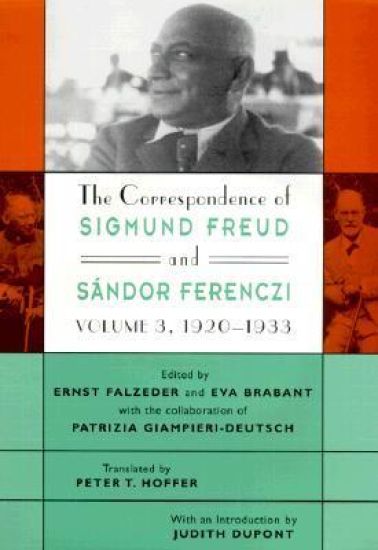
The Correspondence of Sigmund Freud and Sándor Ferenczi
Sigmund Freud; Sándor Ferenczi
The Belknap Press
2000
sidottu
This third and final volume of the correspondence between the founder of psychoanalysis and one of his most colorful disciples brings to a close Sándor Ferenczi's life and the story of one of the most important friendships in the history of psychoanalysis. This volume spans a turbulent period, beginning with the controversy over Otto Rank's The Trauma of Birth and continuing through Ferenczi's lectures in New York and his involvement in a bitter controversy with American analysts over the practice of lay analysis. On his return from America, Ferenczi's relationship with Freud deteriorated, as Freud became increasingly critical of his theoretical and clinical innovations. Their troubled friendship was further complicated by ill health--Freud's cancer of the jaw and the pernicious anemia that finally killed Ferenczi in 1933. The controversies between Freud and Ferenczi continue to this day, as psychoanalysts reassess Ferenczi's innovations, and increasingly challenge the allegations of mental illness leveled against him after his death by Freud and Ernest Jones. The correspondence, now published in its entirety, will deepen understanding of these issues and of the history of psychoanalysis as a whole.
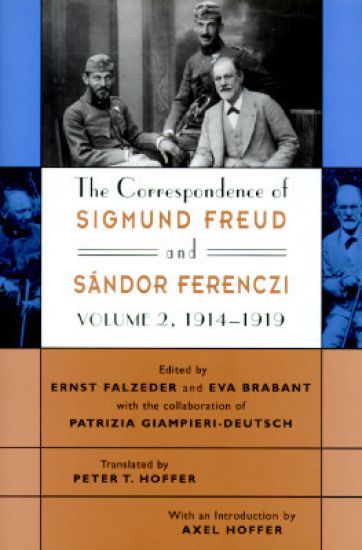
The Correspondence of Sigmund Freud and Sándor Ferenczi
Sigmund Freud; Sándor Ferenczi
Harvard University Press
1996
sidottu
Volume I of the three-volume Freud-Ferenczi correspondence closes with Freud's letter from Vienna, dated June 28, 1914, to his younger colleague in Budapest: "I am writing under the impression of the surprising murder in Sarajevo, the consequences of which cannot be foreseen!' "Now," he continues in a more familiar vein, "to our affairs!" The nation-shattering events of World War I form a somber canvas for "our affairs" and the exchanges of the two correspondents in volume 2 (July 1914 through December 1919). Uncertainty pervades these letters: Will Ferenczi be called up? Will food and fuel-and cigar-shortages continue? Will Freud's three enlisted sons and son-in-law come through the war intact? And will Freud's "problem-child," psychoanalysis, survive? At the same time, a more intimate drama is unfolding: Freud's three-part analysis of Ferenczi in 1914 and 1916 ("finished but not terminated"); Ferenczi's concomitant turmoil over whether to marry his mistress, Gizella Pálos, or her daughter, Elma; and the refraction of all these relationships in constantly shifting triads and dyads. In these, as in other matters, both men display characteristic contradictions and inconsistencies, Freud restrained, Ferenczi more effusive and revealing. Freud, for example, unswervingly favors Ferenczi's marriage to Gizella and views his indecision as "resistance"; yet several years later, commenting on Otto Rank's wife, Freud remarks, "One certainly can't judge in these matters...on behalf of another." Ferenczi, for his part, reacts to the paternal authority of the "father of psychoanalysis" as an alternately obedient and rebellious son. The letters vividly record the use--and misuse--of analysis and self-analysis and the close interweaving of personal and professional matters in the early history of psychoanalysis. Ferenczi's eventual disagreement with Freud about "head and heart," objective detachment versus subjective involvement and engagement in the analytic relationship--an issue that would emerge more clearly in the ensuing years--is hinted at here. As the decade and the volume end, the correspondents continue their literary conversation, unaware of the painful and heartrending events ahead.

The Clinical Diary of Sándor Ferenczi
Sándor Ferenczi
Harvard University Press
1995
nidottu
Halvin toimitettuna 34,60 €
In the half-century since his death, the Hungarian analyst Sándor Ferenczi has amassed an influential following within the psychoanalytic community. During his lifetime Ferenczi, a respected associate and intimate of Freud, unleashed widely disputed ideas that influenced greatly the evolution of modern psychoanalytic technique and practice. In a sequence of short, condensed entries, Sándor Ferenczi’s Diary records self-critical reflections on conventional theory—as well as criticisms of Ferenczi’s own experiments with technique—and his obstinate struggle to divest himself and psychoanalysis of professional hypocrisy. From these pages emerges a hitherto unheard voice, speaking to his heirs with startling candor and forceful originality—a voice that still resonates in the continuing debates over the nature of the relationship in psychoanalytic practice.
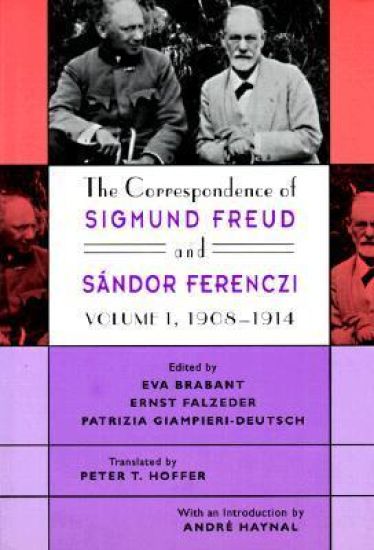
The Correspondence of Sigmund Freud and Sándor Ferenczi
Sigmund Freud; Sándor Ferenczi
Harvard University Press
1993
sidottu
The young psychiatrist from Budapest had studied medicine in Vienna, he had read The Interpretation of Dreams, and now he was about to meet its author. Seventeen years Sigmund Freud's junior, Sándor Ferenczi (1873-1933) sent off a note anticipating the pleasure of the older man's acquaintance--thus beginning a correspondence that would flourish over the next twenty-five years, and that today provides a living record of some of the most important insights and developments of psychoanalysis, worked out through the course of a deep and profoundly complicated friendship. This volume opens in January of 1908 and closes on the eve of World War I. Letter by letter, a "fellowship of life, thoughts, and interests" as Freud came to describe it, unfolds here as a passionate exchange of ideas and theories. Ferenczi's contribution to psychoanalysis was, Freud said, "pure gold," and many of the younger man's notions and concepts, proposed in these letters, later made their way into Freud's works on homosexuality, paranoia, trauma, transference, and other topics. To the two men's mutual scientific interests others were soon added, and their correspondence expanded in richness and complexity as Ferenczi attempted to work out his personal and professional conflicts under the direction of his devoted and sometimes critical elder colleague. Here is Ferenczi's love for Elma, his analysand and the daughter of his mistress, his anguish over his matrimonial intentions, his soliciting of Freud's help in sorting out this emotional tangle--a situation that would eventually lead to Ferenczi's own analysis with Freud. Here is Freud's unraveling relationship with Jung, documented through a heated discussion of the events leading up to the final break. Amid these weighty matters of heart and mind, among the psychoanalytic theorizing and playful speculation, we also find the lighter stuff of life, the talk of travel plans and antiquities, gossip about friends and family. Unparalleled in their wealth of personal and scientific detail, these letters give us an intimate picture of psychoanalytic theory being made in the midst of an extraordinary friendship.