Kirjojen hintavertailu – 12 903 724 kirjaa ja 27 kauppaa

Kirjailija

Sandor Halebsky

Kirjat ja teokset yhdessä paikassa: 7 kirjaa, julkaisuja vuosilta 1976–2019, suosituimpiin kuuluu Cuba. Vertaile teosten hintoja ja tarkista saatavuus suomalaisista kirjakaupoista.

7 kirjaa

Kirjojen julkaisuvuodet: 1976–2019.

Capital, Power, And Inequality In Latin America

Capital, Power, And Inequality In Latin America

Sandor Halebsky; Richard L Harris; Elizabeth W Dore; John Kirk; Michael Kearney

Routledge
2019
sidottu
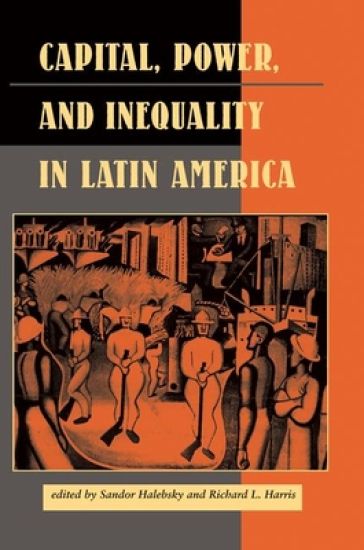
Over the last two decades, economic, political, and social life in Latin America has been transformed by the region's accelerated integration into the global economy. Although this transformation has tended to exacerbate various inequities, new forms of popular expression and action challenging the contemporary structures of capital and power have
Capital, Power, And Inequality In Latin America

Capital, Power, And Inequality In Latin America

Sandor Halebsky; Richard L Harris; Elizabeth W Dore; John Kirk; Michael Kearney

Westview Press Inc
1995
nidottu
Over the last two decades, economic, political, and social life in Latin America has been transformed by the region’s accelerated integration into the global economy. Although this transformation has tended to exacerbate various inequities, new forms of popular expression and action challenging the contemporary structures of capital and power have also developed. This volume is a comprehensive, genuinely comparative text on contemporary Latin America. In it, an international group of contributors offer multidimensional analyses of the historical context, contemporary character, and future direction of rural transformation, urbanization, economic restructuring, and the transition to political democracy. In addition, individual essays address the changing role of women, the influence of religion, the growth of new social movements, the struggles of indigenous peoples, and ecological issues. Finally, the book examines the influence of U. S. policy and of regionalization and globalization on the Latin American states. Sandor Halebsky is professor of sociology at Saint Mary’s University in Halifax, Nova Scotia. He coedited Cuba in Transition: Crisis and Transformation (Westview, 1992). Richard L. Harris is chair of the faculty at Golden Gate University in Monterey, California. He is one of the coordinating editors of the journal Latin American Perspectives and the author of Marxism, Socialism, and Democracy in Latin America (Westview, 1992).

Transformation and Struggle

Transformation and Struggle

Sandor Halebsky; John Kirk

Praeger Publishers Inc
1990
sidottu
This is the second of two volumes to bear witness to the Cuban experience. Together with its predecessor, Cuba: Twenty-Five Years of Revolution, it offers a positive account. Yet, it is sensitive to the dilemmas and flawed strategies in Cuba's thirty-year process of transformation. It warns that no preconceived notion of state or of development will help grasp the multifaceted nature of this nation, which reflects aspects of both developed and underdeveloped nations. Seventeen chapters, five of which are from Cuban contributors, thoroughly investigate recent political, economic, and social changes as well as the successes and failures of long-term development policies. Heavy attention is paid to the rectification process launched by Castro in 1986. This volume portrays a Cuba facing the 1990s with a burst of increased vigor in its efforts to secure continued far-reaching transformation. Seventeen chapters describe major changes in the economic realm caught up in the rectification campaign; a slow process of liberalization in the political sphere; and a Cuba that, in social terms, is far better off than any other Latin American country.
Transformation and Struggle

Transformation and Struggle

Sandor Halebsky; John Kirk

Praeger Publishers Inc
1990
nidottu
This is the second of two volumes to bear witness to the Cuban experience. Together with its predecessor, Cuba: Twenty-Five Years of Revolution, it offers a positive account. Yet, it is sensitive to the dilemmas and flawed strategies in Cuba's thirty-year process of transformation. It warns that no preconceived notion of state or of development will help grasp the multifaceted nature of this nation, which reflects aspects of both developed and underdeveloped nations. Seventeen chapters, five of which are from Cuban contributors, thoroughly investigate recent political, economic, and social changes as well as the successes and failures of long-term development policies. Heavy attention is paid to the rectification process launched by Castro in 1986. This volume portrays a Cuba facing the 1990s with a burst of increased vigor in its efforts to secure continued far-reaching transformation. Seventeen chapters describe major changes in the economic realm caught up in the rectification campaign; a slow process of liberalization in the political sphere; and a Cuba that, in social terms, is far better off than any other Latin American country.
Cuba

Cuba

Sandor Halebsky

Praeger Publishers Inc
1985
nidottu
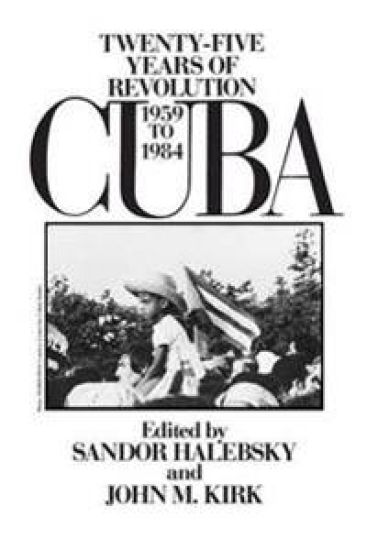
On January 1, 1984, Cuba celebrated the 25th anniversary of its revolution. As the first socialist revolution both in Latin America and in the Western hemisphere, its progress over the years has been closely observed by diverse parties as well as by scholars and academics. In this volume a number of well-known scholars in the field offer an assessment of Cuba's achievments, lessons, problems, and innovative solutions over this period. These essays present a comprehensive view of Cuba covering social reform, cultural change, the economy, the political process and foreign policy.
Cuba

Cuba

Sandor Halebsky

Praeger Publishers Inc
1985
sidottu
On January 1, 1984, Cuba celebrated the 25th anniversary of its revolution. As the first socialist revolution both in Latin America and in the Western hemisphere, its progress over the years has been closely observed by diverse parties as well as by scholars and academics. In this volume a number of well-known scholars in the field offer an assessment of Cuba's achievments, lessons, problems, and innovative solutions over this period. These essays present a comprehensive view of Cuba covering social reform, cultural change, the economy, the political process and foreign policy.
Mass Society and Political Conflict

Mass Society and Political Conflict

Sandor Halebsky

Cambridge University Press
1976
pokkari
The principal purpose of the present volume is to analyse critically one of the major contemporary interpretations of the origin of support for radical or extremist political behaviour - the political theory of mass society. Mass political theory is one of several major perspectives on political extremism which share a stress on the social psychological, emotional and irrational origins of dissidence. The present work may be seen as part of a growing scholarly effort reassessing such theories and urging the importance of increased attention to the social structure origins, cognitive nature and rational properties of dissident support. The present work should be of interest to a fairly broad professional community and student audience, as well as to the informed and more literate layman. Of particular interest may be the detailed summary of the origins of mass political theory and of the properties of the theory itself and the lengthy case study chapter stressing the purposive, reasonable and non-exceptional character of several familiar radical political movements.