Kirjojen hintavertailu – 12 859 819 kirjaa ja 27 kauppaa

Kirjailija

Sandra E. Greene

Kirjat ja teokset yhdessä paikassa: 5 kirjaa, julkaisuja vuosilta 2002–2017, suosituimpiin kuuluu Sacred Sites and the Colonial Encounter. Vertaile teosten hintoja ja tarkista saatavuus suomalaisista kirjakaupoista.

5 kirjaa

Kirjojen julkaisuvuodet: 2002–2017.

Slave Owners of West Africa

Slave Owners of West Africa

Sandra E. Greene

Indiana University Press
2017
sidottu
In this groundbreaking book, Sandra E. Greene explores the lives of three prominent West African slave owners during the age of abolition. These first-published biographies reveal personal and political accomplishments and concerns, economic interests, religious beliefs, and responses to colonial rule in an attempt to understand why the subjects reacted to the demise of slavery as they did. Greene emphasizes the notion that the decisions made by these individuals were deeply influenced by their personalities, desires to protect their economic and social status, and their insecurities and sympathies for wives, friends, and other associates. Knowing why these individuals and so many others in West Africa made the decisions they did, Greene contends, is critical to understanding how and why the institution of indigenous slavery continues to influence social relations in West Africa to this day.
Slave Owners of West Africa

Slave Owners of West Africa

Sandra E. Greene

Indiana University Press
2017
pokkari
In this groundbreaking book, Sandra E. Greene explores the lives of three prominent West African slave owners during the age of abolition. These first-published biographies reveal personal and political accomplishments and concerns, economic interests, religious beliefs, and responses to colonial rule in an attempt to understand why the subjects reacted to the demise of slavery as they did. Greene emphasizes the notion that the decisions made by these individuals were deeply influenced by their personalities, desires to protect their economic and social status, and their insecurities and sympathies for wives, friends, and other associates. Knowing why these individuals and so many others in West Africa made the decisions they did, Greene contends, is critical to understanding how and why the institution of indigenous slavery continues to influence social relations in West Africa to this day.
Africa, Fourth Edition

Africa, Fourth Edition

Victoria Bernal; Sandra E. Greene; Michael Lambert; Dorothy L. Hodgson; Leonardo A. Villalón

Indiana University Press
2014
pokkari
Since the publication of the first edition in 1977, Africa has established itself as a leading resource for teaching, business, and scholarship. This fourth edition has been completely revised and focuses on the dynamism and diversity of contemporary Africa. The volume emphasizes contemporary culture–civil and social issues, art, religion, and the political scene–and provides an overview of significant themes that bear on Africa's place in the world. Historically grounded, Africa provides a comprehensive view of the ways that African women and men have constructed their lives and engaged in collective activities at the local, national, and global levels.
West African Narratives of Slavery

West African Narratives of Slavery

Sandra E. Greene

Indiana University Press
2011
pokkari
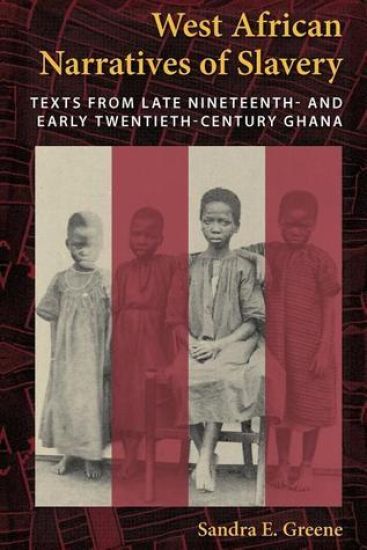
Slavery in Africa existed for hundreds of years before it was abolished in the late 19th century. Yet, we know little about how enslaved individuals, especially those who never left Africa, talked about their experiences. Collecting never before published or translated narratives of Africans from southeastern Ghana, Sandra E. Greene explores how these writings reveal the thoughts, emotions, and memories of those who experienced slavery and the slave trade. Greene considers how local norms and the circumstances behind the recording of the narratives influenced their content and impact. This unprecedented study affords unique insights into how ordinary West Africans understood and talked about their lives during a time of change and upheaval.
Sacred Sites and the Colonial Encounter

Sacred Sites and the Colonial Encounter

Sandra E. Greene

Indiana University Press
2002
pokkari
"Greene gives the reader a vivid sense of the Anlo encounter with western thought and Christian beliefs . . . and the resulting erasures, transferences, adaptations, and alterations in their perceptions of place, space, and the body." —Emmanuel Akyeampong Sandra E. Greene reconstructs a vivid and convincing portrait of the human and physical environment of the 19th-century Anlo-Ewe people of Ghana and brings history and memory into contemporary context. Drawing on her extensive fieldwork, early European accounts, and missionary archives and publications, Greene shows how ideas from outside forced sacred and spiritual meanings associated with particular bodies of water, burial sites, sacred towns, and the human body itself to change in favor of more scientific and regulatory views. Anlo responses to these colonial ideas involved considerable resistance, and, over time, the Anlo began to attribute selective, varied, and often contradictory meanings to the body and the spaces they inhabited. Despite these multiple meanings, Greene shows that the Anlo were successful in forging a consensus on how to manage their identity, environment, and community.