
Kirjojen hintavertailu – 12 859 819 kirjaa ja 27 kauppaa

Kirjailija

Sandra Gianfreda

Kirjat ja teokset yhdessä paikassa: 3 kirjaa, julkaisuja vuosilta 2017–2021, suosituimpiin kuuluu Ottilie W. Roederstein. Vertaile teosten hintoja ja tarkista saatavuus suomalaisista kirjakaupoista.

3 kirjaa

Kirjojen julkaisuvuodet: 2017–2021.

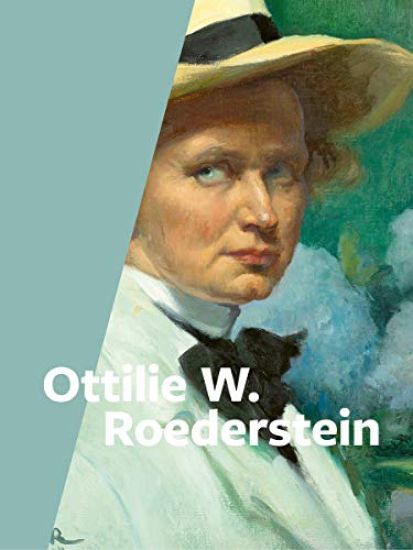
Ottilie W. Roederstein (German edition)

Ottilie W. Roederstein (German edition)

Alexander Eiling; Sandra Gianfreda; Eva-Maria Höllerer

Hatje Cantz
2021
sidottu
Ottilie W. Roederstein, born to German parents in Zurich in 1859, was one of the leading painters in the German-speaking world during her lifetime. She also enjoyed early recognition in Paris. As one of the few women of her time, she successfully dedicated her entire life to art and led an unconventional but respected existence in Germany together with her partner, the gynecologist Elisabeth H. Winterhalter. Although Roederstein's early work adhered to the conventions of the academy, the painter increasingly opened herself up to other currents in her more mature work and in the 1920s found her way to an austere, objective visual vocabulary. Despite her international reputation as a portraitist and painter of still lifes, Roederstein fell into oblivion almost immediately after her death in 1937. Now, after several decades, the Kunsthaus Zürich and the Städel Museum in Frankfurt am Main are presenting the first monographic show of her work, accompanied by this comprehensive catalogue. EXHIBITIONS: Zurich Art Gallery December 4, 2020–April 5, 2021 Städel Museum, Frankfurt am Main May 19–September 6, 2021
Ottilie W. Roederstein

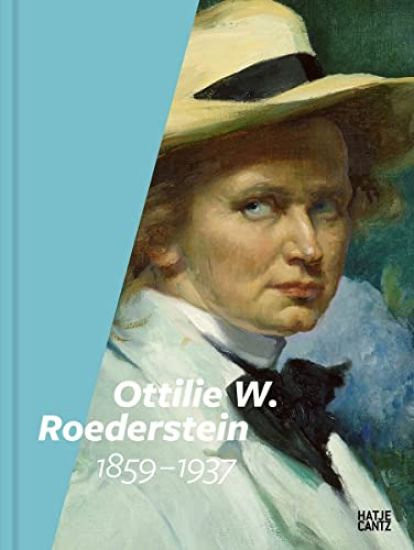
Ottilie W. Roederstein

Alexander Eiling; Sandra Gianfreda; Eva-Maria Höllerer; Iris Schmeisser

Hatje Cantz
2021
sidottu
Ottilie W. Roederstein, born to German parents in Zurich in 1859, was one of the leading painters in the German-speaking world during her lifetime. She also enjoyed early recognition in Paris. As one of the few women of her time, she successfully dedicated her entire life to art and led an unconventional but respected existence in Germany together with her partner, the gynecologist Elisabeth H. Winterhalter. Although Roederstein's early work adhered to the conventions of the academy, the painter increasingly opened herself up to other currents in her more mature work and in the 1920s found her way to an austere, objective visual vocabulary. Despite her international reputation as a portraitist and painter of still lifes, Roederstein fell into oblivion almost immediately after her death in 1937. Now, after several decades, the Kunsthaus Zürich and the Städel Museum in Frankfurt am Main are presenting the first monographic show of her work, accompanied by this comprehensive catalogue. EXHIBITIONS: Zurich Art Gallery December 4, 2020–April 5, 2021 Städel Museum, Frankfurt am Main May 19–September 6, 2021
Vibrant Metropolis / Idyllic Nature

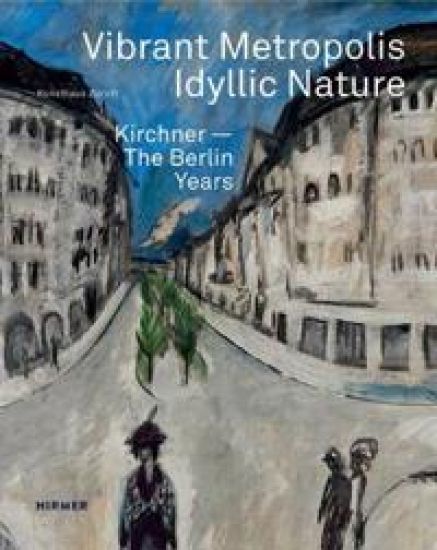
Vibrant Metropolis / Idyllic Nature

Kunsthaus Zürich; Christoph Becker; Madgalena M. Moeller; Sandra Gianfreda; Charles Werner Haxthausen; Karin Schick; Uwe M. Schneede; Günther Gercken; Martina Pfister

Hirmer Verlag
2017
sidottu
Ernst Ludwig Kirchner’s move from Dresden to Berlin in 1911 marked a turning point in his art. Under the influence of the most modern metropolis in Europe, during the years between 1912 and 1915 the artist created works whose exaggerated and condensed styl e could be regarded as a true metaphor for the attitude to life during the early years of the twentieth century. During this time of rapid change the capital of the German Empire promised progress and countless opportunities, but also danger and profound e xistential fear. The city was not only the centre of industry, which continued to grow unchecked, but also of increasing motorised traffic and, with three million inhabitants, it was the biggest “city of tenement blocks” in Europe. But Berlin was also the metropolis of the arts, of hedonism, prostitution and accordingly of a sexuality that could be lived to the full as never before. Berlin vibrated with challenging energy and intellectual challenges. In this melting pot of opportunities and risks Kirchner c reated pictures of breathless, existential directness which he launched unerringly at the conventions of the Wilhelminian age. The main area of focus of the publication will lie on this dialectic and the resulting tension. It will reproduce Kirchner’s grea test masterpieces, and in order to demonstrate the profound changes in his style, a representative selection of his early works from Dresden will also be shown alongside the paintings, drawing s and prints from the time in Berlin.