Kirjojen hintavertailu – 12 859 827 kirjaa ja 27 kauppaa
Kirjailija
Sandra M. Grayson
Kirjat ja teokset yhdessä paikassa: 6 kirjaa, julkaisuja vuosilta 2000–2023, suosituimpiin kuuluu Symbolizing the Past. Vertaile teosten hintoja ja tarkista saatavuus suomalaisista kirjakaupoista.
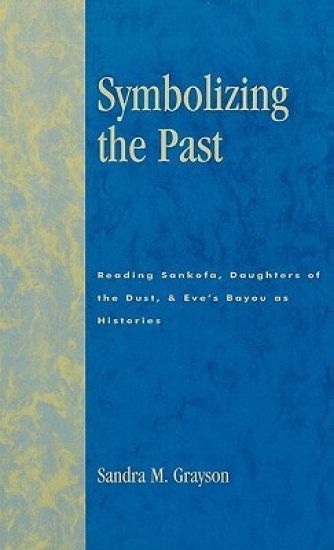
Examples of constructing history through film, the three fictional narratives which are the focus of Sandra Grayson's study provide insight into how the role of the African American woman has been overlooked to the point of suppression. The women in these works are presented as warriors, educators, healers, seers, oral historians, as well as mothers, daughters, sisters, and wives. Through research into archival materials and study of the symbols encoded in the films themselves, Symbolizing the Past reveals the gap between the reality of black mythic history and its representation.
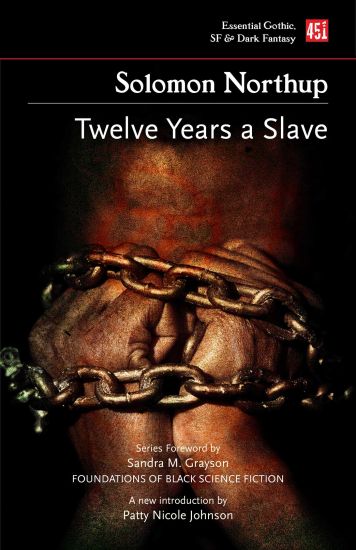
The 1853 memoir and slave narrative by Solomon Northup as told to and written by David Wilson. Northup, a black man who was born free in New York, relates his tale, of being tricked to go to Washington, D. C., where he was kidnapped and sold into slavery in the Deep South. He was in bondage for 12 years in Louisiana before smuggling information to friends and family in New York, who in turn secured his release with the aid of the state. Northup's account provides extensive details on the slave markets in Washington, D. C. and New Orleans, and describes the cotton and sugar cultivation and slave treatment on major plantations in Louisiana. Foundations of Black Science Fiction. New forewords and fresh introductions give long-overdue perspectives on significant, early Black proto-sci-fi and speculative fiction authors who wrote with natural justice and civil rights in their hearts, their voices reaching forward to the writers of today. The series foreword is by Dr Sandra Grayson.
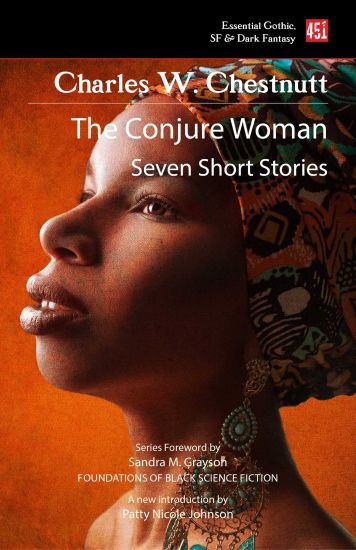
Featuring a new introduction for this new edition, The Conjure Woman is probably Chesnutt's most powerful work, a collection of stories set in post-war North Carolina. The main character is Uncle Julius, a former slave, who entertains a white couple from the North with fantastic tales of antebellum plantation life. Julius tells of supernatural phenomenon, hauntings, transfiguration, and conjuring, which were typical of Southern African-American folk tales at the time. Uncle Julius tells the stories in a way that speaks beyond his immediate audience, offering stories of slavery and inequality that are, to the enlightened reader, obviously wrong. The tales are fabulistic, like those of Uncle Remus or Aesop, with carefully crafted allegories on the psychological and social effects of slavery and racial injustice. Foundations of Black Science Fiction. New forewords and fresh introductions give long-overdue perspectives on significant, early Black proto-sci-fi and speculative fiction authors who wrote with natural justice and civil rights in their hearts, their voices reaching forward to the writers of today. The series foreword is by Dr Sandra Grayson.
New edition with a new introduction. Delany's tale of Blake, an escaped slave in the era before the US Civil War, depicts the harrowing detail of life under slavery and offers a call to action for resistance. Casting beyond the misery of slavery, Delany's novel, located in the Southern United States and Cuba, demonstrates that alternatives are possible if only widespread insurrection could be ignited. A new title in the Foundations of Black Science Fiction series. FLAME TREE 451: From mystery to crime, supernatural to horror and myth, fantasy and science fiction, Flame Tree 451 offers a healthy diet of werewolves and robots, mad scientists, secret worlds, lost civilizations and escapist fantasies. Discover a storehouse of tales, ancient and modern gathered specifically for the reader of the fantastic. The Foundations titles also explore the roots of modern fiction and brings together neglected works which deserve a wider readership as part of a series of classic, essential books.
A new edition with a new introduction, Du Bois' radical text is a rare statement of values formed around the vision of a collective life, where the humanity of black women and men is treated with dignity and equality. He expresses his themes through a series of literary forms: polemic essay, spirituals, poetry and short science fiction, each of which forms a pulse of social justice from a time when a true understanding of intersections between poverty, work, racism and feminism was rare. A new title in the Foundations of Black Science Fiction series. FLAME TREE 451: From mystery to crime, supernatural to horror and myth, fantasy and science fiction, Flame Tree 451 offers a healthy diet of werewolves and robots, mad scientists, secret worlds, lost civilizations and escapist fantasies. Discover a storehouse of tales, ancient and modern gathered specifically for the reader of the fantastic. The Foundations titles also explore the roots of modern fiction and brings together neglected works which deserve a wider readership as part of a series of classic, essential books.
A rip-roaring lost worlds thriller written in the early 1900s by a pioneering black writer of black fiction. The story of Reuel is fuelled by love, betrayal and a heavy undertow of the supernatural; an impulsive medical student, he travels from Boston to Ethiopia, discovers a hidden city, ancient treasure and his own heritage. A new edition with a new introduction which considers Pauline Hopkin's development of the social and racial themes also explored by W. E. B. Du Bois. A new title in Foundations of Black Science Fiction series. Foundations of Black Science Fiction. New forewords and fresh introductions give long-overdue perspectives on significant, early Black proto-sci-fi and speculative fiction authors who wrote with natural justice and civil rights in their hearts, their voices reaching forward to the writers of today. The series foreword is by Dr Sandra Grayson.