Kirjojen hintavertailu – 12 859 819 kirjaa ja 27 kauppaa

Kirjailija

Sandra Smidt

Kirjat ja teokset yhdessä paikassa: 33 kirjaa, julkaisuja vuosilta 2007–2020, suosituimpiin kuuluu Introducing Vygotsky. Vertaile teosten hintoja ja tarkista saatavuus suomalaisista kirjakaupoista.

33 kirjaa

Kirjojen julkaisuvuodet: 2007–2020.

Vygotsky og små børns læring

Vygotsky og små børns læring

Sandra Smidt

Gyldendal
2011
sidottu
En letlæst introduktion til Lev Vygotskys liv og tanker. Forfatteren beskriver, forklarer og eksemplificerer Vygotskys teorier, som stadig er højaktuelle i det pædagogiske arbejde i daginstitution og skole. Bogen omhandler centrale emner som aktiv læring, sprog og tænkning, leg og zonen for nærmeste udvikling (ZNU). Begreberne forklares grundigt og eksemplificeres med cases, der viser deres betydning for pædagogisk praksis. Hvert kapitel afsluttes med en forklarende ordliste. Velegnet undervisningsbog på både pædagog- og læreruddannelsen. Bogen har dansk forord af Espen Jerlang og er oversat fra engelsk efter Introducing Vygotsky af Ole Thornye.
Introducing Bruner

Introducing Bruner

Sandra Smidt

Routledge
2011
nidottu
Sandra Smidt takes the reader on a journey through the key concepts of Jerome Bruner, a significant figure in the field of early education whose work has spanned almost a century. His wide-ranging and innovative principles of early learning and teaching are unpicked here using everyday language and the links between his ideas and those of other key thinkers of the twentieth and twenty-first centuries are revealed. Introducing Bruner is the companion volume to Introducing Vygotsky and is an invaluable work for anyone involved with children in the early years. The introduction of Bruner's key concepts is followed by discussion of the implications of these for teaching and learning. This accessible text is illustrated throughout with examples drawn from real-life early years settings and the concepts discussed include: how children acquire language how children come to make sense of their world through narrative the significance of play to learning the importance of culture and context the role of memory what should children be taught: the spiral curriculum how should children be taught: scaffolding and interaction. The book also looks, crucially, at what those working or involved with young children can learn from Bruner, and includes a helpful glossary of terminology. This fascinating insight in to the life and work of a key figure in early years education is essential reading for anyone concerned with the learning and development of young children.
Introducing Bruner

Introducing Bruner

Sandra Smidt

Routledge
2011
sidottu
Sandra Smidt takes the reader on a journey through the key concepts of Jerome Bruner, a significant figure in the field of early education whose work has spanned almost a century. His wide-ranging and innovative principles of early learning and teaching are unpicked here using everyday language and the links between his ideas and those of other key thinkers of the twentieth and twenty-first centuries are revealed. Introducing Bruner is the companion volume to Introducing Vygotsky and is an invaluable work for anyone involved with children in the early years. The introduction of Bruner's key concepts is followed by discussion of the implications of these for teaching and learning. This accessible text is illustrated throughout with examples drawn from real-life early years settings and the concepts discussed include: how children acquire language how children come to make sense of their world through narrative the significance of play to learning the importance of culture and context the role of memory what should children be taught: the spiral curriculum how should children be taught: scaffolding and interaction. The book also looks, crucially, at what those working or involved with young children can learn from Bruner, and includes a helpful glossary of terminology. This fascinating insight in to the life and work of a key figure in early years education is essential reading for anyone concerned with the learning and development of young children.
Playing to Learn

Playing to Learn

Sandra Smidt

Routledge
2010
sidottu
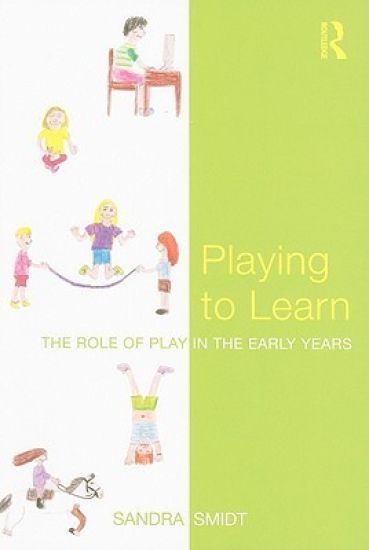
Sandra Smidt sets out to explain what play is and why it is so important as one of the key ways of learning, particularly - but not solely - for young children. She argues that all play is purposeful, and can only truly considered to be play when the child has chosen what to do, where and how to do it. Using case studies drawn from all over the world, Smidt challenges some of the prevailing myths relating to play and pays close attention to what it is that early years professionals need to do to interpet the play, understand its purpose for the child and sometimes extend it. Attention is paid to the close links that play has with creativity, and the author also highlights the importance of being able to explain to colleagues, parents and even those in government, why play matters so much in terms of learning and development. This book will be of interest to anyone involved in early years’ education.
Playing to Learn

Playing to Learn

Sandra Smidt

Routledge
2010
nidottu
Sandra Smidt sets out to explain what play is and why it is so important as one of the key ways of learning, particularly - but not solely - for young children. She argues that all play is purposeful, and can only truly considered to be play when the child has chosen what to do, where and how to do it. Using case studies drawn from all over the world, Smidt challenges some of the prevailing myths relating to play and pays close attention to what it is that early years professionals need to do to interpet the play, understand its purpose for the child and sometimes extend it. Attention is paid to the close links that play has with creativity, and the author also highlights the importance of being able to explain to colleagues, parents and even those in government, why play matters so much in terms of learning and development. This book will be of interest to anyone involved in early years’ education.
Planning for the Early Years Foundation Stage
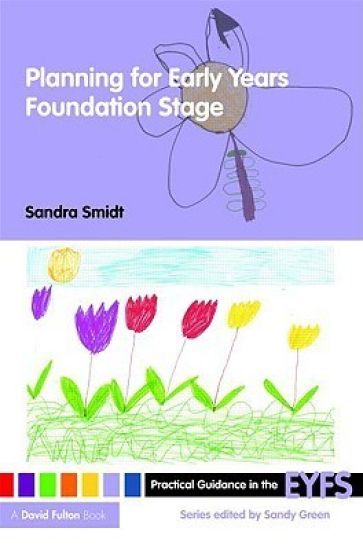
The Practical Guidance in the Early Years Foundation Stage series will assist practitioners in the smooth and successful implementation of the Early Years Foundation Stage. Each book gives clear and detailed explanations of each aspect of Learning and Development and encourages readers to consider each area within its broadest context to expand and develop their own knowledge and good practice. Practical ideas and activities for all age groups are offered along with a wealth of expertise of how elements from the practice guidance can be implemented within all early years settings. The books include suggestions for the innovative use of everyday ressources, popular books and stories. Planning for the Early Years Foundation Stage complements the six Learning area books in this series by explaining the basis of clear planning and how it links to careful observation and assessment. Useful examples are provided throughout, Planning across the Early Years Foundation Stage will raise awareness of what is needed within early years settings, explain the who, when and whys of observation, assessment and planning, and making useful links to each of the other books in the series.
Introducing Vygotsky

Introducing Vygotsky

Sandra Smidt

Routledge
2008
nidottu
Sandra Smidt takes the reader on a journey through the key concepts of Lev Vygotsky, one of the twentieth century’s most influential theorists in the field of early education. His ground-breaking principles of early learning and teaching are unpicked here using every-day language, and critical links between his fascinating ideas are revealed. Introducing Vygotsky is an invaluable companion for anyone involved with children in the early years. The introduction of Vygotsky’s key concepts is followed by discussion of the implications of these for teaching and learning. Each chapter also includes a useful glossary of terms. This accessible text is illustrated throughout with examples drawn from real-life early years settings and the concepts discussed include: mediation and memoryculture and cultural toolsmental functionslanguage, concepts and thinkingactivity theoryplay and meaning. Essential reading for all those interested in or working with children, Introducing Vygotsky emphasises the social nature of learning and examines the importance of issues such as culture, history, language, and symbols in learning.
Introducing Vygotsky

Introducing Vygotsky

Sandra Smidt

Routledge
2008
sidottu
Sandra Smidt takes the reader on a journey through the key concepts of Lev Vygotsky, one of the twentieth century’s most influential theorists in the field of early education. His ground-breaking principles of early learning and teaching are unpicked here using every-day language, and critical links between his fascinating ideas are revealed. Introducing Vygotsky is an invaluable companion for anyone involved with children in the early years. The introduction of Vygotsky’s key concepts is followed by discussion of the implications of these for teaching and learning. Each chapter also includes a useful glossary of terms. This accessible text is illustrated throughout with examples drawn from real-life early years settings and the concepts discussed include: mediation and memoryculture and cultural toolsmental functionslanguage, concepts and thinkingactivity theoryplay and meaning. Essential reading for all those interested in or working with children, Introducing Vygotsky emphasises the social nature of learning and examines the importance of issues such as culture, history, language, and symbols in learning.
Practical Guidance in the Early Years Foundation Stage Set

Practical Guidance in the Early Years Foundation Stage Set

Angela D Nurse; Pamela May; Stella Louis; Sue Sheppy; Anita M Hughes; Helen Bradford; Sandra Smidt

Routledge
2008
muu
This highly practical series links fully and comfortably to the Early Years Foundation Stage making the implementation of the practice guidance within your setting easy. Each book provides a theoretical background on which good practice is based, helping practitioners provide children with a relevant, age appropriate, exciting and challenging curriculum in each area of learning. Each book includes: Easy to implement practical ideas across all age groups Suggestions for innovative use of everyday resources and/or popular books and stories How to consider each area of learning within its broadest context. The series is complemented by a planning book providing clear ideas on how to plan and deliver cross-curriculum activities throughout the EYFS, and how to use observation and assessment in a positive way to inform practice.
Supporting Multilingual Learners in the Early Years
Shortlisted for the Nasen Book that supports SEN and Disability Issues Award 2008Are children who are exposed to more than one language from birth at an advantage or a disadvantage when starting school? Supporting Multilingual Learners in the Early Years examines the theoretical, ideological and practical issues involved in the education of children speaking two or more languages coming to settings which are predominantly monolingual. The book examines current research and thinking about the advantages and disadvantages of being multilingual and tackles complex topics such as: what being multilingual implies in terms of prior learning and why this matters in educationthe importance of respect for diversity and encouraging children to be proud of their language and culturepractical ways to help young children acquire English ways of working with parents who themselves have little or no English the differences and difficulties involved in a child learning an additional language so early on in their livesstrategies for exploring the learning of multilingual learners and a review of the resources and activities that could help. Sandra Smidt views multilingualism as a cognitive advantage and shows how Early Years practitioners can use interactive styles of learning to focus on the benefit that the many cultures and languages in the classroom can bring to children’s learning and development. Written in a highly accessible tone, this book offers practitioners a mix of practical case studies and examples in which theory is embedded and its importance explained. Students of early childhood education will also appreciate the author's carefully structured approach to the topic, as she includes summary boxes, glossaries and points for reflection in each chapter.
A Guide to Early Years Practice

A Guide to Early Years Practice

Sandra Smidt

Routledge
2007
nidottu
This is a practical, accessible guide to early years practice. The author examines current theories about how children learn best and focuses on how we can support and extend the learning of young children. This fully revised edition discusses Birth to Three Matters, the new Childcare Bill and the development of children's centres, and has additional focus on the Foundation Stage ProfilePacked full with case studies, the book offers:practical advice on how to successfully involve parents as equal partners in the education of their children guidance to ensure that the activities and support offered to young children will promote learning across a broad and balanced Early Years curriculum a focus on special needs, multiculturalism and multilingualism, play and culture, and the importance of interactions with adults and with peers. Essential reading for students on Early Years courses, this book is also invaluable for practitioners, who can use this text as the starting point for developing their own methods within the frameworks of statutory documents relating to Early Years education.