Kirjailija
Sandra Walklate
Kirjat ja teokset yhdessä paikassa: 35 kirjaa, julkaisuja vuosilta 1994–2026, suosituimpiin kuuluu Violence Against Women During Coronavirus. Vertaile teosten hintoja ja tarkista saatavuus suomalaisista kirjakaupoista.
35 kirjaa
Kirjojen julkaisuvuodet: 1994–2026.
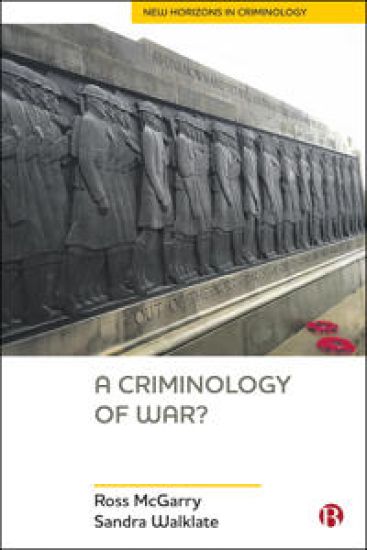
In recent years, the academic study of ‘war’ has gained renewed popularity in criminology. This book illustrates its long-standing engagement with this social phenomenon within the discipline. Foregrounding established criminological work addressing war and connecting it to a wide range of extant sociological literature, the authors present and further develop theoretical and conceptual ways of thinking critically about war. Providing a critique of mainstream criminology, the authors question whether a ‘criminology of war’ is possible, and if so, how this seemingly ‘new horizon’ of the discipline might be usefully informed by sociology.
First published in 1999, this volume presents arguments which compare two inner-city wards of Salford and look to introduce such a subtlety to the understanding of the management of crime in high crime communities and derive from a longitudinal research study which took place over a two and a half year period. Between 1994 and 1996, researchers based at the University of Salford and the University of Keele embarked on research into two similarly structured neighbourhoods within the city of Salford in the North of England. This research set out to situate an understanding of the risk from and fear of crime in a comparative, urban context – to uncover how people who live, work and go to school in designated ‘high-crime’ areas manage their routine daily lives and construct their own responses to ‘risk of’ and ‘fear of’ crime. The authors go on to highlight the similarities between these wards and other wards with which they have a clear resonance across Britain.
Theories of Welfare
Anthony Forder; Terry Caslin; Geoffrey Ponton; Sandra Walklate
Routledge
2018
sidottu
Originally published in 1984 Theories of Welfare looks at theories of social administration developed in different social science disciplines. The book ranges widely and gives concise coverage to the historical and intellectual background in which the theory emerged, the implicit or explicit value assumptions, and account of the most important theoretical concepts and the major criticisms of them, an indication of the relevance to social administration and a guide to further reading.
Criminology is a discipline that is constituted by its subject matter rather than being bound by an agreed set of concepts or way of thinking. This fully updated third edition of Criminology: The Basics is a lively and engaging guide to this compelling and complex subject. Topics covered include: the history and development of criminology myths about crime and offenders the search for criminological explanation victims of crime and state crime crime prevention, cybercrime, and the future of crime control criminology and intersectionalityThis edition also includes new sections on genocide, terrorism, cultural victimology, and Westo-centric thinking. Concise and accessible, this book utilises chapter summaries, exercise questions and lists of further reading to provide a perfect introduction to this subject.
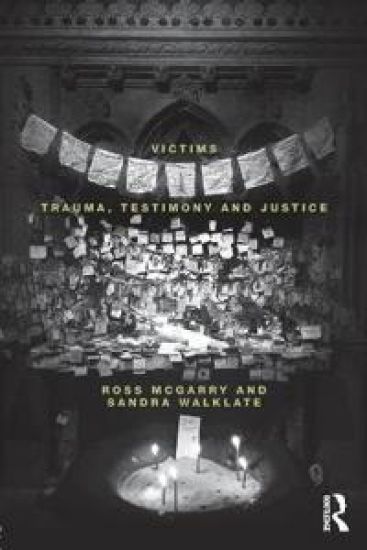
The study of victims of crime is a central concern for criminologists around the world. In recent years, some victimologists have become increasingly engaged in positivist debates on the differences between victims and non-victims, how these differences can be measured and what could be done to improve the victims' experience of the criminal justice system. Written by experts in the field, this book embraces a much wider understanding of social harms and asks which victims' voices are heard and why. McGarry and Walklate break new ground with this innovative and accessible book; it offers a broad discussion of social harms, the role of the victim in society and the inter-relationship between trauma, testimony and justice and asks: how has harm been understood and under what circumstances have those harms been recognised? how and under what circumstances are those harms articulated? how and under what circumstances are the voices of those who have been harmed listened to? Each chapter draws on case studies and a range of questions designed to assist in reflection and critical engagement. This book is perfect reading for students taking courses on victimology, victims and society, victims’ rights and criminal justice.
First published in 1989, this book provides a comprehensive introduction to the study of the victims of crime and the way in which they are treated in society generally, and in the criminal justice process in particular. The study of victims of crime is important to academics, the wider community of policy initiation and implementation, and to the political arena. Sandra Walklate examines the nature of this interest, and the contributions of victim-related research and criminal victimization surveys, in order to be able to provide the reader with a critical assessment of the issues involved. This book will be of interest to students of criminology, sociology, social policy and law, as well as victim support workers, probation officers, social workers, police officers and all those interested in the plight of victims of crime.
Over the last fifteen years there has been a significant growth in literature dealing with terrorism. Nevertheless, scholars within mainstream criminology have only recently begun to grapple with the problem of terrorism in a sustained fashion. In this provocative book the authors provide both an exposition of the contradictions that have emerged around the regulation of terrorism and an incisive analysis of the questions that the management of terrorism poses for the discipline. Focusing primarily on the processes and practices that have emerged in the United States and the United Kingdom, the book provides a critical account of the political construction, mediation and regulation of terrorist threat since the events of 9/11. The authors explore the ways in which new institutional modes of risk assessment based on the principle of pre-emption have impacted on individuals targeted by them. Noting the dilemmas produced by the pre-emptive turn, the authors also elucidate more recent moves to develop the idea of resilience in counter-terrorism and security policy. This book will be suitable for academics and students interested in political violence, terrorism, geopolitics and risk, as well as for practitioners and experts working in the security industries.
First published in 1989, this book provides a comprehensive introduction to the study of the victims of crime and the way in which they are treated in society generally, and in the criminal justice process in particular. The study of victims of crime is important to academics, the wider community of policy initiation and implementation, and to the political arena. Sandra Walklate examines the nature of this interest, and the contributions of victim-related research and criminal victimization surveys, in order to be able to provide the reader with a critical assessment of the issues involved. This book will be of interest to students of criminology, sociology, social policy and law, as well as victim support workers, probation officers, social workers, police officers and all those interested in the plight of victims of crime.
"Provides a very clear, easily readable introduction to the wide range of criminological theories." Anne Rees, University of Portsmouth, UK What does contemporary criminological theory look like? What impact, if any, does it have on policy? The new edition of this bestselling text updates a key title in the Crime and Justice series, whilst maintaining it's trademark theory-intensive approach to Criminology. In this third edition, the author pays particular attention to the development of the policy agenda under New Labour. The book examines the development of criminological theory over the past twenty five years, with detailed analysis of the relationship between criminological theorizing, criminal justice, social justice, and politics. It also provides:A detailed examination of the role of the media in relation to the fear of crime Expanded discussion of classical criminology, adding discussion of cultural criminologySpecial reference to young people and victims of crimeA critical consideration of current policies concerned with rebalancing the criminal justice systemIncreased emphasis on issues related to risk and terrorism A comprehensive update of policy and research throughoutUnderstanding Criminology is key reading for students who are new to the discipline, but also contains the rigourous analysis required by all levels of undergraduate student.

"...the clarity in which the wide range of relevant issues are presented throughout the book makes this must-reading for new entrants to this field and for students." International Review of VictimologyThis book situates the contemporary preoccupation with criminal victimisation within the broader socio-cultural changes of the last twenty five years. In so doing it addresses not only the policy possibilities that have been generated as a consequence of those changes but also concerns itself with the ability of victimology to help make sense of this change. Written in the post 9/11 context this book considers the efficacy of theory and policy relating to questions of victimhood to accommodate the current political and cultural climate and offers a critical understanding of both. It adopts an explicitly cross-cultural position on these questions. It will be vital reading for anyone interested in the problems and possibilities posed by criminal victimisation understood in the broadest terms.
This book seeks to unravel the issues associated with the crime of murder, providing a highly accessible account of the subject for people coming to it for the first time. It uses detailed case studies as a way of exemplifying and exploring more general questions of socio-cultural responses to murder and their explanation. It incorporates a historical perspective which both provides some fascinating examples from the past and enables readers to gain a vision of what has changed and what has remained the same within those socio-cultural responses to murder. The book also embraces questions of race and gender, in particular cultural constructions of masculinity and femininity on the one hand, and the social processes of 'forgetting and remembering' in the context of particular crimes on the other. Particular murders analysed included those of Myra Hindley, Harold Shipman and the Bulger murder.
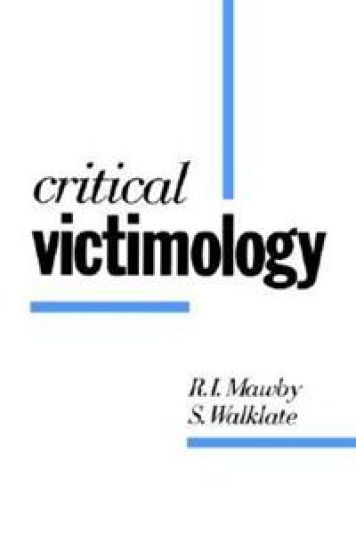
Drawing on a wealth of local, national and international sources, unpublished documents and original research, this book provides a theoretical and practical critique of victimology. The authors outline and discuss the issues facing victims today and address the fundamental question: How can we best ensure justice for victims, while at the same time preserving the rights of defendants? The search for answers raises other key questions: What are the risks of crime and do they vary from country to country? What is the impact of crime on the victim? How are victims treated by police, welfare agencies and courts? Why have governments become interested in victims? Can we learn from the experiences of policies in other nations? How are services developing in the rest of the world, including Eastern Europe? This critical and comparative analysis of `victim services' offers important insights for students and academics in criminology, social work and social policy, as well as for victim support workers.