Kirjojen hintavertailu – 12 903 725 kirjaa ja 27 kauppaa

Kirjailija

Sandro Jung

Kirjat ja teokset yhdessä paikassa: 8 kirjaa, julkaisuja vuosilta 2009–2026, suosituimpiin kuuluu The Publishing and Marketing of Illustrated Literature in Scotland, 1760–1825. Vertaile teosten hintoja ja tarkista saatavuus suomalaisista kirjakaupoista.

8 kirjaa

Kirjojen julkaisuvuodet: 2009–2026.

A Political Biography of John Gay

A Political Biography of John Gay

Sandro Jung

Pickering Chatto (Publishers) Ltd
2026
sidottu
John Gay was a dramatist and poet, best-known for writing The Beggar's Opera. Through his membership of the Scriblerus Club, Gay developed lasting friendships with Alexander Pope, Jonathan Swift and John Arbuthnot, all of whom influenced his writing. The study will be invaluable to scholars of eighteenth-century literature and political history.
Transnational Crusoe, Illustration and Reading History, 1719–1722
Bringing illustration studies, the history of reading and transnational book history together, the Element offers an original micro-history of illustrated editions and iconic interpretations of Daniel Defoe's Robinson Crusoe. Unlike earlier accounts, it takes into account not only the copyright holder's editions but also studies Continental visualizations alongside a lower-end London abridgment issued by Edward Midwinter and illustrated by twenty-nine woodcuts. The Element covers the period from 1719 (the year of the work's first publication by William Taylor) to 1722 (the year Midwinter published his abridgment) and examines the illustrated editions published during that time, including those featuring translations of the work issued in Amsterdam (where Dutch and French translations were published) and in Germany. It recovers a hitherto unexplored archive of illustrations that played an essential role in the reading history – in Britain and abroad – of Robinson Crusoe. This title is also available as Open Access on Cambridge Core.
Eighteenth-Century Illustration and Literary Material Culture
This Element studies eighteenth- and early nineteenth-century instances of transmediation, concentrating on how the same illustrations were adapted for new media and how they generated novel media constellations and meanings for these images. Focusing on the 'content' of the illustrations and its adaptation within the framework of a new medium, case studies examine the use across different media of illustrations (comprehending both the designs for book illustrations and furniture prints) of three eighteenth-century works: Defoe's Robinson Crusoe (1719), Thomson's The Seasons (1730) and Richardson's Pamela (1740). These case studies reveal how visually enhanced material culture not only makes present the literary work, including its characters and story-world. But they also demonstrate how, through processes of transmediation, changes are introduced to the illustration that affect comprehension of that work. This title is also available as Open Access on Cambridge Core.
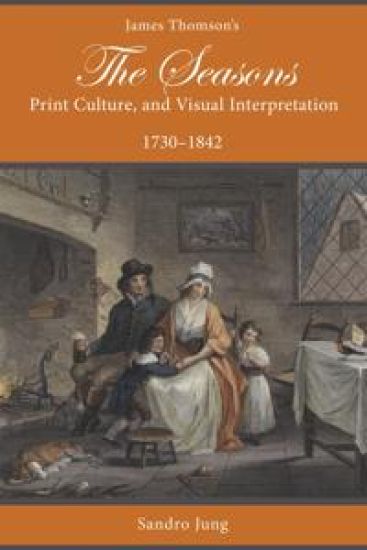
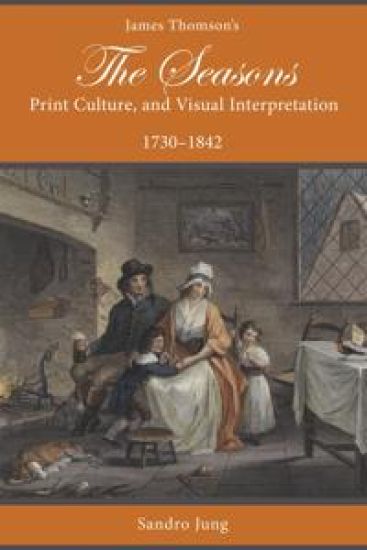
James Thomson's The Seasons, Print Culture, and Visual Interpretation, 1730–1842
Drawing on the methods of textual and reception studies, book history, print culture research, and visual culture, this interdisciplinary study of James Thomson’s The Seasons (1730) understands the text as marketable commodity and symbolic capital which throughout its extended affective presence in the marketplace for printed literary editions shaped reading habits. At the same time, through the addition of paratexts such as memoirs of Thomson, notes, and illustrations, it was recast by changing readerships, consumer fashions, and ideologies of culture. The book investigates the poem’s cultural afterlife by charting the prominent place it occupied in the visual cultures of eighteenth- and early nineteenth-century Britain. While the emphasis of the chapters is on printed visual culture in the form of book illustrations, the book also features discussions of paintings and other visual media such as furniture prints. Reading illustrations of iconographic moments from The Seasons as paratextual, interpretive commentaries that reflect multifarious reading practices as well as mentalities, the chapters contextualise the editions in light of their production and interpretive inscription. They introduce these editions’ publishers and designers who conceived visual translations of the text, as well as the engravers who rendered these designs in the form of the engraving plate from which the illustration could then be printed. Where relevant, the chapters introduce non-British illustrated editions to demonstrate in which ways foreign booksellers were conscious of British editions of The Seasons and negotiated their illustrative models in the sets of engraved plates they commissioned for their volumes.
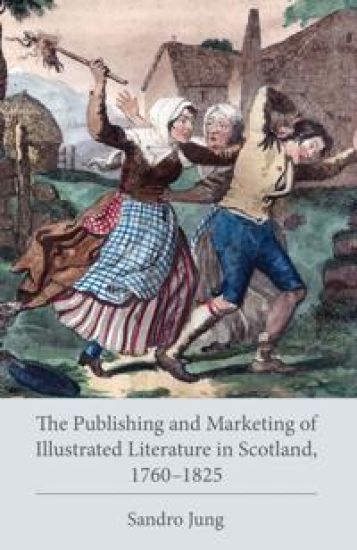
The Publishing and Marketing of Illustrated Literature in Scotland, 1760–1825
A ground-breaking contribution to the economic and cultural history of the eighteenth- and early nineteenth-century publishing of illustrated belles lettres in Scotland, the book offers detailed accounts of numerous agents of prints (booksellers, printers, designers, engravers) and their involvement in the making and marketing of illustrated editions. It examines the ways in which the makers of books not only produced printed visual culture artefacts but also contributed to the ideological inscription of these illustrations to engender patriotic concerns and issues of national identity. The book differs fundamentally from existing interventions in book illustration studies: Examinations of eighteenth- and early nineteenth-century British literary book illustrations have, as a rule, been selective rather than broad in scope or systematic in outlook; they have focused on English examples of book illustrations. By contrast, The Publishing and Marketing of Illustrated Literature in Scotland, 1760-1820 studies a large body of illustrated editions and adopts a systematic and decentered (non-London-centered) approach. It focuses on the examination of the production of literary book illustrations in eighteenth- and early nineteenth-century Scotland, while at the same time bearing in mind that developments in the marketing of illustrated books need to be understood as part of the cultural and book-historical dynamics of exchange that existed between Scotland and England. Not only does the monograph offer the first large-scale study of the subject, contextualizing literary book illustrations in terms of the ideologically defined ventures as part of which they were issued, but it also draws a map of illustrated works that has not been imagined yet by scholars of the history of the eighteenth- and early nineteenth-century book. In doing so, the book provides an account of the publishing of belles lettres and the various strategies that bookseller-publishers deployed to market their editions competitively in both Scotland and England.
James Thomson's The Seasons, Print Culture, and Visual Interpretation, 1730–1842
Drawing on the methods of textual and reception studies, book history, print culture research, and visual culture, this interdisciplinary study of James Thomson’s The Seasons (1730) understands the text as marketable commodity and symbolic capital which throughout its extended affective presence in the marketplace for printed literary editions shaped reading habits. At the same time, through the addition of paratexts such as memoirs of Thomson, notes, and illustrations, it was recast by changing readerships, consumer fashions, and ideologies of culture. The book investigates the poem’s cultural afterlife by charting the prominent place it occupied in the visual cultures of eighteenth- and early nineteenth-century Britain. While the emphasis of the chapters is on printed visual culture in the form of book illustrations, the book also features discussions of paintings and other visual media such as furniture prints. Reading illustrations of iconographic moments from The Seasons as paratextual, interpretive commentaries that reflect multifarious reading practices as well as mentalities, the chapters contextualise the editions in light of their production and interpretive inscription. They introduce these editions’ publishers and designers who conceived visual translations of the text, as well as the engravers who rendered these designs in the form of the engraving plate from which the illustration could then be printed. Where relevant, the chapters introduce non-British illustrated editions to demonstrate in which ways foreign booksellers were conscious of British editions of The Seasons and negotiated their illustrative models in the sets of engraved plates they commissioned for their volumes.
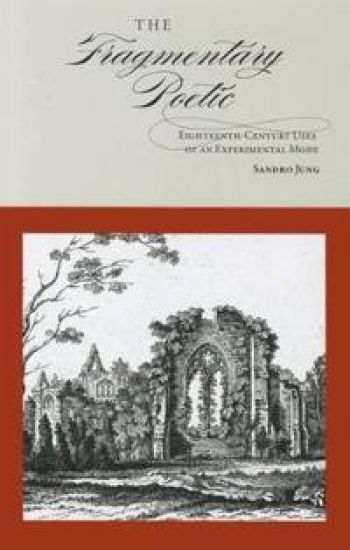
The Fragmentary Poetic

The Fragmentary Poetic

Sandro Jung

Lehigh University Press
2009
sidottu
The Fragmentary Poetic: Eighteenth-Century Uses of an Experimental Mode is the first study of the mode of the fragmentary in eighteenth-century poetry. Revisiting traditional literary historiography, it offers a fresh account of the "Pindaric" impulse, a mode informing deliberate fragmentation. It distinguishes itself from the work of Thomas McFarland, Marjorie Levinson (on the Romantic fragment poem), and Elizabeth Wanning Harries (on the prose fragment in the late eighteenth century) through its familiarity with the varied poetic landscape of the period. Through its immersion in the (still) under-researched field of eighteenth-century poetry and its inclusive, historicist approach, it introduces original but rarely discussed poems, thereby contributing to the mapping, and better understanding, of the growing canon of poetry. Rather than being overtly contrasted with the preceptive poetics of early eighteenth-century Neoclassicism, the fragmentary impulse is read as integral to "new" genres such as the long-poem and the Pindaric ode. Its "amphibian" nature accommodates its transgeneric use in genres as varied as the ode and the epic, deploying the ruin as an emblem of its deliberate resistance to closure or the sublime to indicate rupture. The study discusses the ode, the long-poem, imitations of Spenser, Macpherson's "reinventions" of the epic, and poems engaging with (personal and cultural) memory and ruin. It further explores intermodal cooperation in productions ranging from satire to the epic. Poets variously utilized the fragmentary as a mode reflecting human fallenness and the fragmentedness of human existence, but also (paradoxically) as evidence for original completeness and authenticity. In addition, the ruin as a cultural construct facilitated the recognition of the fragmentary as a valid mode. Detailed discussions of poems include works by authors ranging from James Thomson and Edward Young to James Macpherson, Charlotte Smith, and Wordsworth. Scholars of both eighteenth-century and Romantic period poetry will find The Fragmentary Poetic a useful guide to the generic complexity that characterizes the poetry of the eighteenth century. This account of the polymorphous nature of the fragment and its definitional and formal fluidity enables scholars to rethink eighteenth-century form and to appreciate a pervasive mode that found its most varying expression in the poetry of the period.