Kirjojen hintavertailu – 12 903 724 kirjaa ja 27 kauppaa

Kirjailija

Sanford Levinson

Kirjat ja teokset yhdessä paikassa: 18 kirjaa, julkaisuja vuosilta 1998–2025, suosituimpiin kuuluu Fault Lines in the Constitution (Third Edition): The Framers, Their Fights, and the Flaws That Affect Us Today. Vertaile teosten hintoja ja tarkista saatavuus suomalaisista kirjakaupoista.

18 kirjaa

Kirjojen julkaisuvuodet: 1998–2025.

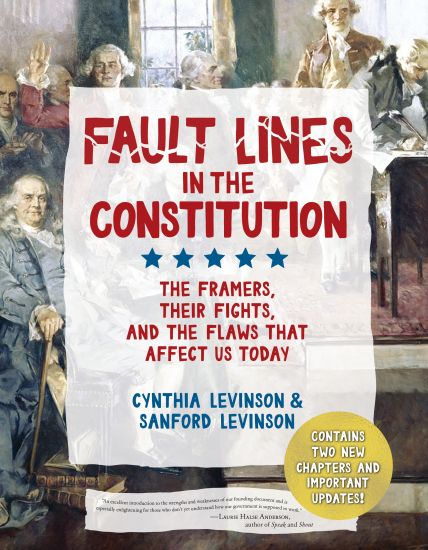
Fault Lines in the Constitution (Third Edition): The Framers, Their Fights, and the Flaws That Affect Us Today
Many of the political issues we struggle with today have their roots in the US Constitution. This book explores 21 of the fault lines that were created in 1787 and are still causing problems today. "Should be read by every single adult who lives in America." --Laurie Halse Anderson Many of us take certain features in our political system for granted, even when we complain about them. But these fault lines didn't spontaneously arise--they have their roots in the Constitution itself, the result of disagreements and compromises made by the Framers in 1787--and we're still feeling the ramifications today. Fault Lines in the Constitution takes readers back to the creation of this historic document and discusses the original intent and worldview of the Framers, when and how problems arose after the fact, and possible solutions for those problems, inspired by both constitutions of individual US states and other countries. Each chapter begins with a true story that connects directly back to a section of the document that forms the basis of our society and government. Written by an award-winning middle grade author and a constitutional law scholar, this new edition includes updated content throughout; two new chapters on Impeachment and Secession; significant expansion of the chapters on Emergency Powers and Term Limits; and revisions throughout that reflect political and social changes leading up to and following the 2024 national election.
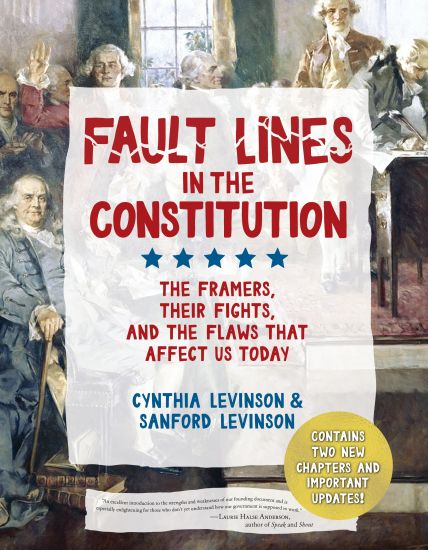
Fault Lines in the Constitution (Third Edition): The Framers, Their Fights, and the Flaws That Affect Us Today
Many of the political issues we struggle with today have their roots in the US Constitution. This book explores 21 of the fault lines that were created in 1787 and are still causing problems today. "Should be read by every single adult who lives in America." --Laurie Halse Anderson Many of us take certain features in our political system for granted, even when we complain about them. But these fault lines didn't spontaneously arise--they have their roots in the Constitution itself, the result of disagreements and compromises made by the Framers in 1787--and we're still feeling the ramifications today. Fault Lines in the Constitution takes readers back to the creation of this historic document and discusses the original intent and worldview of the Framers, when and how problems arose after the fact, and possible solutions for those problems, inspired by both constitutions of individual US states and other countries. Each chapter begins with a true story that connects directly back to a section of the document that forms the basis of our society and government. Written by an award-winning middle grade author and a constitutional law scholar, this new edition includes updated content throughout; two new chapters on Impeachment and Secession; significant expansion of the chapters on Emergency Powers and Term Limits; and revisions throughout that reflect political and social changes leading up to and following the 2024 national election.
Fault Lines in the Constitution: The Framers, Their Fights, and the Flaws That Affect Us Today
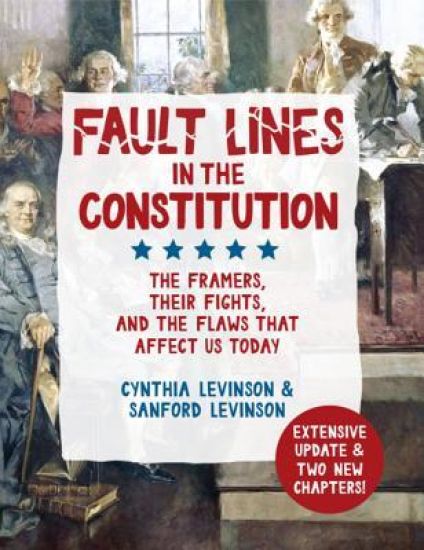
A noted children's nonfiction author and one of the nation's foremost constitutional scholars team up to create an essential book on the United States Constitution for everyone grappling with today's most urgent political issues. Many of the political issues we struggle with today have their roots in one place--the U. S. Constitution. Fault Lines in the Constitution takes readers back to the creation of this historic document and reveals how many of the problems that trouble us today--such as voting rights, the Electoral College, gerrymandering--were first introduced. Cynthia and Sanford Levinson explain the unexpected ramifications of decisions make in 1787 and explore possible solutions found in the constitutions of states and other countries. Each chapter begins with a story―all but one of them true―that connects directly back to a section of the document that forms the basis of our society and government. Informative sidebars and graphics run throughout along with a timeline and bibliography.
Fault Lines in the Constitution: The Framers, Their Fights, and the Flaws That Affect Us Today

Fault Lines in the Constitution: The Framers, Their Fights, and the Flaws That Affect Us Today

Cynthia Levinson; Sanford Levinson

Peachtree Publishers
2019
nidottu

Halvin toimitettuna 29,90 €

A noted children's nonfiction author and one of the nation's foremost constitutional scholars team up to create an essential book on the United States Constitution for everyone grappling with today's most urgent political issues. Many of the political issues we struggle with today have their roots in one place--the U. S. Constitution. Fault Lines in the Constitution takes readers back to the creation of this historic document and reveals how many of the problems that trouble us today--such as voting rights, the Electoral College, gerrymandering--were first introduced. Cynthia and Sanford Levinson explain the unexpected ramifications of decisions make in 1787 and explore possible solutions found in the constitutions of states and other countries. Each chapter begins with a story―all but one of them true―that connects directly back to a section of the document that forms the basis of our society and government. Informative sidebars and graphics run throughout along with a timeline and bibliography.
Democracy and Dysfunction

Democracy and Dysfunction

Sanford Levinson; Jack M Balkin

University of Chicago Press
2019
pokkari
It is no longer controversial that the American political system has become deeply dysfunctional. Today, only slightly more than a quarter of Americans believe the country is heading in the right direction, while sixty-three percent believe we are on a downward slope. The top twenty words used to describe the past year include "chaotic," "turbulent," and "disastrous." Donald Trump's improbable rise to power and his 2016 Electoral College victory placed America's political dysfunction in an especially troubling light, but given the extreme polarization of contemporary politics, the outlook would have been grim even if Hillary Clinton had won. The greatest upset in American presidential history is only a symptom of deeper problems of political culture and constitutional design. Democracy and Dysfunction brings together two of the leading constitutional law scholars of our time, Sanford Levinson and Jack M. Balkin, in an urgently needed conversation that seeks to uncover the underlying causes of our current crisis and their meaning for American democracy. In a series of letters exchanged over a period of two years, Levinson and Balkin travel--along with the rest of the country--through the convulsions of the 2016 election and Trump's first year in office. They disagree about the scope of the crisis and the remedy required. Levinson believes that our Constitution is fundamentally defective and argues for a new constitutional convention, while Balkin, who believes we are suffering from constitutional rot, argues that there are less radical solutions. As it becomes dangerously clear that Americans--and the world--will be living with the consequences of this pivotal period for many years to come, it is imperative that we understand how we got here--and how we might forestall the next demagogue who will seek to beguile the American public.
Written in Stone

Written in Stone

Sanford Levinson

Duke University Press
2018
sidottu
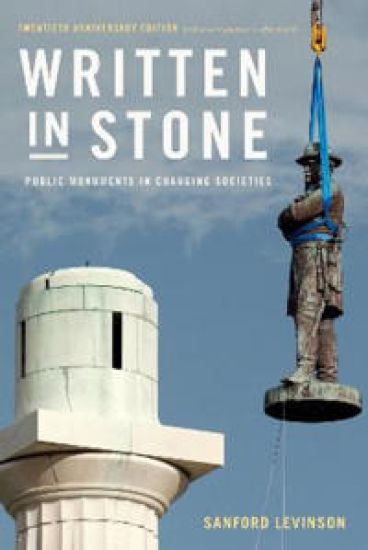
Twentieth Anniversary Edition with a new preface and afterword From the removal of Confederate monuments in New Orleans in the spring of 2017 to the violent aftermath of the white nationalist march on the Robert E. Lee monument in Charlottesville later that summer, debates and conflicts over the memorialization of Confederate “heroes” have stormed to the forefront of popular American political and cultural discourse. In Written in Stone Sanford Levinson considers the tangled responses to controversial monuments and commemorations while examining how those with political power configure public spaces in ways that shape public memory and politics. Paying particular attention to the American South, though drawing examples as well from elsewhere in the United States and throughout the world, Levinson shows how the social and legal arguments regarding the display, construction, modification, and destruction of public monuments mark the seemingly endless confrontation over the symbolism attached to public space. This twentieth anniversary edition of Written in Stone includes a new preface and an extensive afterword that takes account of recent events in cities, schools and universities, and public spaces throughout the United States and elsewhere. Twenty years on, Levinson's work is more timely and relevant than ever.
Written in Stone

Written in Stone

Sanford Levinson

Duke University Press
2018
pokkari
Twentieth Anniversary Edition with a new preface and afterword From the removal of Confederate monuments in New Orleans in the spring of 2017 to the violent aftermath of the white nationalist march on the Robert E. Lee monument in Charlottesville later that summer, debates and conflicts over the memorialization of Confederate “heroes” have stormed to the forefront of popular American political and cultural discourse. In Written in Stone Sanford Levinson considers the tangled responses to controversial monuments and commemorations while examining how those with political power configure public spaces in ways that shape public memory and politics. Paying particular attention to the American South, though drawing examples as well from elsewhere in the United States and throughout the world, Levinson shows how the social and legal arguments regarding the display, construction, modification, and destruction of public monuments mark the seemingly endless confrontation over the symbolism attached to public space. This twentieth anniversary edition of Written in Stone includes a new preface and an extensive afterword that takes account of recent events in cities, schools and universities, and public spaces throughout the United States and elsewhere. Twenty years on, Levinson's work is more timely and relevant than ever.
The American Supreme Court, Sixth Edition

The American Supreme Court, Sixth Edition

Robert G. McCloskey; Sanford Levinson

University of Chicago Press
2016
nidottu

Halvin toimitettuna 34,50 €

For more than fifty years, Robert G. McCloskey’s classic work on the Supreme Court’s role in constructing the US Constitution has introduced generations of students to the workings of our nation’s highest court. As in prior editions, McCloskey’s original text remains unchanged. In his historical interpretation, he argues that the strength of the Court has always been its sensitivity to the changing political scene, as well as its reluctance to stray too far from the main currents of public sentiment. In this new edition, Sanford Levinson extends McCloskey’s magisterial treatment to address developments since the 2010 election, including the Supreme Court’s decisions regarding the Defense of Marriage Act, the Affordable Care Act, and gay marriage. The best and most concise account of the Supreme Court and its place in American politics, McCloskey's wonderfully readable book is an essential guide to the past, present, and future prospects of this institution.
The American Supreme Court, Sixth Edition

The American Supreme Court, Sixth Edition

Robert G. McCloskey; Sanford Levinson

University of Chicago Press
2016
sidottu
For more than fifty years, Robert G. McCloskey’s classic work on the Supreme Court’s role in constructing the US Constitution has introduced generations of students to the workings of our nation’s highest court. As in prior editions, McCloskey’s original text remains unchanged. In his historical interpretation, he argues that the strength of the Court has always been its sensitivity to the changing political scene, as well as its reluctance to stray too far from the main currents of public sentiment. In this new edition, Sanford Levinson extends McCloskey’s magisterial treatment to address developments since the 2010 election, including the Supreme Court’s decisions regarding the Defense of Marriage Act, the Affordable Care Act, and gay marriage. The best and most concise account of the Supreme Court and its place in American politics, McCloskey's wonderfully readable book is an essential guide to the past, present, and future prospects of this institution.
Red, White, and Blue

Red, White, and Blue

Mark Tushnet; Sanford Levinson

University Press of Kansas
2015
nidottu
The first paperback edition of a classic of American constitutional theory. The book is divided into two parts. In Part I Professor Tushnet appraises the five major competing “grand theories” of constitutional law and interpretation, and, argues that none of them satisfy their own requirements for coherence and judicial constraint. In Part II the author offers a descriptive sociology of constitutional doctrine and raises critical questions as to whether a grand theory is necessary, is it possible to construct a coherent, useful grand theory, and is construction of an uncontroversial grand theory possible? Professor Tushnet’s new Afterword is organized in parallel fashion to the original text. Part I offers a new survey of the contemporary terrain of constitutional interpretation. Part II provides an extended discussion of the most prominent of contemporary efforts to provide an external analysis of constitutional law, the idea of regime politics. This includes discussion of major court decisions, including Bush v. Gore and Citizens United.
Framed

Framed

Sanford Levinson

Oxford University Press Inc
2013
nidottu
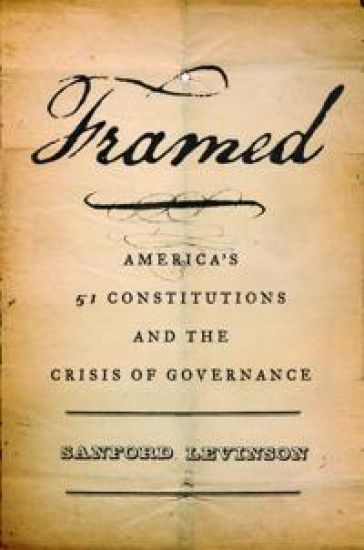
In his widely acclaimed volume Our Undemocratic Constitution, Sanford Levinson boldly argued that our Constitution should not be treated with "sanctimonious reverence," but as a badly flawed document deserving revision. Now Levinson takes us deeper, asking what were the original assumptions underlying our institutions, and whether we accept those assumptions 225 years later. In Framed, Levinson challenges our belief that the most important features of our constitutions concern what rights they protect. Instead, he focuses on the fundamental procedures of governance such as congressional bicameralism; the selection of the President by the electoral college, or the dimensions of the President's veto power--not to mention the near impossibility of amending the United States Constitution. These seemingly "settled" and "hardwired" structures contribute to the now almost universally recognized "dysfunctionality" of American politics. Levinson argues that we should stop treating the United States Constitution as uniquely exemplifying the American constitutional tradition. We should be aware of the 50 state constitutions, often interestingly different--and perhaps better--than the national model. Many states have updated their constitutions by frequent amendment or by complete replacement via state constitutional conventions. California's ungovernable condition has prompted serious calls for a constitutional convention. This constant churn indicates that basic law often reaches the point where it fails and becomes obsolete. Given the experience of so many states, he writes, surely it is reasonable to believe that the U. S. Constitution merits its own updating. Whether we are concerned about making America more genuinely democratic or only about creating a system of government that can more effectively respond to contemporary challenges, we must confront the ways our constitutions, especially the United States Constitution, must be changed in fundamental ways.
Framed

Framed

Sanford Levinson

Oxford University Press Inc
2012
sidottu
In his widely acclaimed volume Our Undemocratic Constitution, Sanford Levinson boldly argued that our Constitution should not be treated with "sanctimonious reverence," but as a badly flawed document deserving revision. Now Levinson takes us deeper, asking what were the original assumptions underlying our institutions, and whether we accept those assumptions 225 years later. In Framed, Levinson challenges our belief that the most important features of our constitutions concern what rights they protect. Instead, he focuses on the fundamental procedures of governance such as congressional bicameralism; the selection of the President by the electoral college, or the dimensions of the President's veto power--not to mention the near impossibility of amending the United States Constitution. These seemingly "settled" and "hardwired" structures contribute to the now almost universally recognized "dysfunctionality" of American politics. Levinson argues that we should stop treating the United States Constitution as uniquely exemplifying the American constitutional tradition. We should be aware of the 50 state constitutions, often interestingly different--and perhaps better--than the national model. Many states have updated their constitutions by frequent amendment or by complete replacement via state constitutional conventions. California's ungovernable condition has prompted serious calls for a constitutional convention. This constant churn indicates that basic law often reaches the point where it fails and becomes obsolete. Given the experience of so many states, he writes, surely it is reasonable to believe that the U. S. Constitution merits its own updating. Whether we are concerned about making America more genuinely democratic or only about creating a system of government that can more effectively respond to contemporary challenges, we must confront the ways our constitutions, especially the United States Constitution, must be changed in fundamental ways.
Constitutional Faith

Constitutional Faith

Sanford Levinson

Princeton University Press
2011
pokkari
This book examines the "constitutional faith" that has, since 1788, been a central component of American "civil religion". By taking seriously the parallel between wholehearted acceptance of the Constitution and religious faith, Sanford Levinson opens up a host of intriguing questions about what it means to be American. While some view the Constitution as the central component of an American religion that serves to unite the social order, Levinson maintains that its sacred role can result in conflict, fragmentation, and even war. To Levinson, the Constitution's value lies in the realm of the discourse it sustains: a uniquely American form of political rhetoric that allows citizens to grapple with every important public issue imaginable. In a new afterword, Levinson looks at the deepening of constitutional worship and attributes the current widespread frustrations with the government to the static nature of the Constitution.
Our Undemocratic Constitution

Our Undemocratic Constitution

Sanford Levinson

Oxford University Press Inc
2008
nidottu
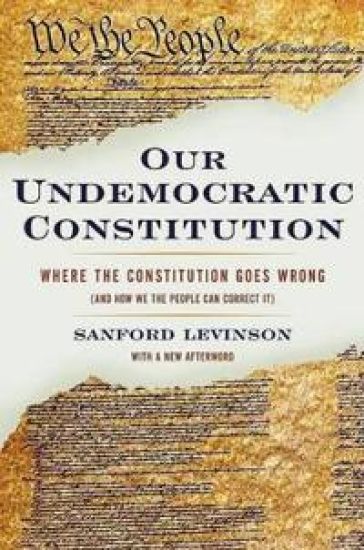
Levinson argues that too many of our Constitution's provisions promote either unjust or ineffective government. Under the existing blueprint, we can neither rid ourselves of incompetent presidents nor assure continuity of government following catastrophic attacks. Less important, perhaps, but certainly problematic, is the appointment of Supreme Court judges for life. Adding insult to injury, the United States Constitution is the most difficult to amend or update of any constitution currently existing in the world today. Democratic debate leaves few stones unturned, but we tend to take our basic constitutional structures for granted. Levinson boldly challenges the American people to undertake a long overdue public discussion on how they might best reform this most hallowed document and construct a constitution adequate to our democratic values. "Admirably gutsy and unfashionable." --Michael Kinsley, The New York Times "Bold, bracingly unromantic, and filled with illuminating insights. He accomplishes an unlikely feat, which is to make a really serious argument for a new constitutional convention, one that is founded squarely on democratic ideals." --Cass R. Sunstein, The New Republic "Everyone who cares about how our government works should read this thoughtful book." --Washington Lawyer
Wrestling with Diversity

Wrestling with Diversity

Sanford Levinson

Duke University Press
2003
sidottu
"Diversity" has become a mantra within discussions of university admissions policies and many other arenas of American society. In the essays collected here, Sanford Levinson, a leading scholar of constitutional law and American government, wrestles with various notions of diversity.
Wrestling with Diversity

Wrestling with Diversity

Sanford Levinson

Duke University Press
2003
pokkari
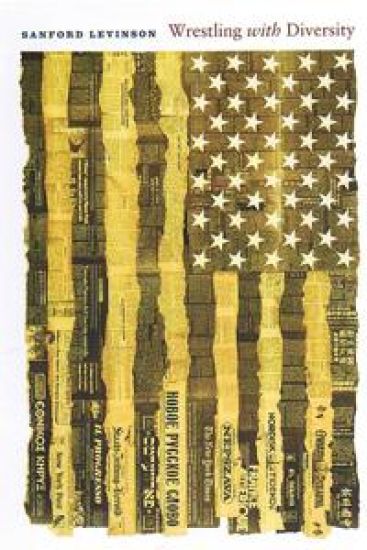
“Diversity” has become a mantra within discussions of university admissions policies and many other arenas of American society. In the essays collected here, Sanford Levinson, a leading scholar of constitutional law and American government, wrestles with various notions of diversity. He begins by explaining why he finds the concept to be almost useless as a genuine guide to public policy. Discussing affirmative action in university admissions, including the now famous University of Michigan Law School case, he argues both that there may be good reasons to use preferences-including race and ethnicity-and that these reasons have relatively little to do with any cogently developed theory of diversity. Distinguished by Levinson’s characteristic open-mindedness and willingness to tease out the full implications of various claims, each of these nine essays, written over the past decade, develops a case study focusing on a particular aspect of public life in a richly diverse, and sometimes bitterly divided, society. Although most discussions of diversity have focused on race and ethnicity, Levinson is particularly interested in religious diversity and its implications. Why, he asks, do arguments for racial and ethnic diversity not also counsel a concern to achieve religious diversity within a student body? He considers the propriety of judges drawing on their religious views in making legal decisions and the kinds of questions Senators should feel free to ask nominees to the federal judiciary who have proclaimed the importance of their religion in structuring their own lives. In exploring the sense in which Sandy Koufax can be said to be a “Jewish baseball player,” he engages in broad reflections on professional identity. He asks whether it is desirable, or even possible, to subordinate merely "personal" aspects of one’s identity-religion, political viewpoints, gender-to the impersonal demands of the professional role. Wrestling with Diversity is a powerful interrogation of the assumptions and contradictions underlying public life in a multicultural world.
Written in Stone

Written in Stone

Sanford Levinson

Duke University Press
1998
pokkari
Is it “Stalinist” for a formerly communist country to tear down a statue of Stalin? Should the Confederate flag be allowed to fly over the South Carolina state capitol? Is it possible for America to honor General Custer and the Sioux Nation, Jefferson Davis and Abraham Lincoln? Indeed, can a liberal, multicultural society memorialize anyone at all, or is it committed to a strict neutrality about the quality of the lives led by its citizens? In Written in Stone, legal scholar Sanford Levinson considers the tangled responses of ever-changing societies to the monuments and commemorations created by past regimes or outmoded cultural and political systems. Drawing on examples from Albania to Zimbabwe, from Moscow to Managua, and paying particular attention to examples throughout the American South, Levinson looks at social and legal arguments regarding the display, construction, modification, and destruction of public monuments. He asks what kinds of claims the past has on the present, particularly if the present is defined in dramatic opposition to its past values. In addition, he addresses the possibilities for responding to the use and abuse of public spaces and explores how a culture might memorialize its historical figures and events in ways that are beneficial to all its members. Written in Stone is a meditation on how national cultures have been or may yet be defined through the deployment of public monuments. It adds a thoughtful and crucial voice into debates surrounding historical accuracy and representation, and will be welcomed by the many readers concerned with such issues.
Written in Stone

Written in Stone

Sanford Levinson

Duke University Press
1998
sidottu
Is it “Stalinist” for a formerly communist country to tear down a statue of Stalin? Should the Confederate flag be allowed to fly over the South Carolina state capitol? Is it possible for America to honor General Custer and the Sioux Nation, Jefferson Davis and Abraham Lincoln? Indeed, can a liberal, multicultural society memorialize anyone at all, or is it committed to a strict neutrality about the quality of the lives led by its citizens? In Written in Stone, legal scholar Sanford Levinson considers the tangled responses of ever-changing societies to the monuments and commemorations created by past regimes or outmoded cultural and political systems. Drawing on examples from Albania to Zimbabwe, from Moscow to Managua, and paying particular attention to examples throughout the American South, Levinson looks at social and legal arguments regarding the display, construction, modification, and destruction of public monuments. He asks what kinds of claims the past has on the present, particularly if the present is defined in dramatic opposition to its past values. In addition, he addresses the possibilities for responding to the use and abuse of public spaces and explores how a culture might memorialize its historical figures and events in ways that are beneficial to all its members. Written in Stone is a meditation on how national cultures have been or may yet be defined through the deployment of public monuments. It adds a thoughtful and crucial voice into debates surrounding historical accuracy and representation, and will be welcomed by the many readers concerned with such issues.