Kirjojen hintavertailu – 12 903 727 kirjaa ja 27 kauppaa

Kirjailija

Sanja Kutnjak Ivkovich

Kirjat ja teokset yhdessä paikassa: 5 kirjaa, julkaisuja vuosilta 2006–2021, suosituimpiin kuuluu Reclaiming Justice. Vertaile teosten hintoja ja tarkista saatavuus suomalaisista kirjakaupoista.

5 kirjaa

Kirjojen julkaisuvuodet: 2006–2021.

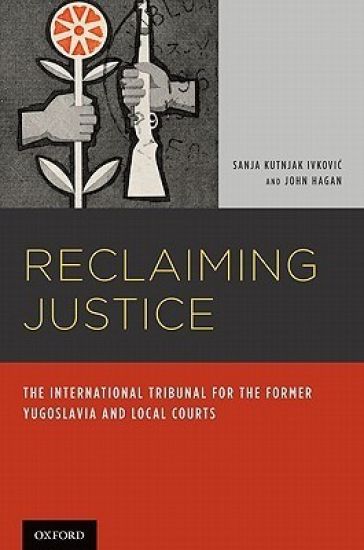
Reclaiming Justice

Reclaiming Justice

Sanja Kutnjak Ivkovich; John Hagan

Oxford University Press Inc
2011
sidottu

Halvin toimitettuna 127,70 €

For the first time in legal history, an indictment was filed against an acting head of state, Slobodan Milosevic, for crimes that Milosevic allegedly committed while he was in office. Seeking to change the concept of ethnic cleansing from a rationalizing euphemism to an incriminating metaphor, the International Criminal Tribunal for the Former Yugoslavia (ICTY) set precedents and expanded the boundaries of international criminal and humanitarian law. In Reclaiming Justice, Sanja Kutnjak Ivkovich and John Hagan add to prior literature about the ICTY by providing a comprehensive view of how people from Bosnia and Herzegovina, Croatia, Kosovo, and Serbia view and evaluate the ICTY. Kutnjak Ivkovich and Hagan ask crucial questions about international justice in a systematic and comprehensive manner, looking into the ICTY's legality and judicial independence, as well as specific issues of substantive and procedural justice and collective and individual responsibility. Kutnjak Ivkovich and Hagan provide an in-depth analysis of perceptions about the ICTY, the subsequent work of its local courts, and decisions reached by the local courts. They also examine the relationship between the views of the ICTY and ethnicity, a particularly relevant notion because the war was fought largely along ethnic lines.
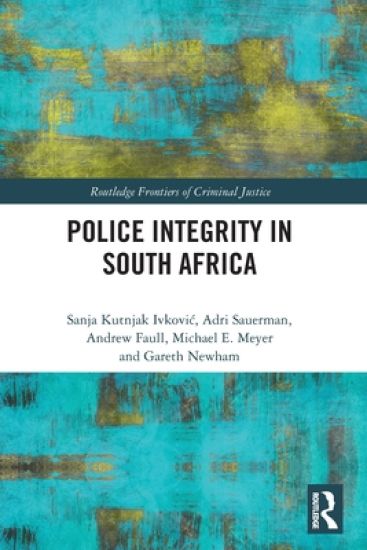
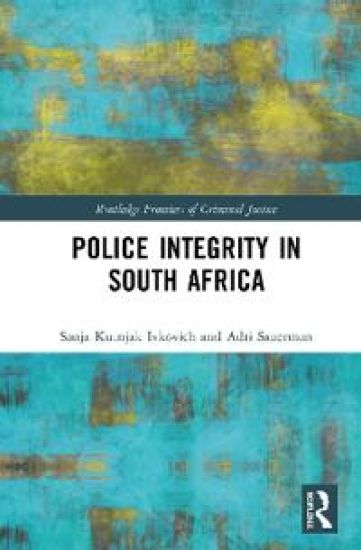
Police Integrity in South Africa

Police Integrity in South Africa

Sanja Kutnjak Ivkovich; Adri Sauerman; Andrew Faull; Michael E. Meyer; Gareth Newham

Routledge
2021
nidottu
Policing in South Africa has gained notoriety through its extensive history of oppressive law enforcement. In 1994, as the country’s apartheid system was replaced with a democratic order, the new government faced the significant challenge of transforming the South African police force into a democratic police agency—the South African Police Service (SAPS)—that would provide unbiased policing to all the country’s people. More than two decades since the initiation of the reforms, it appears that the SAPS has rapidly developed a reputation as a police agency beset by challenges to its integrity. This book offers a unique perspective by providing in-depth analyses of police integrity in South Africa. It is a case study that systematically and empirically explores the contours of police integrity in a young democracy. Using the organizational theory of police integrity, the book analyzes the complex set of historical, legal, political, social, and economic circumstances shaping police integrity. A discussion of the theoretical framework is accompanied by the results of a nationwide survey of nearly 900 SAPS officers, probing their familiarity with official rules, their expectations of discipline within the SAPS, and their willingness to report misconduct. The book also examines the influence of the respondents’ race, gender, and supervisory status on police integrity. Written in a clear and direct style, this book will appeal to students and scholars of criminology, policing, sociology, political science, as well as to police administrators interested in expanding their knowledge about police integrity and enhancing it in their organizations.
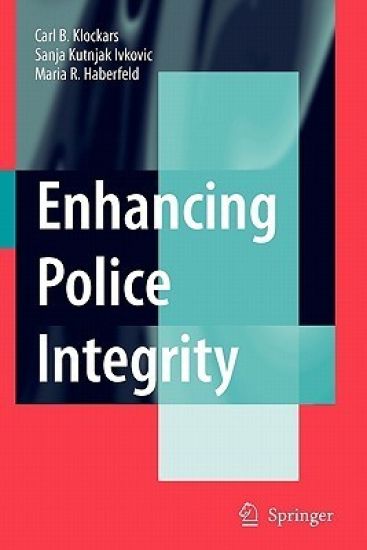
Enhancing Police Integrity

Enhancing Police Integrity

Carl B. Klockars; Sanja Kutnjak Ivkovich; M.R. Haberfeld

Springer-Verlag New York Inc.
2010
nidottu
How can we enhance police integrity? The authors surveyed over 3000 police officers from 30 U. S. police departments on how they would respond to typical scenarios where integrity is challenged. They studied three police agencies which scored highly on the integrity scale: Charlotte-Mecklenburg, North Carolina; Charleston, South Carolina; and St. Petersburg, Florida. The authors conclude that enhancing police integrity goes well beyond culling out "bad apple" police officers. Police administrators should focus on four aspects: organizational rulemaking; detecting, investigating and disciplining rule violations; circumscribing the informal "code of silence" that prohibits police from reporting the misconduct of their colleagues; and understanding the influence of public expectations and agency history.
Police Integrity in South Africa

Police Integrity in South Africa

Sanja Kutnjak Ivkovich; Adri Sauerman; Andrew Faull; Michael E. Meyer; Gareth Newham

Routledge
2020
sidottu
Policing in South Africa has gained notoriety through its extensive history of oppressive law enforcement. In 1994, as the country’s apartheid system was replaced with a democratic order, the new government faced the significant challenge of transforming the South African police force into a democratic police agency—the South African Police Service (SAPS)—that would provide unbiased policing to all the country’s people. More than two decades since the initiation of the reforms, it appears that the SAPS has rapidly developed a reputation as a police agency beset by challenges to its integrity. This book offers a unique perspective by providing in-depth analyses of police integrity in South Africa. It is a case study that systematically and empirically explores the contours of police integrity in a young democracy. Using the organizational theory of police integrity, the book analyzes the complex set of historical, legal, political, social, and economic circumstances shaping police integrity. A discussion of the theoretical framework is accompanied by the results of a nationwide survey of nearly 900 SAPS officers, probing their familiarity with official rules, their expectations of discipline within the SAPS, and their willingness to report misconduct. The book also examines the influence of the respondents’ race, gender, and supervisory status on police integrity. Written in a clear and direct style, this book will appeal to students and scholars of criminology, policing, sociology, political science, as well as to police administrators interested in expanding their knowledge about police integrity and enhancing it in their organizations.
Enhancing Police Integrity

Enhancing Police Integrity

Carl B. Klockars; Sanja Kutnjak Ivkovich; M.R. Haberfeld

Springer-Verlag New York Inc.
2006
sidottu
How can we enhance police integrity? The authors surveyed over 3000 police officers from 30 U. S. police departments on how they would respond to typical scenarios where integrity is challenged. They studied three police agencies which scored highly on the integrity scale: Charlotte-Mecklenburg, North Carolina; Charleston, South Carolina; and St. Petersburg, Florida. The authors conclude that enhancing police integrity goes well beyond culling out "bad apple" police officers. Police administrators should focus on four aspects: organizational rulemaking; detecting, investigating and disciplining rule violations; circumscribing the informal "code of silence" that prohibits police from reporting the misconduct of their colleagues; and understanding the influence of public expectations and agency history.