Kirjojen hintavertailu – 12 859 819 kirjaa ja 27 kauppaa
Kirjailija
Sara Jones
Kirjat ja teokset yhdessä paikassa: 11 kirjaa, julkaisuja vuosilta 2011–2026, suosituimpiin kuuluu Knowledge of the Stasi in the East German Literary Sphere. Vertaile teosten hintoja ja tarkista saatavuus suomalaisista kirjakaupoista.
The first book to investigate what writers, publishers, and editors knew about the Stasi and how, rethinking the relationship between knowledge, secrecy, intuition, trust, and agency under an authoritarian regime. While much scholarship has explored what the East German Ministry for State Security - the Stasi - knew about writers, publishers, editors, and others involved in the GDR's literary sphere, none has asked what these groups knew about the Stasi, how they acquired that knowledge, and how it circulated. The present book flips the approach of existing scholarship to ask those questions, thus offering an innovative approach to studying the production and circulation of literature in East Germany. It uncovers the myriad ways in which those who wrote, published, or supported literary production that was critical of the state negotiated, circumvented, and actively confronted the threat posed by surveillance and control. The study draws on original interviews, Stasi files, and writings by Uwe Kolbe, Ekkehard Maaß, Christa Moog, Gabriele Stötzer, Bernd Wagner, and Bettina Wegner, as well as works by Stefan Heym, Ralf-Günter Krolkiewicz, Günter Kunert, and Christa Wolf. The book shows that the Stasi was a kind of "public secret"-a known unknown that was positioned between revelation and concealment. It engages with theoretical frameworks drawn from anthropology, sociology, psychology, philosophy, surveillance studies and cultural studies to reconceptualize the relationship between knowledge, secrecy, intuition, trust, and agency in an authoritarian context. This book is available as Open Access under the Creative Commons license CC BY-NC-ND. SARA JONES is Professor of Languages, Cultures, and Societies at the University of Birmingham, UK. TARA TALWAR WINDSOR is Lecturer in German Studies at the University of Leeds, UK. BETIEL WASIHUN is Lecturer in Cultural and Literary Theory at the Humboldt University of Berlin, Germany.
"A kid once told me that we have one life only, and it's quite stupid to spend it thinking about dying. Then summer came, and she tried taking this one life she had."
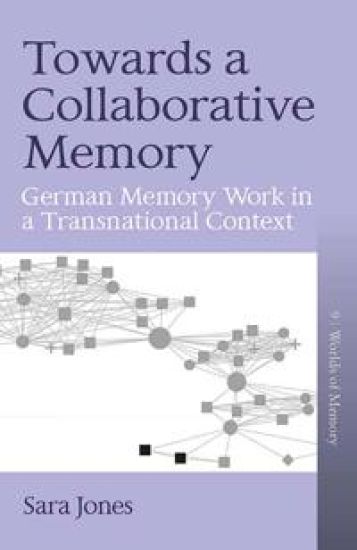
Focusing on the memory of the German Democratic Republic, Towards a Collaborative Memory explores the cross-border collaborations of three German institutions. Using an innovative theoretical and methodological framework, drawing on relational sociology, network analysis and narrative, the study highlights the epistemic coloniality that has underpinned global partnerships across European actors and institutions. Sara Jones reconceptualizes transnational memory towards an approach that is collaborative not only in its practices, but also in its ethics, and shows how these institutions position themselves within dominant relationship cultures reflected between East and West, and North and South.
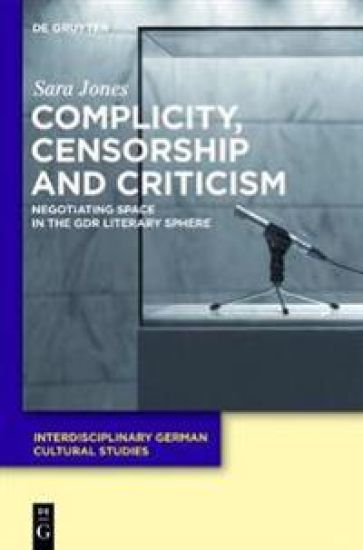
This study develops an interdisciplinary approach to the analysis of the cultural history of the German Democratic Republic, examining the interaction between intellectuals and Party functionaries from a literary and historical perspective. Divided into three case studies, the work focuses on writers positioned along a spectrum of conformity and dissent and who had quite different relationships to political power: Hermann Kant, Stefan Heym and Elfriede Brüning. Drawing on and comparing unpublished archive material, autobiography and the literary output of the three named writers, this study brings to the fore the ambiguities and contradictions of intellectual life in the GDR. Tensions between the different sources point towards tensions inherent in the subject positions of writers, publishers, reviewers and cultural authorities. This granular approach to the study of GDR cultural history challenges top-down interpretations and builds into a theoretical understanding of GDR cultural life based on the concepts of ambiguity and ambivalence and the increasing fragmentation of ideology. Comparison with other spheres of GDR life points towards the significance of these concepts for the study of East German society as a whole.