Kirjojen hintavertailu – 12 859 818 kirjaa ja 27 kauppaa

Kirjailija

Sara Mills

Kirjat ja teokset yhdessä paikassa: 22 kirjaa, julkaisuja vuosilta 1991–2022, suosituimpiin kuuluu Gender Matters. Vertaile teosten hintoja ja tarkista saatavuus suomalaisista kirjakaupoista.

22 kirjaa

Kirjojen julkaisuvuodet: 1991–2022.

English Politeness and Class

English Politeness and Class

Sara Mills

Cambridge University Press
2022
pokkari
Politeness plays a vital role in maintaining class differences. In this highly original account, Sara Mills analyses the interrelationship between class and linguistic interaction, uncovering the linguistic ideologies behind politeness in British English. She sheds light on the way politeness and rudeness interrelate with the marking of class boundaries, and reveals how middle-class positions in society are marked by people's use of self-deprecation, indirectness and reserve. Systematically challenging received wisdom about cross-cultural and inter-cultural differences, she goes beyond the mere context of the interaction to investigate the social dimension of politeness. This approach enables readers to analyse other languages in the same way, and a range of case studies illustrate how ideologies of politeness are employed and judged.
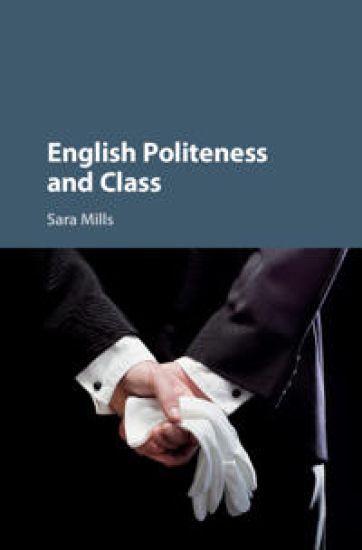
English Politeness and Class

English Politeness and Class

Sara Mills

Cambridge University Press
2017
sidottu
Politeness plays a vital role in maintaining class differences. In this highly original account, Sara Mills analyses the interrelationship between class and linguistic interaction, uncovering the linguistic ideologies behind politeness in British English. She sheds light on the way politeness and rudeness interrelate with the marking of class boundaries, and reveals how middle-class positions in society are marked by people's use of self-deprecation, indirectness and reserve. Systematically challenging received wisdom about cross-cultural and inter-cultural differences, she goes beyond the mere context of the interaction to investigate the social dimension of politeness. This approach enables readers to analyse other languages in the same way, and a range of case studies illustrate how ideologies of politeness are employed and judged.
Language and Gender

Language and Gender

Sara Mills

Routledge
2017
sidottu
This volume examines important themes in the theoretical debates on the relationship of language and gender. It analyses this relationship across a range of different disciplinary perspectives from linguistics, literary theory, cultural studies and visual analysis. The focus of the book goes beyond an analysis of women's language to discuss the complexities of gendered language with chapters on lesbian poetics, the language of girls and boys and the relationship between gender and genre.
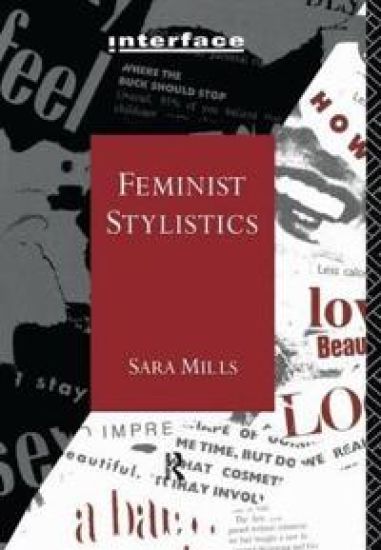
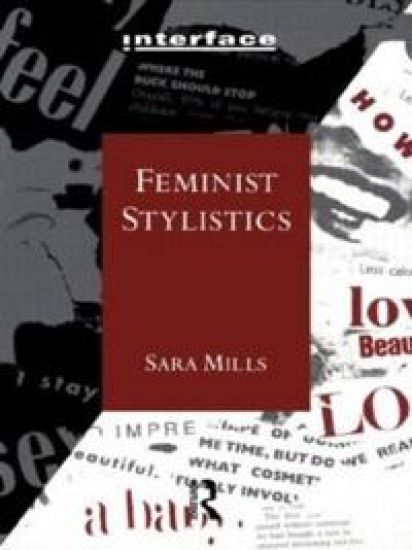
Feminist Stylistics

Feminist Stylistics

Sara Mills

Routledge
2016
sidottu
This lively and accessible book is the first sustained account of feminist stylistics. Mills explores such issues as sexism, political correctness, reader positioning and meaning, opening up the study of style to feminist inquiry.
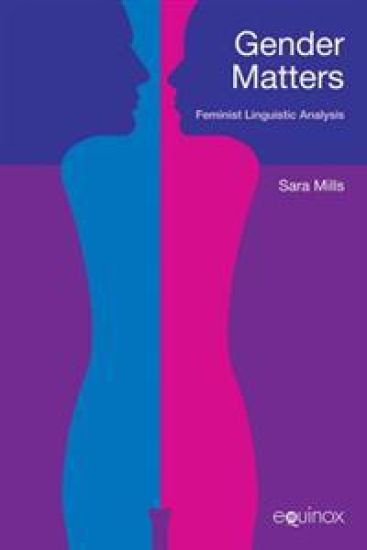
Gender Matters

Gender Matters

Sara Mills

Equinox Publishing Ltd
2012
pokkari
Gender Matters presents a feminist linguistic analysis of texts - literature, media and lyrics - and conversation. It explores how gender relates to and shapes our understanding of sexism, reading and writing, politeness and public speaking. The essays in the book examine a range of questions: why is it necessary for feminists to analyse or comment on sexism when sexism is widely regarded as an anachronistic concern? How can feminists describe the effect of gender on the experience of literature? Why are women conA--sidered more capable of private rather than public speech? What is the relation between gender and politeness and are women more polite than men? In analysing these themes, Gender Matters highlights the insights and strengths of both second and third wave feminist analysis for linguistics.
Gender Matters

Gender Matters

Sara Mills

Equinox Publishing Ltd
2012
sidottu
Gender Matters presents a feminist linguistic analysis of texts - literature, media and lyrics - and conversation. It explores how gender relates to and shapes our understanding of sexism, reading and writing, politeness and public speaking. The essays in the book examine a range of questions: why is it necessary for feminists to analyse or comment on sexism when sexism is widely regarded as an anachronistic concern? How can feminists describe the effect of gender on the experience of literature? Why are women conA--sidered more capable of private rather than public speech? What is the relation between gender and politeness and are women more polite than men? In analysing these themes, Gender Matters highlights the insights and strengths of both second and third wave feminist analysis for linguistics.
Language, Gender and Feminism

Language, Gender and Feminism

Sara Mills; Louise Mullany

Routledge
2011
sidottu
Language, Gender and Feminism presents students and researchers with key contemporary theoretical perspectives, methodologies and analytical frameworks in the field of feminist linguistic analysis. Mills and Mullany cover a wide range of contemporary feminist theories and emphasise the importance of an interdisciplinary approach. Topics covered include: power, language and sexuality, sexism and an exploration of the difference between second and third wave feminist analysis. Each chapter presents examples from research conducted in different cultural and linguistic contexts which allows students to observe practical applications of all current theories and approaches. Throughout oral and written language data, from a wealth of different contexts, settings and sources, is thoroughly analysed. The book concludes with a discussion of how the field could advance and a overview of the various research methods, pertinent for future work in language and gender study. Language, Gender and Feminism is an invaluable text for students new to the discipline of Language and Gender studies within English Language, Linguistics, Communication Studies and Women’s Studies, as well as being an up-to-date resource for more established researchers and scholars.
Language, Gender and Feminism

Language, Gender and Feminism

Sara Mills; Louise Mullany

Routledge
2011
nidottu
Language, Gender and Feminism presents students and researchers with key contemporary theoretical perspectives, methodologies and analytical frameworks in the field of feminist linguistic analysis. Mills and Mullany cover a wide range of contemporary feminist theories and emphasise the importance of an interdisciplinary approach. Topics covered include: power, language and sexuality, sexism and an exploration of the difference between second and third wave feminist analysis. Each chapter presents examples from research conducted in different cultural and linguistic contexts which allows students to observe practical applications of all current theories and approaches. Throughout oral and written language data, from a wealth of different contexts, settings and sources, is thoroughly analysed. The book concludes with a discussion of how the field could advance and a overview of the various research methods, pertinent for future work in language and gender study. Language, Gender and Feminism is an invaluable text for students new to the discipline of Language and Gender studies within English Language, Linguistics, Communication Studies and Women’s Studies, as well as being an up-to-date resource for more established researchers and scholars.
Gender and Colonial Space

Gender and Colonial Space

Sara Mills

Manchester University Press
2009
nidottu
Gender and colonial space is a trenchant analysis of the complex relation between social relations – including notions of class, nationality and gender – and spatial relations, landscape, architecture and topography – in post-colonial contexts. Arguing against much of the psychoanalytic focus of much current post-colonial theory, Mills aims to set out in a new direction, drawing on a wide range of literary and non-literary texts to develop a more materialist approach. She foregrounds gender in this field where it has often been marginalised by the critical orthodoxies, demonstrating its importance not only in spatial theorising in general, but in the post-colonial theorising of space in particular. Concentrating on the period of ‘high’ British colonialism at the close of the nineteenth century, she adroitly examines a range of contexts, looking at a range of colonial contexts such as India, Africa, America, Canada, Australia and Britain, illustrating how relations must be analysed for the way in which different colonial contexts define and constitute each other.
Language and Sexism

Language and Sexism

Sara Mills

Cambridge University Press
2008
pokkari
The issue of sexist language has been hotly debated within feminist circles since the 1960s. Previous books have tended to regard sexism in language as easy to identify and have suggested solutions to overcome and counter sexism. Sara Mills takes a fresh and more critical look at sexism in language, and argues that even in feminist circles it has become a problematic concept. Drawing on conversational and textual data collected over the last ten years, and with reference to recent research carried out in a range of different academic disciplines, Mills suggests that there are two forms of sexism - overt and indirect. Overt sexism is clear and unambiguous, while indirect sexism is based on pragmatics and the meaning and interpretation of utterances. Indirect sexism is extremely common and we therefore need new ways to challenge and analyse its usage in language.
Language and Sexism

Language and Sexism

Sara Mills

Cambridge University Press
2008
sidottu
The issue of sexist language has been hotly debated within feminist circles since the 1960s. Previous books have tended to regard sexism in language as easy to identify and have suggested solutions to overcome and counter sexism. Sara Mills takes a fresh and more critical look at sexism in language, and argues that even in feminist circles it has become a problematic concept. Drawing on conversational and textual data collected over the last ten years, and with reference to recent research carried out in a range of different academic disciplines, Mills suggests that there are two forms of sexism - overt and indirect. Overt sexism is clear and unambiguous, while indirect sexism is based on pragmatics and the meaning and interpretation of utterances. Indirect sexism is extremely common and we therefore need new ways to challenge and analyse its usage in language.
Discourse

Discourse

Sara Mills

Routledge
2004
sidottu
This volume provides a broad analysis of the term 'discourse' and a thorough examination of the many theoretical assumptions surrounding it. In the revised edition of this invaluable guidebook, Sara Mills:examines the historical definitions and developments of discourseanalyzes Foucault's use of the term and its appropriation in the fields of linguistics, social psychology, and feminist, colonial and post-colonial theoryexplores the changes that have taken place in the field of critical discourse analysis since original publicationdiscusses the work of various discourse theorists, including Zizek and Bourdieu. A fully updated bibliography, new glossary and suggestions for further reading make this more than ever the essential introductory guide to the concept of discourse for students of literary theory.
Discourse

Discourse

Sara Mills

Routledge
2004
nidottu

Halvin toimitettuna 33,30 €

This volume provides a broad analysis of the term 'discourse' and a thorough examination of the many theoretical assumptions surrounding it. In the revised edition of this invaluable guidebook, Sara Mills: *examines the historical definitions and developments of discourse *analyzes Foucault's use of the term and its appropriation in the fields of linguistics, social psychology, and feminist, colonial and post-colonial theory *explores the changes that have taken place in the field of critical discourse analysis since original publication *discusses the work of various discourse theorists, including Zizek and Bourdieu. A fully updated bibliography, new glossary and suggestions for further reading make this more than ever the essential introductory guide to the concept of discourse for students of literary theory.
Gender and Politeness

Gender and Politeness

Sara Mills

Cambridge University Press
2003
pokkari
Gender and Politeness challenges the notion that women are necessarily always more polite than men as much of the language and gender literature claims. Sara Mills discusses the complex relations between gender and politeness and argues that although there are circumstances when women speakers, drawing on stereotypes of femininity to guide their behaviour, will appear to be acting in a more polite way than men, there are many circumstances where women will act just as impolitely as men. The book aims to show that politeness and impoliteness are in essence judgements about another’s interventions in an interaction and about that person as whole, and are not simple classifications of particular types of speech. Drawing on the notion of community of practice Mills examines the way that speakers negotiate with what they perceive to be gendered stereotypes circulating within their particular group.
Michel Foucault

Michel Foucault

Sara Mills

Routledge
2003
sidottu
It is impossible to imagine contemporary critical theory without the work of Michel Foucault. His radical reworkings of the concepts of power, knowledge, discourse and identity have influenced the widest possible range of theories and impacted upon disciplinary fields from literary studies to anthropology. Aimed at students approaching Foucault's texts for the first time, this volume offers:* an examination of Foucault's contexts* a guide to his key ideas* an overview of responses to his work* practical hints on 'using Foucault'* an annotated guide to his most influential works* suggestions for further reading. Challenging not just what we think but how we think, Foucault's work remains the subject of heated debate. Sara Mills' Michel Foucault offers an introduction to both the ideas and the debate, fully equipping student readers for an encounter with this most influential of thinkers.
Michel Foucault

Michel Foucault

Sara Mills

Routledge
2003
nidottu
It is impossible to imagine contemporary critical theory without the work of Michel Foucault. His radical reworkings of the concepts of power, knowledge, discourse and identity have influenced the widest possible range of theories and impacted upon disciplinary fields from literary studies to anthropology. Aimed at students approaching Foucault's texts for the first time, this volume offers:* an examination of Foucault's contexts* a guide to his key ideas* an overview of responses to his work* practical hints on 'using Foucault'* an annotated guide to his most influential works* suggestions for further reading. Challenging not just what we think but how we think, Foucault's work remains the subject of heated debate. Sara Mills' Michel Foucault offers an introduction to both the ideas and the debate, fully equipping student readers for an encounter with this most influential of thinkers.
Feminist Stylistics

Feminist Stylistics

Sara Mills

Routledge
1995
nidottu
This lively and accessible book is the first sustained account of feminist stylistics. Mills explores such issues as sexism, political correctness, reader positioning and meaning, opening up the study of style to feminist inquiry.
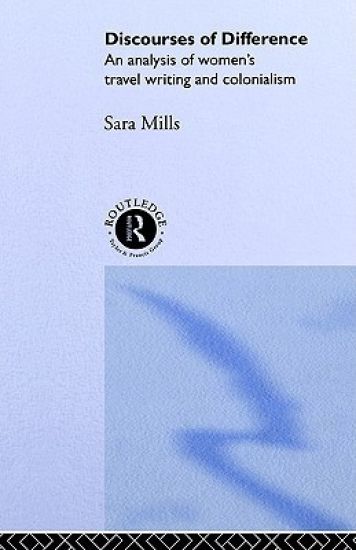
Discourses of Difference

Discourses of Difference

Sara Mills

Routledge
1993
nidottu
Discourses of Difference unravels the complexities of writings by British women travellers of the `high colonial' period. Sara Mills examines the relation of women travellers to colonialism, positioned as they were at the site of conflicting discourses: femininity, feminism, and patriarchal imperialism. Using feminist discourse theory, Sara Mills analyses the writings of three women travellers - Alexandra David-Neel, Mary Kingsley and Nina Mazuchelli. Her examination of agency, identity, and the contemporary social environment, is an important and inspiring step forward in post-colonial cultural and literary theory.
Discourses of Difference

Discourses of Difference

Sara Mills

Routledge
1991
sidottu
Discourses of Difference unravels the complexities of writings by British women travellers of the `high colonial' period. Sara Mills examines the relation of women travellers to colonialism, positioned as they were at the site of conflicting discourses: femininity, feminism, and patriarchal imperialism. Using feminist discourse theory, Sara Mills analyses the writings of three women travellers - Alexandra David-Neel, Mary Kingsley and Nina Mazuchelli. Her examination of agency, identity, and the contemporary social environment, is an important and inspiring step forward in post-colonial cultural and literary theory.