
Kirjailija
Sara Teasdale
Kirjat ja teokset yhdessä paikassa: 99 kirjaa, julkaisuja vuosilta 2004–2026, suosituimpiin kuuluu Rainbow Gold. Vertaile teosten hintoja ja tarkista saatavuus suomalaisista kirjakaupoista.
99 kirjaa
Kirjojen julkaisuvuodet: 2004–2026.
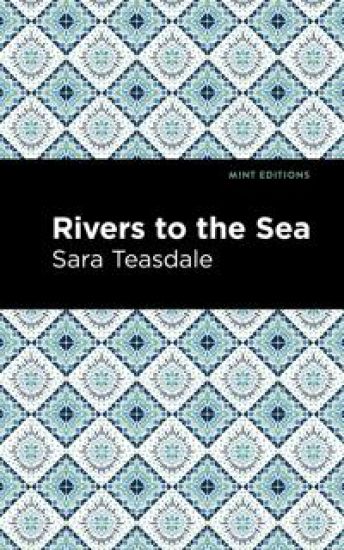
Rivers to the Sea (1915) is a poetry collection by Sara Teasdale. The poet’s third collection, published several years before she was awarded the 1918 Pulitzer Prize, is a masterful collection of lyric poems meditating on life, romance, and the natural world. Somber and celebratory, symbolic and grounded in experience, Rivers to the Sea revels in the mystery of existence itself. “The park is filled with night and fog, / The veils are drawn about the world, / The drowsy lights along the paths / Are dim and pearled.” “Spring Night,” the collection’s opening poem, begins in quiet reverie, its speaker appreciating the beauty and mystery of a silent world while suffering from heartache and uncertainty: “Oh, is it not enough to be / Here with this beauty over me? / My throat should ache with praise, and I / Should kneel in joy beneath the sky. / Oh, beauty are you not enough?” A lyric poet to her core, Teasdale explores the highs and lows of love in her own life and in the lives of strangers. Personal and communal, public and private, her work is a testament to a life spent in observance. For Teasdale, a poet who merges an abiding affection for flora and fauna with a critical distance from human affairs, the belief in the life of the world, with or without us, is enough. With a beautifully designed cover and professionally typeset manuscript, this edition of Sara Teasdale’s Rivers to the Sea is a classic work of American poetry reimagined for modern readers.
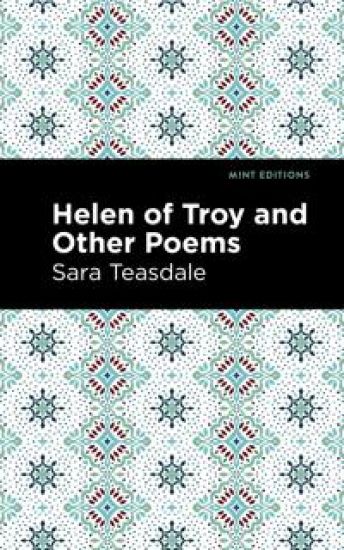
Helen of Troy and Other Poems (1911) is a poetry collection by Sara Teasdale. The poet’s second collection, published several years before she was awarded the 1918 Pulitzer Prize, is a masterful collection of lyric poems meditating on life, romance, and the natural world. Somber and celebratory, symbolic and grounded in experience, Helen of Troy and Other Poems revels in the mystery of existence itself. “Wild flight on flight against the fading dawn / The flames' red wings soar upward duskily. / This is the funeral pyre and Troy is dead / That sparkled so the day I saw it first, / And darkened slowly after. I am she / Who loves all beauty—yet I wither it.” As Troy burns, Teasdale imagines an impassioned monologue given from the ramparts by the infamous Helen, whose faithlessness in marriage was the catalyst for war in Homer’s Iliad. Although she is often seen as a minor character, more an object of male desire than an autonomous subject in her own right, Teasdale refuses to follow the template passed down by generations of poets—mostly men. Her Helen is meditative and intelligent, capable of immense sorrow and full-throated rage alike: “Men’s lives shall waste with longing after me, / For I shall be the sum of their desire, / The whole of beauty, never seen again.” While acknowledging her role in Troy’s destruction, Helen is a tragic figure in Teasdale’s poem, a woman who never asked for beauty, let alone for the troubles that beauty brought down on the world. Containing monologue poems from such figures as Sappho, Beatrice, and Guenevere, alongside a series of love poems and finely-crafted sonnets, Helen of Troy and Other Poems is a brilliant collection by a gifted American poet. With a beautifully designed cover and professionally typeset manuscript, this edition of Sara Teasdale’s Helen of Troy and Other Poems is a classic work of American poetry reimagined for modern readers.

This book has been considered important throughout the human history, and so that this work is never forgotten we have made efforts in its preservation by republishing this book in a modern format for present and future generations. This whole book has been reformatted, retyped and designed. These books are not made of scanned copies and hence the text is clear and readable.
Rivers to the Sea (1915) is a poetry collection by Sara Teasdale. The poet’s third collection, published several years before she was awarded the 1918 Pulitzer Prize, is a masterful collection of lyric poems meditating on life, romance, and the natural world. Somber and celebratory, symbolic and grounded in experience, Rivers to the Sea revels in the mystery of existence itself. “The park is filled with night and fog, / The veils are drawn about the world, / The drowsy lights along the paths / Are dim and pearled.” “Spring Night,” the collection’s opening poem, begins in quiet reverie, its speaker appreciating the beauty and mystery of a silent world while suffering from heartache and uncertainty: “Oh, is it not enough to be / Here with this beauty over me? / My throat should ache with praise, and I / Should kneel in joy beneath the sky. / Oh, beauty are you not enough?” A lyric poet to her core, Teasdale explores the highs and lows of love in her own life and in the lives of strangers. Personal and communal, public and private, her work is a testament to a life spent in observance. For Teasdale, a poet who merges an abiding affection for flora and fauna with a critical distance from human affairs, the belief in the life of the world, with or without us, is enough. With a beautifully designed cover and professionally typeset manuscript, this edition of Sara Teasdale’s Rivers to the Sea is a classic work of American poetry reimagined for modern readers.
Helen of Troy and Other Poems (1911) is a poetry collection by Sara Teasdale. The poet’s second collection, published several years before she was awarded the 1918 Pulitzer Prize, is a masterful collection of lyric poems meditating on life, romance, and the natural world. Somber and celebratory, symbolic and grounded in experience, Helen of Troy and Other Poems revels in the mystery of existence itself. “Wild flight on flight against the fading dawn / The flames' red wings soar upward duskily. / This is the funeral pyre and Troy is dead / That sparkled so the day I saw it first, / And darkened slowly after. I am she / Who loves all beauty—yet I wither it.” As Troy burns, Teasdale imagines an impassioned monologue given from the ramparts by the infamous Helen, whose faithlessness in marriage was the catalyst for war in Homer’s Iliad. Although she is often seen as a minor character, more an object of male desire than an autonomous subject in her own right, Teasdale refuses to follow the template passed down by generations of poets—mostly men. Her Helen is meditative and intelligent, capable of immense sorrow and full-throated rage alike: “Men’s lives shall waste with longing after me, / For I shall be the sum of their desire, / The whole of beauty, never seen again.” While acknowledging her role in Troy’s destruction, Helen is a tragic figure in Teasdale’s poem, a woman who never asked for beauty, let alone for the troubles that beauty brought down on the world. Containing monologue poems from such figures as Sappho, Beatrice, and Guenevere, alongside a series of love poems and finely-crafted sonnets, Helen of Troy and Other Poems is a brilliant collection by a gifted American poet. With a beautifully designed cover and professionally typeset manuscript, this edition of Sara Teasdale’s Helen of Troy and Other Poems is a classic work of American poetry reimagined for modern readers.

Love Songs (1917) is a poetry collection by Sara Teasdale. The poet’s fourth collection, for which she was awarded the 1918 Pulitzer Prize, is a masterful collection of lyric poems meditating on life, romance, and the natural world. Somber and celebratory, symbolic and grounded in experience, Love Songs revels in the mystery of existence itself. From despair to elation, confusion to security, Sara Teasdale captures the many emotions at work in the hearts of lovers. In “November,” she explores the strange feeling that accompany a relationship nearing a mutual ending: “The world is tired, the year is old, / The fading leaves are glad to die, / The wind goes shivering with cold / Where the brown reeds are dry.” Beginning her brief verse with an observation of autumn, Teasdale moves into a bittersweet stanza on love grown stagnant, mirroring the world approaching winter: “Our love is dying like the grass, / And we who kissed grow coldly kind, / Half glad to see our old love pass / Like leaves along the wind.” So far from spring, the only thing certain is that these lovers must part ways. Refusing to romanticize love, to portray it as wholly positive or negative, the poet crafts a timeless collection on a timeless theme. For Teasdale, a poet who merges an abiding affection for flora and fauna with a critical distance from human affairs, the belief in the life of the world, with or without us, is enough. With a beautifully designed cover and professionally typeset manuscript, this edition of Sara Teasdale’s Love Songs is a classic work of American poetry reimagined for modern readers.

Flame and Shadow (1920) is a poetry collection by Sara Teasdale. The poet’s fifth collection, published two years after she won the 1918 Pulitzer Prize, is a masterful collection of lyric poems meditating on life, death, and the natural world. Somber and celebratory, symbolic and grounded in experience, Flame and Shadow revels in the mystery of existence itself. “What do I care, in the dreams and the languor of spring, / That my songs do not show me at all?” Content to depict the rhythms of nature, the songs of birds, and “the silver light after a storm,” Teasdale’s poetry dissolves the poet’s ego in order to access a deeper well of creative energy: “For my mind is proud and strong enough to be silent, / It is my heart that makes my songs, not I.” In “There Will Come Soft Rains,” a poem born from a decade of war and widespread disease, Teasdale imagines a posthuman world where beauty and harmony continue despite our disappearance: “Robins will wear their feathery fire / Whistling their whims on a low fence-wire; And not one will know of the war…” For Teasdale, a poet who merges an abiding affection for flora and fauna with a critical distance from human affairs, the belief in the life of the world, with or without us, is enough. With a beautifully designed cover and professionally typeset manuscript, this edition of Sara Teasdale’s Flame and Shadow is a classic work of American poetry reimagined for modern readers.
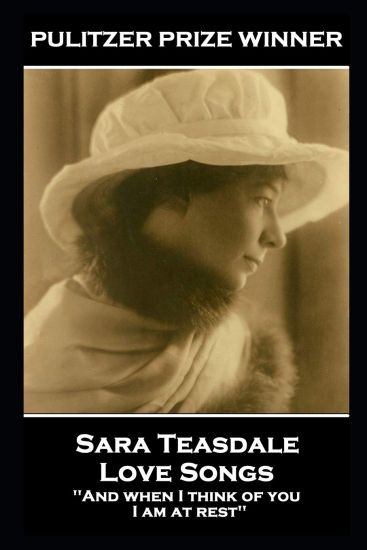
Sara Trevor Teasdale was born on the 8th August 1884 in St Louis, Missouri. A woman of poor health it was only at age 10 that she was well enough to begin school when she attended the Mary Institute from 1898, but moving to Hosmer Hall from where she graduated in 1903. Her first poem was published in William Marion Reedy's Reedy's Mirror, a local newspaper, in 1907. Later that same year her first collection of poems, 'Sonnets to Duse and Other Poems' was published. Her well received second volume 'Helen of Troy and Other Poems', published 4 years later, was praised for its lyrical talents and subject matter. She was courted by various men among them Vachel Lindsay, a great poet but one who thought he could not provide a suitable standard of living for her. Sara then married Ernst Filsinger, who also admired her poetry, in 1914. Sara's third poetry collection, 'Rivers to the Sea', was published in 1915 and was a best seller. A year later, in 1916, the couple moved to New York City. In 1917 she released her collection 'Love Songs' and the following year it won three awards: the Columbia University Poetry Society prize, the annual prize of the Poetry Society of America and, as a crowning achievement, the 1918 Pulitzer Prize for poetry By 1929 Sara was deeply unhappy and lonely and decided to divorce. To satisfy the criteria she moved across state lines for three months. She did not wish to inform Filsinger, and only at the insistence of her lawyers, as the divorce was going through, did she-Filsinger was shocked. After her divorce Sara remained in New York City and resumed her friendship with Vachel Lindsay, who was by this time married with children. 1931 Vachel Lindsay committed suicide. Two year later on 29th January 1933 Sara Teasdale died from an overdose of sleeping pills. She was 48. She was buried in the Bellefontaine Cemetery in St. Louis.

"The Song Maker" is a brand new collection of poetry by American lyric poet Sara Teasdale (1884-1933). Featuring her famous "Love Songs" collection alongside "Rivers to the Sea". Teasdale produced numerous volumes of poetry in her career, most of which were both well received critically and economically successful. She was awarded the Pulitzer Price for her poetry collection "Love Songs" in 1917, which was the first of its kind. A fantastic collection of timeless poems not to be missed by poetry lovers of all ages. Contents include: "Helen of Troy and Other Poems", "Rivers to the Sea", "Love Songs", and "Flame and Shadow". Ragged Hand is proudly publishing this brand-new collection of classic poetry complete with an introductory excerpt by William Lyon Phelps.
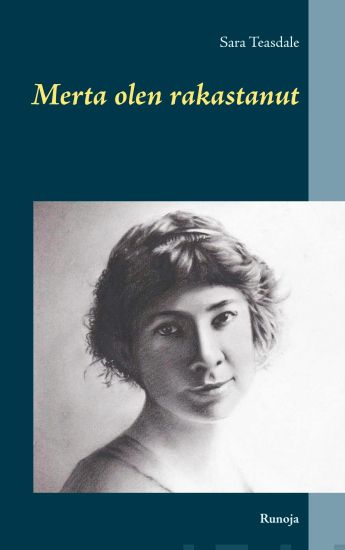
Runon keskeinen arvo on kyky kestää aikaa. Runot jotka elävät keskuudessamme sukupolvesta toiseen ovat merkityksellisiä, niissä on ihmistä koskettavia viestejä muodossa jota kaipaamme elämän haasteissa. Sara Teasdale (1884-1933) oli jo elinaikanaan merkittävä runoilija. Teasdalen lapsuutta ja nuoruutta varjostivat terveysongelmat mutta hänen ensimmäinen runokokoelmansa Sonnets to Duse and Other Poems oli arvostelumenestys ja hän sai nauttia menestyksestään lähes kaksi vuosikymmentä ennen kuolemaa oman käden kautta 48-vuotiaana. Sara Teasdalen teemoja ovat rakkaus, menetykset ja kuolema kuvattuna usein luonnon, vuodenaikojen ja värien kautta. Käännös: Harri Huttunen
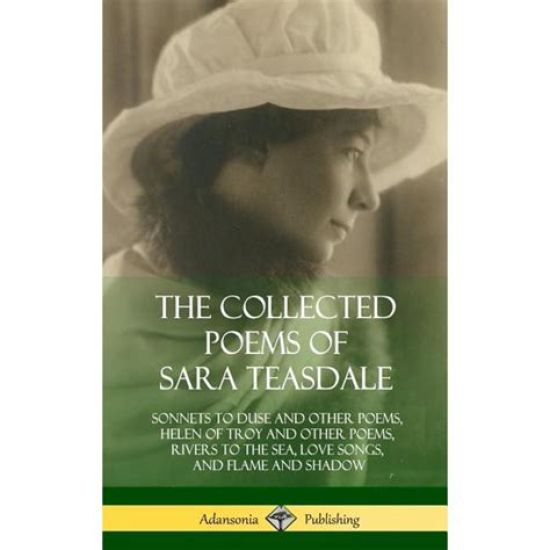
This sizable anthology contains the finest poems of Sara Teasdale, one of America's best-loved poets and lyricists, combined from a total of five earlier collections. A poorly child, the young Sara was taught at home in St. Louis, Missouri, until she was aged nine and deemed well enough to be educated in school. An introvert, her childhood home and quarters were designed to ensure privacy and solitude. By the time she was in her mid-teens, Sara had demonstrated an affinity for English verse and soon began to write her earliest poems. The five collections which comprise this anthology were published between 1907 and 1920; these were the years in which Sara Teasdale, as a young woman brimming with creative talent, authored her finest works. She won prizes for her poetry, and had soon gained national renown with her collections proving to be popular and much-endeared to the American public.
This sizable anthology contains the finest poems of Sara Teasdale, one of America's best-loved poets and lyricists, combined from a total of five earlier collections. A poorly child, the young Sara was taught at home in St. Louis, Missouri, until she was aged nine and deemed well enough to be educated in school. An introvert, her childhood home and quarters were designed to ensure privacy and solitude. By the time she was in her mid-teens, Sara had demonstrated an affinity for English verse and soon began to write her earliest poems. The five collections which comprise this anthology were published between 1907 and 1920; these were the years in which Sara Teasdale, as a young woman brimming with creative talent, authored her finest works. She won prizes for her poetry, and had soon gained national renown with her collections proving to be popular and much-endeared to the American public.

Helen of Troy and Other Poems (1911). By: Sara Teasdale: Sara Teasdale(August 8, 1884 - January 29, 1933) was an American lyric poet.
Sara Teasdale
Createspace Independent Publishing Platform
2018
nidottu
Sara Teasdale(August 8, 1884 - January 29, 1933) was an American lyric poet. She was born Sarah Trevor Teasdale in St. Louis, Missouri, and used the name Sara Teasdale Filsinger after her marriage in 1914. Biography;easdale was born on August 8, 1884. She had poor health for much of her childhood, so she was home schooled until age 9. It was at age 10 that she was well enough to begin school. She started at Mary Institute in 1898, but switched to Hosmer Hall in 1899, graduating in 1903. The Teasdale family resided at 3668 Lindell Blvd. and then 38 Kingsbury Place in St. Louis, Missouri. Both homes were designed by Sara's mother. The house on Kingsbury Place had a private suite for Sara on the second floor. Guests entered through a separate entrance and were admitted by appointment. This suite is where Sara worked, slept, and often dined alone. From 1904 to 1907, Teasdale was a member of The Potters, led by Lillie Rose Ernst, a group of female artists in their late teens and early twenties who published, from 1904 to 1907, The Potter's Wheel a monthly artistic and literary magazine in St. Louis. Teasdale's first poem was published in William Marion Reedy's Reedy's Mirror, a local newspaper, in 1907. Her first collection of poems, Sonnets to Duse and Other Poems, was published that same year. Teasdale's second collection, Helen of Troy and Other Poems, was published in 1911. It was well received by critics, who praised its lyrical mastery and romantic subject matter. From 1911 to 1914 Teasdale was courted by several men, including the poet Vachel Lindsay, who was truly in love with her but did not feel that he could provide enough money or stability to keep her satisfied. She chose to marry Ernst Filsinger, a longtime admirer of her poetry, on December 19, 1914. Teasdale's third poetry collection, Rivers to the Sea, was published in 1915. It was and is a bestseller, being reprinted several times. In 1916 she and Filsinger moved to New York City, where they lived in an Upper West Side apartment on Central Park West. In 1918 she won a Pulitzer Prize for her 1917 poetry collection Love Songs. It was "made possible by a special grant from The Poetry Society"; however, the sponsoring organization now lists it as the earliest Pulitzer Prize for Poetry (inaugurated 1922). Filsinger's constant business travel caused Teasdale much loneliness. In 1929, she moved interstate for three months, thereby satisfying the criteria to gain a divorce. She did not wish to inform Filsinger, only doing so at her lawyers' insistence as the divorce was going through. Filsinger was shocked. After the divorce she moved only two blocks from her old home on Central Park West. She rekindled her friendship with Vachel Lindsay, who was now married with children. In 1933, she died by suicide, overdosing on sleeping pills. Lindsay had died by suicide two years earlier. She is interred in Bellefontaine Cemetery in St. Louis.
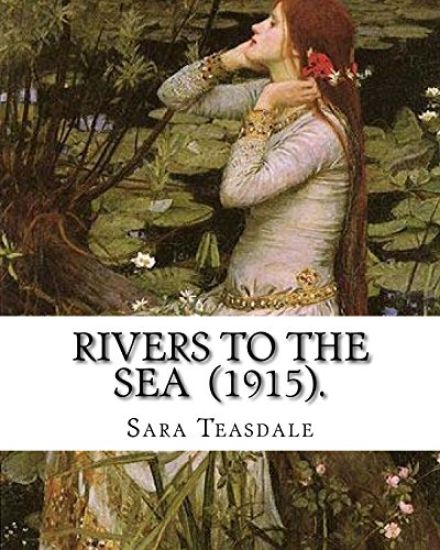
Rivers to the Sea (1915). By: Sara Teasdale: Sara Teasdale(August 8, 1884 - January 29, 1933) was an American lyric poet.
Sara Teasdale
Createspace Independent Publishing Platform
2018
nidottu
Sara Teasdale(August 8, 1884 - January 29, 1933) was an American lyric poet. She was born Sarah Trevor Teasdale in St. Louis, Missouri, and used the name Sara Teasdale Filsinger after her marriage in 1914. Biography;easdale was born on August 8, 1884. She had poor health for much of her childhood, so she was home schooled until age 9. It was at age 10 that she was well enough to begin school. She started at Mary Institute in 1898, but switched to Hosmer Hall in 1899, graduating in 1903. The Teasdale family resided at 3668 Lindell Blvd. and then 38 Kingsbury Place in St. Louis, Missouri. Both homes were designed by Sara's mother. The house on Kingsbury Place had a private suite for Sara on the second floor. Guests entered through a separate entrance and were admitted by appointment. This suite is where Sara worked, slept, and often dined alone. From 1904 to 1907, Teasdale was a member of The Potters, led by Lillie Rose Ernst, a group of female artists in their late teens and early twenties who published, from 1904 to 1907, The Potter's Wheel a monthly artistic and literary magazine in St. Louis. Teasdale's first poem was published in William Marion Reedy's Reedy's Mirror, a local newspaper, in 1907. Her first collection of poems, Sonnets to Duse and Other Poems, was published that same year. Teasdale's second collection, Helen of Troy and Other Poems, was published in 1911. It was well received by critics, who praised its lyrical mastery and romantic subject matter. From 1911 to 1914 Teasdale was courted by several men, including the poet Vachel Lindsay, who was truly in love with her but did not feel that he could provide enough money or stability to keep her satisfied. She chose to marry Ernst Filsinger, a longtime admirer of her poetry, on December 19, 1914. Teasdale's third poetry collection, Rivers to the Sea, was published in 1915. It was and is a bestseller, being reprinted several times. In 1916 she and Filsinger moved to New York City, where they lived in an Upper West Side apartment on Central Park West. In 1918 she won a Pulitzer Prize for her 1917 poetry collection Love Songs. It was "made possible by a special grant from The Poetry Society"; however, the sponsoring organization now lists it as the earliest Pulitzer Prize for Poetry (inaugurated 1922). Filsinger's constant business travel caused Teasdale much loneliness. In 1929, she moved interstate for three months, thereby satisfying the criteria to gain a divorce. She did not wish to inform Filsinger, only doing so at her lawyers' insistence as the divorce was going through. Filsinger was shocked. After the divorce she moved only two blocks from her old home on Central Park West. She rekindled her friendship with Vachel Lindsay, who was now married with children. In 1933, she died by suicide, overdosing on sleeping pills. Lindsay had died by suicide two years earlier. She is interred in Bellefontaine Cemetery in St. Louis.
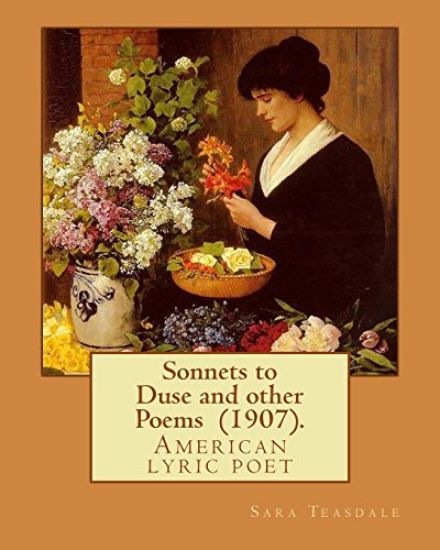
Sonnets to Duse and other Poems (1907). By: Sara Teasdale: Sara Teasdale(August 8, 1884 - January 29, 1933) was an American lyric poet.
Sara Teasdale
Createspace Independent Publishing Platform
2018
nidottu
Sara Teasdale(August 8, 1884 - January 29, 1933) was an American lyric poet. She was born Sarah Trevor Teasdale in St. Louis, Missouri, and used the name Sara Teasdale Filsinger after her marriage in 1914. Biography;easdale was born on August 8, 1884. She had poor health for much of her childhood, so she was home schooled until age 9. It was at age 10 that she was well enough to begin school. She started at Mary Institute in 1898, but switched to Hosmer Hall in 1899, graduating in 1903. The Teasdale family resided at 3668 Lindell Blvd. and then 38 Kingsbury Place in St. Louis, Missouri. Both homes were designed by Sara's mother. The house on Kingsbury Place had a private suite for Sara on the second floor. Guests entered through a separate entrance and were admitted by appointment. This suite is where Sara worked, slept, and often dined alone. From 1904 to 1907, Teasdale was a member of The Potters, led by Lillie Rose Ernst, a group of female artists in their late teens and early twenties who published, from 1904 to 1907, The Potter's Wheel a monthly artistic and literary magazine in St. Louis. Teasdale's first poem was published in William Marion Reedy's Reedy's Mirror, a local newspaper, in 1907. Her first collection of poems, Sonnets to Duse and Other Poems, was published that same year. Teasdale's second collection, Helen of Troy and Other Poems, was published in 1911. It was well received by critics, who praised its lyrical mastery and romantic subject matter. From 1911 to 1914 Teasdale was courted by several men, including the poet Vachel Lindsay, who was truly in love with her but did not feel that he could provide enough money or stability to keep her satisfied. She chose to marry Ernst Filsinger, a longtime admirer of her poetry, on December 19, 1914. Teasdale's third poetry collection, Rivers to the Sea, was published in 1915. It was and is a bestseller, being reprinted several times. In 1916 she and Filsinger moved to New York City, where they lived in an Upper West Side apartment on Central Park West. In 1918 she won a Pulitzer Prize for her 1917 poetry collection Love Songs. It was "made possible by a special grant from The Poetry Society"; however, the sponsoring organization now lists it as the earliest Pulitzer Prize for Poetry (inaugurated 1922). Filsinger's constant business travel caused Teasdale much loneliness. In 1929, she moved interstate for three months, thereby satisfying the criteria to gain a divorce. She did not wish to inform Filsinger, only doing so at her lawyers' insistence as the divorce was going through. Filsinger was shocked. After the divorce she moved only two blocks from her old home on Central Park West. She rekindled her friendship with Vachel Lindsay, who was now married with children. In 1933, she died by suicide, overdosing on sleeping pills. Lindsay had died by suicide two years earlier. She is interred in Bellefontaine Cemetery in St. Louis....................

Love Songs (1918). By: Sara Teasdale: Sara Teasdale (August 8, 1884 - January 29, 1933) was an American lyric poet.
Sara Teasdale
Createspace Independent Publishing Platform
2018
nidottu
Sara Teasdale (August 8, 1884 - January 29, 1933) was an American lyric poet. She was born Sarah Trevor Teasdale in St. Louis, Missouri, and used the name Sara Teasdale Filsinger after her marriage in 1914. Biography;easdale was born on August 8, 1884. She had poor health for much of her childhood, so she was home schooled until age 9. It was at age 10 that she was well enough to begin school. She started at Mary Institute in 1898, but switched to Hosmer Hall in 1899, graduating in 1903. The Teasdale family resided at 3668 Lindell Blvd. and then 38 Kingsbury Place in St. Louis, Missouri. Both homes were designed by Sara's mother. The house on Kingsbury Place had a private suite for Sara on the second floor. Guests entered through a separate entrance and were admitted by appointment. This suite is where Sara worked, slept, and often dined alone. From 1904 to 1907, Teasdale was a member of The Potters, led by Lillie Rose Ernst, a group of female artists in their late teens and early twenties who published, from 1904 to 1907, The Potter's Wheel a monthly artistic and literary magazine in St. Louis. Teasdale's first poem was published in William Marion Reedy's Reedy's Mirror, a local newspaper, in 1907. Her first collection of poems, Sonnets to Duse and Other Poems, was published that same year. Teasdale's second collection, Helen of Troy and Other Poems, was published in 1911. It was well received by critics, who praised its lyrical mastery and romantic subject matter. From 1911 to 1914 Teasdale was courted by several men, including the poet Vachel Lindsay, who was truly in love with her but did not feel that he could provide enough money or stability to keep her satisfied. She chose to marry Ernst Filsinger, a longtime admirer of her poetry, on December 19, 1914. Teasdale's third poetry collection, Rivers to the Sea, was published in 1915. It was and is a bestseller, being reprinted several times. In 1916 she and Filsinger moved to New York City, where they lived in an Upper West Side apartment on Central Park West. In 1918 she won a Pulitzer Prize for her 1917 poetry collection Love Songs. It was "made possible by a special grant from The Poetry Society"; however, the sponsoring organization now lists it as the earliest Pulitzer Prize for Poetry (inaugurated 1922). Filsinger's constant business travel caused Teasdale much loneliness. In 1929, she moved interstate for three months, thereby satisfying the criteria to gain a divorce. She did not wish to inform Filsinger, only doing so at her lawyers' insistence as the divorce was going through. Filsinger was shocked. After the divorce she moved only two blocks from her old home on Central Park West. She rekindled her friendship with Vachel Lindsay, who was now married with children. In 1933, she died by suicide, overdosing on sleeping pills. Lindsay had died by suicide two years earlier. She is interred in Bellefontaine Cemetery in St. Louis.