Kirjojen hintavertailu – 12 859 819 kirjaa ja 27 kauppaa

Kirjailija

Sarah Bracking

Kirjat ja teokset yhdessä paikassa: 4 kirjaa, julkaisuja vuosilta 2009–2018, suosituimpiin kuuluu The Financialisation of Power. Vertaile teosten hintoja ja tarkista saatavuus suomalaisista kirjakaupoista.

4 kirjaa

Kirjojen julkaisuvuodet: 2009–2018.

The Financialisation of Power

The Financialisation of Power

Sarah Bracking

Routledge
2018
nidottu
The financial crash of 2008 led people all over the world to ask how far financiers are in control of our lives. To what extent does what they do with our money affect our everyday lives? This book asks whether the crisis, and subsequent use of public subsidies to help the international economy recover, was a unique event, or a symptom of a wider malaise where financiers have effectively usurped the power of governments and are running the political economy themselves. The Financialisation of Power in Africa argues that growth is not always a good thing. The development of more derivatives and faster financial exchanges are draining businesses of investment capital rather than serving to supply it; applying financial logic does not save nature or protect biodiversity and other species. This book outlines the concept of financialisation and how it has been used in various ways to explain the post-2008 crisis and global political economy. There is a particular focus on these issues in reference to Africa, which has a particular dependence on international money. It takes the perspective of the modern state, exploring how the political economy of development actually works in relation to African governance. This book is of interest to students of international development and political economy and is a key source for policy makers interested in African studies and economic development.
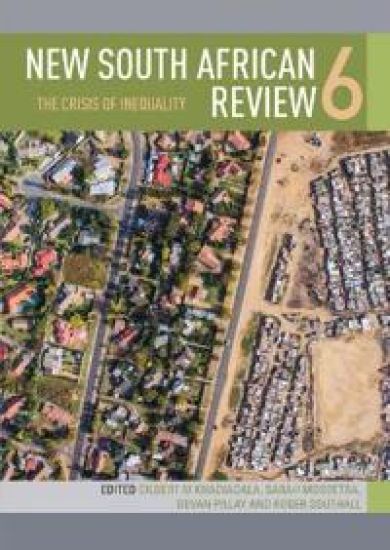
New South African Review 6

New South African Review 6

Kariuki Samuel; Jacqui Ala; Stephanie Allais; Atkinson Doreen; Black David; Sarah Bracking; Cock Jacklyn; Glaser Daryl; Gilad Isaacs; Makgetla Neva; Maharajh Rasigan; Motala Enver; Sonwabile Mnwana; Jana Mudronova; David Neves; Samuel Oloruntoba; Pillay Devan; Southall Roger; Vally Salim; Jo-Ansie van Wyk

Wits University Press
2018
nidottu
Despite the transition from apartheid to democracy, South Africa is the most unequal country in the world. Its extremes of wealth and poverty undermine intensifying struggles for a better life for all. The wide-ranging essays in this sixth volume of the New South African Review demonstrate how the consequences of inequality extend throughout society and the political economy, crippling the quest for social justice, polarising the politics, skewing economic outcomes and bringing devastating environmental consequences in their wake. Contributors survey the extent and consequences of inequality across fields as diverse as education, disability, agrarian reform, nuclear geography and small towns, and tackle some of the most difficult social, political and economic issues. How has the quest for greater equality affected progressive political discourse? How has inequality reproduced itself, despite best intentions in social policy, to the detriment of the poor and the historically disadvantaged? How have shifts in mining and the financialisation of the economy reshaped the contours of inequality? How does inequality reach into the daily social life of South Africans, and shape the way in which they interact? How does the extent and shape of inequality in South Africa compare with that of other major countries of the global South which themselves are notorious for their extremes of wealth and poverty? South African extremes of inequality reflect increasing inequality globally, and The Crisis of Inequality will speak to all those – general readers, policy makers, researchers and students – who are demanding a more equal world.
The Financialisation of Power

The Financialisation of Power

Sarah Bracking

Routledge
2016
sidottu
The financial crash of 2008 led people all over the world to ask how far financiers are in control of our lives. To what extent does what they do with our money affect our everyday lives? This book asks whether the crisis, and subsequent use of public subsidies to help the international economy recover, was a unique event, or a symptom of a wider malaise where financiers have effectively usurped the power of governments and are running the political economy themselves. The Financialisation of Power in Africa argues that growth is not always a good thing. The development of more derivatives and faster financial exchanges are draining businesses of investment capital rather than serving to supply it; applying financial logic does not save nature or protect biodiversity and other species. This book outlines the concept of financialisation and how it has been used in various ways to explain the post-2008 crisis and global political economy. There is a particular focus on these issues in reference to Africa, which has a particular dependence on international money. It takes the perspective of the modern state, exploring how the political economy of development actually works in relation to African governance. This book is of interest to students of international development and political economy and is a key source for policy makers interested in African studies and economic development.
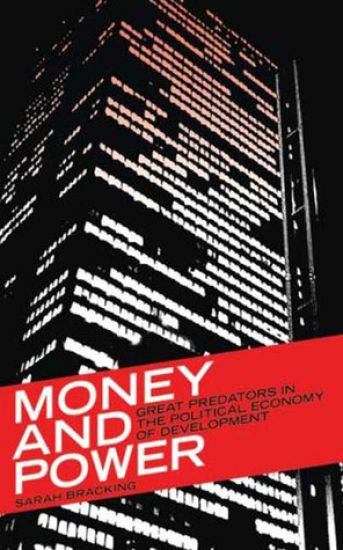
Money and Power

Money and Power

Sarah Bracking

Pluto Press
2009
sidottu
This book explores the role of governments and financial institutions in managing the markets in the developing world. These 'Great Predators' are trapping the populations of the Global South in a permanent cycle of austerity. Through a framework of political economy, Money and Power shows how pseudo-public 'development' institutions retain complete economic control over developing markets, while the international system remains unregulated. Operating in the interests of North America and the European Union, these Great Predators have a political purpose, and yet serve to cloud the brute power relations between states.