Kirjojen hintavertailu – 12 859 818 kirjaa ja 27 kauppaa

Kirjailija

Sarah Byrne

Kirjat ja teokset yhdessä paikassa: 3 kirjaa, julkaisuja vuosilta 2005–2024, suosituimpiin kuuluu A Casebook of Cognitive Behaviour Therapy for Command Hallucinations. Vertaile teosten hintoja ja tarkista saatavuus suomalaisista kirjakaupoista.

3 kirjaa

Kirjojen julkaisuvuodet: 2005–2024.

The Little Book of Celtic Mindfulness

The Little Book of Celtic Mindfulness

Sarah Byrne

O'BRIEN PRESS LTD
2024
sidottu
Let this wonderful collection of old Irish proverbs, in English and the original Gaeilge, help still your thoughts and lighten your mind. Nil aon tinteán mar do thinteán féin. There’s no hearth like your own hearth. Is fearr súil romhat ná dhá shúil i do dhiaidh. One eye to the future is better than two eyes to the past. Maireann croí éadrom i bhfad. A light heart lives long. Escape the hustle and bustle of modern life and find solace in the Celtic wisdom of the ages.
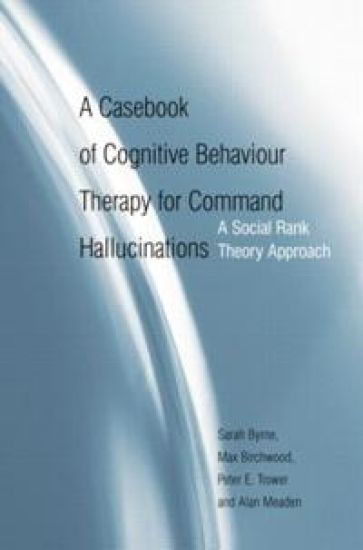
A Casebook of Cognitive Behaviour Therapy for Command Hallucinations

A Casebook of Cognitive Behaviour Therapy for Command Hallucinations

Sarah Byrne; Max Birchwood; Peter E. Trower; Alan Meaden

Routledge
2016
nidottu
Command hallucinations are a particularly distressing and sometimes dangerous type of hallucination about which relatively little is known and for which no evidenced based treatment currently exists. In A Casebook of Cognitive Behaviour Therapy for Command Hallucinations the development of a new and innovative evidence based cognitive therapy is presented in a practical format ideal for the busy practitioner. This new approach is based on over a decade's research on the role of voice hearers' beliefs about the power and omnipotence of their voices and how this drives distress and 'acting on' voices. The therapy protocol is presented in clear steps from formulation to intervention. The body of the book describes its application in eight cases illustrating the breadth of its application, including 'complex' cases. The authors also present their interpretation of what their findings tell us about what works and doesn't work, and suggestions for future developments. Subjects covered also include: understanding command hallucinations a cognitive versus a quasi-neuroleptic approach to CBT in psychosis does CBT for CH work? findings from a randomised controlled trial. This book provides a fascinating and very practical summary of the first intervention to have a major impact on distress and on compliance with command hallucinations. It will be of great interest to all mental health practitioners working with people with psychosis in community and forensic settings.

A Casebook of Cognitive Behaviour Therapy for Command Hallucinations
Command hallucinations are a particularly distressing and sometimes dangerous type of hallucination about which relatively little is known and for which no evidenced based treatment currently exists. In A Casebook of Cognitive Behaviour Therapy for Command Hallucinations the development of a new and innovative evidence based cognitive therapy is presented in a practical format ideal for the busy practitioner. This new approach is based on over a decade's research on the role of voice hearers' beliefs about the power and omnipotence of their voices and how this drives distress and 'acting on' voices. The therapy protocol is presented in clear steps from formulation to intervention. The body of the book describes its application in eight cases illustrating the breadth of its application, including 'complex' cases. The authors also present their interpretation of what their findings tell us about what works and doesn't work, and suggestions for future developments. Subjects covered also include: understanding command hallucinations a cognitive versus a quasi-neuroleptic approach to CBT in psychosis does CBT for CH work? findings from a randomised controlled trial. This book provides a fascinating and very practical summary of the first intervention to have a major impact on distress and on compliance with command hallucinations. It will be of great interest to all mental health practitioners working with people with psychosis in community and forensic settings.