Kirjojen hintavertailu – 12 859 829 kirjaa ja 27 kauppaa

Kirjailija

Sarah C. Williams

Kirjat ja teokset yhdessä paikassa: 5 kirjaa, julkaisuja vuosilta 2018–2025, suosituimpiin kuuluu When Courage Calls: Josephine Butler and the Radical Pursuit of Justice for Women. Vertaile teosten hintoja ja tarkista saatavuus suomalaisista kirjakaupoista.

5 kirjaa

Kirjojen julkaisuvuodet: 2018–2025.

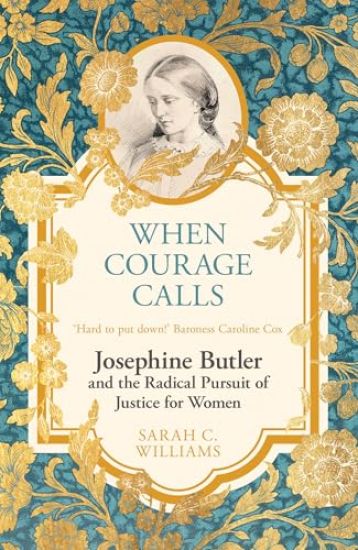
When Courage Calls: Josephine Butler and the Radical Pursuit of Justice for Women
Millicent Fawcett once described Josephine Butler as 'the most distinguished English woman of the nineteenth century'. Among the first feminist activists, Butler raised public awareness of the plight of destitute women, worked to address human trafficking and led a vigorous campaign to secure equal rights for women before the law. In her pursuit of justice, Butler did as much for women as William Wilberforce did for African slaves within the British Empire, and yet, while Wilberforce remains a household name, Butler is forgotten. Underpinning Butler's public life of political activism lies the full corpus of her writing and the spirituality that grounded her activism. When Courage Calls offers a profound examination of Butler's inner life of prayer, defined by her radical sense of justice that was able to transform Victorian society. Such conviction offers us a taste of what might be possible for our own time and culture.
When Courage Calls: Josephine Butler and the Radical Pursuit of Justice for Women
'Offers a new way of writing about religion and should serve as a model for future studies in modern British history. ' Literary Review'A crucial and compelling read' NATALIE COLLINS @GodLovesWomen 'The story of Josephine Butler is astonishing, shocking, inspiring, recounted here by a narrator who understands the very core of her subject. A powerful read.' CLAIRE GILBERT, author of I, Julian 'When Courage Calls allows us to hear Butler's message afresh at a time when women's value and safety is again at risk.' ALISON MILBANK, Professor of Literature and Theology, University of Nottingham'Remarkable' KRISH KANDIAH'This is an inspiring book written by an inspiring writer' RACHAEL TREWEEK, Bishop of Gloucester Millicent Fawcett, the leader of the British suffragist movement, described Josephine Butler as 'the most distinguished English woman of the nineteenth century'. Among the first feminist activists, Butler raised public awareness of the plight of destitute women, worked to address human trafficking and led a vigorous campaign to secure equal rights for women before the law. In her pursuit of justice, Butler did as much for women as William Wilberforce did for African slaves within the British Empire, and yet, while Wilberforce remains a household name, Butler is forgotten. Social historian Sarah C. Williams presents a re-examined biography of the radical political activist Josephine Butler. From the beauty of her childhood in Northumbria, to the stifling intellectual environment of mid-Victorian Oxford; from the impoverished streets of Liverpool and the brothels of London, Brussels and Paris, to the offices of Westminster and the Houses of Parliament. Butler's relentless drive to secure rights for women against the sexual double standard of her day captures a remarkable woman with deeply held values for equality. Underpinning Butler's public life of political activism lies the full corpus of her writing and the spirituality that grounded her activism. When Courage Calls offers a profound examination of Butler's inner life of prayer, defined by her radical sense of justice that was able to transform Victorian society. Such conviction offers us a taste of the possibility for our time and culture. This biography presents a fresh interpretation of the relationship between Josephine Butler's public leadership, her political activism and her spirituality.
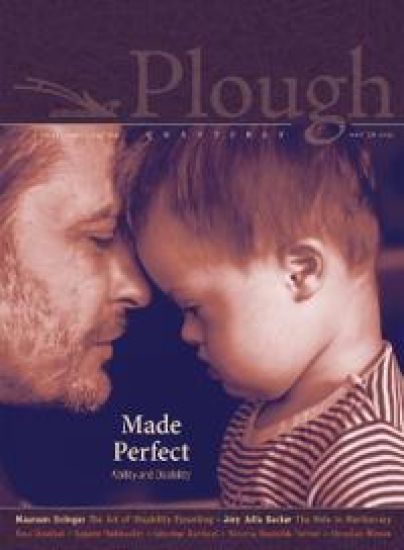
Plough Quarterly No. 30 – Made Perfect

Plough Quarterly No. 30 – Made Perfect

Molly McCully Brown; Victoria Reynolds Farmer; Edwidge Danticat; Stephanie Saldaña; Kelsey Osgood; Christian Wiman; Amy Julia Becker; Ross Douthat; Eugene Vodolazkin; Sarah C. Williams; Isaac T. Soon; Leah Libresco Sargeant

PLOUGH PUBLISHING HOUSE
2021
pokkari
Whose lives count as fully human? The answer matters for everyone, disabled or not. The ancient Greek ideal linked physical wholeness to moral wholeness – the virtuous citizen was “beautiful and good.” It’s an ideal that has all too often turned deadly, casting those who do not measure up as less than human. In the pre-Christian era, infants with disabilities were left on the rocks; in modern times, they have been targeted by eugenics. Much has changed, thanks to the tenacious advocacy of the disability rights movement. Yesteryear’s hellish institutions have given way to customized educational programs and assisted living centers. Public spaces have been reconfigured to improve access. Therapies and medical technology have advanced rapidly in sophistication and effectiveness. Protections for people with disabilities have been enshrined in many countries’ antidiscrimination laws. But these victories, impressive as they are, mask other realities that collide awkwardly with society’s avowals of equality. Why are parents choosing to abort a baby likely to have a disability? Why does Belgian law allow for euthanasia in cases of disability, even absent a terminal diagnosis or physical pain? Why, when ventilators were in short supply during the first Covid wave, did some states list disability as a reason to deny care? On this theme: - Heonju Lee tells how his son with Down syndrome saved another child’s life.- Molly McCully Brown and Victoria Reynolds Farmer recount their personal experiences with disability.- Amy Julia Becker says meritocracies fail because they value the wrong things.- Maureen Swinger asks six mothers around the world about raising a child with disabilities.- Joe Keiderling documents the unfinished struggle for disability rights.- Isaac T. Soon wonders if Saint Paul’s “thorn in the flesh” was a disability.- Leah Libresco Sargeant reviews What Can a Body Do? and Making Disability Modern.- Sarah C. Williams says testing for fetal abnormalities is not a neutral practice. Also in the issue: - Ross Douthat is brought low by intractable Lyme disease.- Edwidge Danticat flees an active shooter in a packed mall.- Eugene Vodolazkin finds comic relief at funerals, including his own father’s.- Kelsey Osgood discovers that being an Orthodox Jew is strange, even in Brooklyn.- Christian Wiman pens three new poems.- Susannah Black profiles Flannery O’Conner.- Our writers review Eyal Press’s Dirty Work, Steve Coll’s Directorate S, and Millennial Nuns by the Daughters of Saint Paul. Plough Quarterly features stories, ideas, and culture for people eager to apply their faith to the challenges we face. Each issue includes in-depth articles, interviews, poetry, book reviews, and art.
Plough Quarterly No. 26 – What Are Families For?

Plough Quarterly No. 26 – What Are Families For?

Ross Douthat; Edwidge Danticat; Sarah C. Williams; Rabbi Jonathan Sacks; Cardinal Christoph Schönborn; Leah Libresco Sargeant; Gina Dalfonzo; Zito Madu; Norann Voll; Noah Van Niel

Plough Publishing House
2020
pokkari
What is a family and what is it good for? Story 1: Families are in crisis, and the cause is moral breakdown. We urgently need a deep renewal of our family culture, supported by public policies that strengthen traditional marriage and encourage childbearing. Story 2: Families are in crisis, and the cause is capitalism. We need structural changes in society so that all families can flourish: parental leave, guaranteed healthcare, flexible work hours for parents, restorative justice. What if both these stories are true? This issue of Plough reflects on what a family is and what it is for, so that the transformations needed to solve the crisis of the family start from a firm basis, not a nostalgic ideal or progressive theorizing. As always, we take as a starting point the teachings of Jesus. It turns out his idea of family values might not be what people think. He calls us to extend our natural love for our biological family to a vast new throng of siblings – a family of many ethnicities and cultures that includes the widowed, the unmarried, the outsider, and the stranger. In this issue: - Ross Douthat asks what is stopping people from having the one more child they desire. - Edwidge Danticat says families are not nuclear. - Gina Dalfonzo reveals what singles know best about the church as family. - Norann Voll remembers a Jewish woman who escaped the Holocaust and married a German. - W. Bradford Wilcox and Alysse ElHage report on how the Covid pandemic has impacted the family. - Noah Van Niel asks whether masculinity is OK anymore. - Cardinal Christoph Schönborn reflects the burden of family history, celibacy, and monument toppling. - Sarah C. Williams pinpoints the source of feminist pioneer Josephine Butler’s daring. - Rabbi Jonathan Sacks begins the story of marriage 385 million years ago in a lake in Scotland. - Zito Madu recalls how his father’s amazing storytelling saved the past from oblivion. You’ll also find: - M. M. Townsend on what Louisa May Alcott and Simone de Beauvoir had in common - A special announcement about Plough’s new poetry contest: the Rhina Espaillat Poetry Award - A reading from G. K. Chesterton - Two new poems by Rachel Hadas - Reviews of Eric Edstrom’s Un-American, Maya Schenwar and Victoria Law’s Prison by Any Other Name, Brian Doyle’s One Long River of Song, and Martín Caparrós’s Hunger Plough Quarterly features stories, ideas, and culture for people eager to put their faith into action. Each issue brings you in-depth articles, interviews, poetry, book reviews, and art to help you put Jesus’ message into practice and find common cause with others.
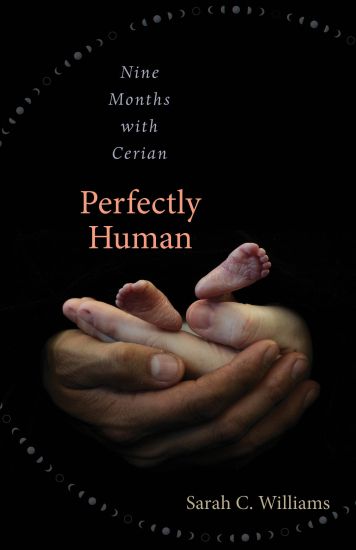
Perfectly Human

Perfectly Human

Sarah C. Williams

Plough Publishing House
2018
pokkari
She knew they would only have a few fleeting months together, but in that time Sarah's unborn daughter would transform her understanding of beauty, worth, and the gift of life. Happily married and teaching history at the University of Oxford, Sarah Williams had credentials, success, and knowledge. It took someone who would never have any of these things to teach her what it means to be human. This extraordinary true story begins with the welcome news of a new member of the Williams family. Sarah's husband, Paul, and their two young daughters share her excitement. But the happiness is short-lived, as a hospital scan reveals a lethal skeletal dysplasia. Birth will be fatal. Sarah and Paul decide to carry the baby to term, a decision that shocks medical staff and Sarah's professional colleagues. Sarah and Paul find themselves having to defend their child's dignity and worth against incomprehension and at times open hostility. They name their daughter, Cerian, Welsh for "loved one." Sarah writes, "Cerian is not a strong religious principle or a rule that compels me to make hard and fast ethical decisions. She is a beautiful person who is teaching me to love the vulnerable, treasure the unlovely, and face fear with dignity and hope." In this candid and vulnerable account, Sarah brings the reader along with her on the journey towards Cerian's birthday and her deathday. It's rare enough to find a writer who can share such a heart-stretching personal experience without sounding sappy, but here is one who at the same time has the ability to articulate the broader cultural issues raised by Cerian's story. In a society striving for perfection, where worth is earned, identity is constructed, children are a choice, normal is beautiful, and deformity is repulsive, Cerian's short life raises vital questions about what we value and where we are headed as a culture. Perfectly Human was first published in the United Kingdom as The Shaming of the Strong. This edition includes a new afterword by the author.