Kirjojen hintavertailu – 12 903 725 kirjaa ja 27 kauppaa

Kirjailija

Sarah Comyn

Kirjat ja teokset yhdessä paikassa: 7 kirjaa, julkaisuja vuosilta 2018–2025, suosituimpiin kuuluu Political Economy. Vertaile teosten hintoja ja tarkista saatavuus suomalaisista kirjakaupoista.

7 kirjaa

Kirjojen julkaisuvuodet: 2018–2025.

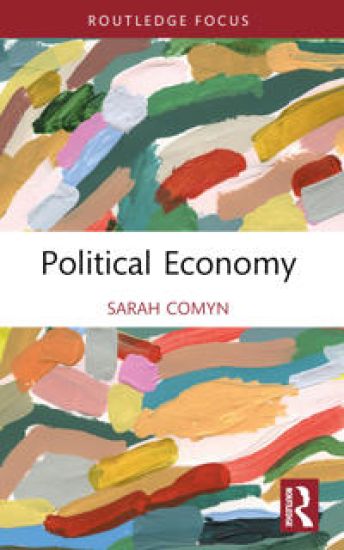
Political Economy

Political Economy

Sarah Comyn

TAYLOR FRANCIS LTD
2025
nidottu
Providing a ‘short take’ on the long history of political economy, this book examines both the stories about and those within economics. It traces the history of political economy from its beginnings in the Scottish Enlightenment; through its disciplinary demarcation as a science in the nineteenth century that saw its differentiation from literary, aesthetic, and moral discourses; and to its emergence as the ‘amoral’ market-driven neoliberalism that dominates economic theories and policies today. In exploring the long history of economic thought, it examines and challenges both Enlightenment and contemporary grand narratives such as the stadial theory of progress, the ‘Great Divergence’ and the ‘Great Convergence’ that have divided the world into global norths and souths according to their economic advantages. It concludes with a study of currency as both a medium of monetary exchange and a term that denotes prevalence and acceptance to explore political economy’s continuous engagement with the problem of representing value through money. Part of the series Short Takes on Long Views, this book will appeal to a traditional academic audience of scholars and students, and to a wider public audience of informed non-fiction readers interested in the long history of economics.
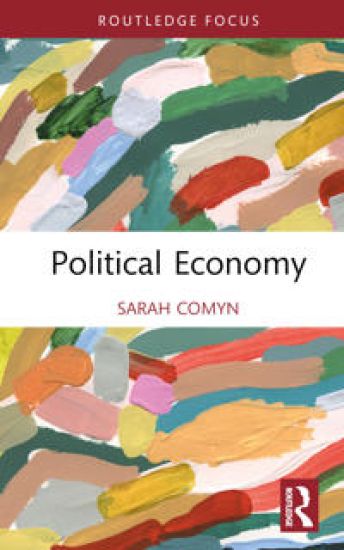
Political Economy

Political Economy

Sarah Comyn

TAYLOR FRANCIS LTD
2024
sidottu
Providing a ‘short take’ on the long history of political economy, this book examines both the stories about and those within economics. It traces the history of political economy from its beginnings in the Scottish Enlightenment; through its disciplinary demarcation as a science in the nineteenth century that saw its differentiation from literary, aesthetic, and moral discourses; and to its emergence as the ‘amoral’ market-driven neoliberalism that dominates economic theories and policies today. In exploring the long history of economic thought, it examines and challenges both Enlightenment and contemporary grand narratives such as the stadial theory of progress, the ‘Great Divergence’ and the ‘Great Convergence’ that have divided the world into global norths and souths according to their economic advantages. It concludes with a study of currency as both a medium of monetary exchange and a term that denotes prevalence and acceptance to explore political economy’s continuous engagement with the problem of representing value through money. Part of the series Short Takes on Long Views, this book will appeal to a traditional academic audience of scholars and students, and to a wider public audience of informed non-fiction readers interested in the long history of economics.
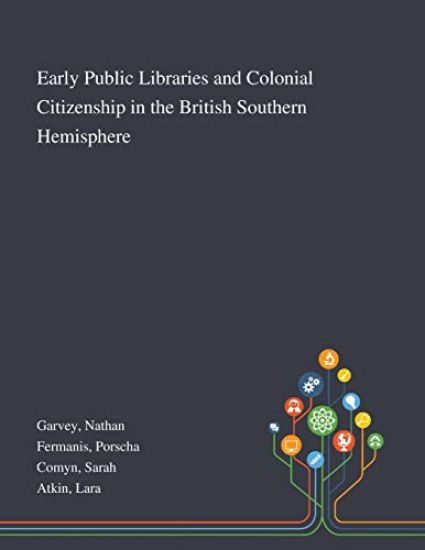
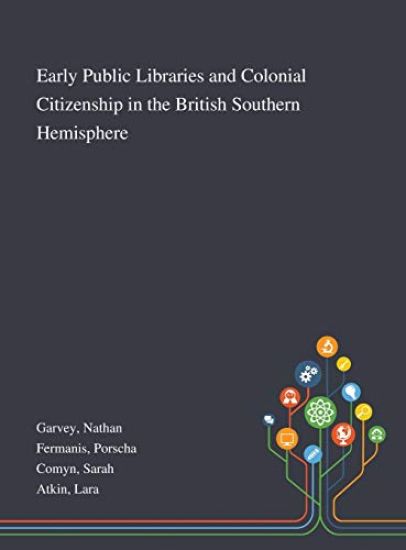
Early Public Libraries and Colonial Citizenship in the British Southern Hemisphere

Early Public Libraries and Colonial Citizenship in the British Southern Hemisphere

Nathan Garvey; Porscha Fermanis; Sarah Comyn

Saint Philip Street Press
2020
pokkari
This open access Pivot book is a comparative study of six early colonial public libraries in nineteenth-century Australia, South Africa, and Southeast Asia. Drawing on networked conceptualisations of empire, transnational frameworks, and 'new imperial history' paradigms that privilege imbricated colonial and metropolitan 'intercultures', it looks at the neglected role of public libraries in shaping a programme of Anglophone civic education, scientific knowledge creation, and modernisation in the British southern hemisphere. The book's six chapters analyse institutional models and precedents, reading publics and types, book holdings and catalogues, and regional scientific networks in order to demonstrate the significance of these libraries for the construction of colonial identity, citizenship, and national self-government as well as charting their influence in shaping perceptions of social class, gender, and race. Using primary source material from the recently completed 'Book Catalogues of the Colonial Southern Hemisphere' digital archive, the book argues that public libraries played a formative role in colonial public discourse, contributing to broader debates on imperial citizenship and nation-statehood across different geographic, cultural, and linguistic borders. This work was published by Saint Philip Street Press pursuant to a Creative Commons license permitting commercial use. All rights not granted by the work's license are retained by the author or authors.
Early Public Libraries and Colonial Citizenship in the British Southern Hemisphere

Early Public Libraries and Colonial Citizenship in the British Southern Hemisphere

Nathan Garvey; Porscha Fermanis; Sarah Comyn

Saint Philip Street Press
2020
sidottu
This open access Pivot book is a comparative study of six early colonial public libraries in nineteenth-century Australia, South Africa, and Southeast Asia. Drawing on networked conceptualisations of empire, transnational frameworks, and 'new imperial history' paradigms that privilege imbricated colonial and metropolitan 'intercultures', it looks at the neglected role of public libraries in shaping a programme of Anglophone civic education, scientific knowledge creation, and modernisation in the British southern hemisphere. The book's six chapters analyse institutional models and precedents, reading publics and types, book holdings and catalogues, and regional scientific networks in order to demonstrate the significance of these libraries for the construction of colonial identity, citizenship, and national self-government as well as charting their influence in shaping perceptions of social class, gender, and race. Using primary source material from the recently completed 'Book Catalogues of the Colonial Southern Hemisphere' digital archive, the book argues that public libraries played a formative role in colonial public discourse, contributing to broader debates on imperial citizenship and nation-statehood across different geographic, cultural, and linguistic borders. This work was published by Saint Philip Street Press pursuant to a Creative Commons license permitting commercial use. All rights not granted by the work's license are retained by the author or authors.
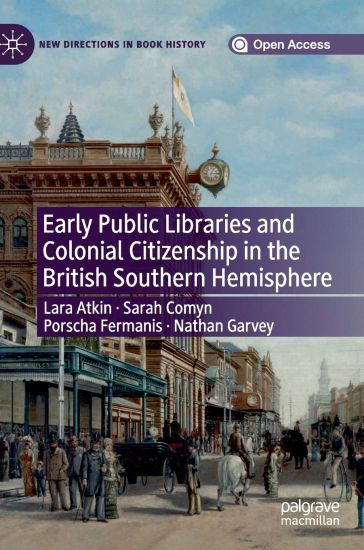
Early Public Libraries and Colonial Citizenship in the British Southern Hemisphere

Early Public Libraries and Colonial Citizenship in the British Southern Hemisphere

Lara Atkin; Sarah Comyn; Porscha Fermanis; Nathan Garvey

Springer Nature Switzerland AG
2019
sidottu
This open access Pivot book is a comparative study of six early colonial public libraries in nineteenth-century Australia, South Africa, and Southeast Asia. Drawing on networked conceptualisations of empire, transnational frameworks, and ‘new imperial history’ paradigms that privilege imbricated colonial and metropolitan ‘intercultures’, it looks at the neglected role of public libraries in shaping a programme of Anglophone civic education, scientific knowledge creation, and modernisation in the British southern hemisphere. The book’s six chapters analyse institutional models and precedents, reading publics and types, book holdings and catalogues, and regional scientific networks in order to demonstrate the significance of these libraries for the construction of colonial identity, citizenship, and national self-government as well as charting their influence in shaping perceptions of social class, gender, and race. Using primary source material from the recently completed ‘Book Catalogues of the Colonial Southern Hemisphere’ digital archive, the book argues that public libraries played a formative role in colonial public discourse, contributing to broader debates on imperial citizenship and nation-statehood across different geographic, cultural, and linguistic borders.
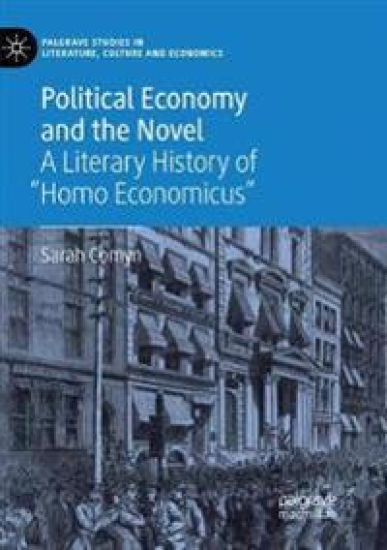
Political Economy and the Novel

Political Economy and the Novel

Sarah Comyn

Springer Nature Switzerland AG
2018
nidottu
Political Economy and the Novel: A Literary History of ‘Homo Economicus’ provides a transhistorical account of homo economicus (economic man), demonstrating this figure’s significance to economic theory and the Anglo-American novel over a 250-year period. Beginning with Adam Smith’s seminal texts – Theory of Moral Sentiments and The Wealth of Nations – and Henry Fielding’s A History of Tom Jones, this book combines the methodologies of new historicism and new economic criticism to investigate the evolution of the homo economicus model as it traverses through Ricardian economics and Jane Austen’s Sanditon; J. S. Mill and Charles Dickens’ engagement with mid-Victorian dualities; Keynesianism and Mrs Dalloway’s exploration of post-war consumer impulses; the a/moralistic discourses of Friedrich von Hayek, and Ayn Rand’s Atlas Shrugged; and finally the virtual crises of the twenty-first century financial market and DonDeLillo’s Cosmopolis. Through its sustained comparative analysis of literary and economic discourses, this book transforms our understanding of the genre of the novel and offers critical new understandings of literary value, cultural capital and the moral foundations of political economy.
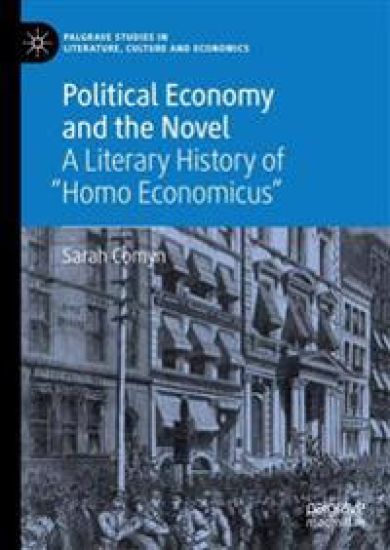
Political Economy and the Novel

Political Economy and the Novel

Sarah Comyn

Springer International Publishing AG
2018
sidottu
Political Economy and the Novel: A Literary History of ‘Homo Economicus’ provides a transhistorical account of homo economicus (economic man), demonstrating this figure’s significance to economic theory and the Anglo-American novel over a 250-year period. Beginning with Adam Smith’s seminal texts – Theory of Moral Sentiments and The Wealth of Nations – and Henry Fielding’s A History of Tom Jones, this book combines the methodologies of new historicism and new economic criticism to investigate the evolution of the homo economicus model as it traverses through Ricardian economics and Jane Austen’s Sanditon; J. S. Mill and Charles Dickens’ engagement with mid-Victorian dualities; Keynesianism and Mrs Dalloway’s exploration of post-war consumer impulses; the a/moralistic discourses of Friedrich von Hayek, and Ayn Rand’s Atlas Shrugged; and finally the virtual crises of the twenty-first century financial market and DonDeLillo’s Cosmopolis. Through its sustained comparative analysis of literary and economic discourses, this book transforms our understanding of the genre of the novel and offers critical new understandings of literary value, cultural capital and the moral foundations of political economy.