Kirjojen hintavertailu – 12 859 828 kirjaa ja 27 kauppaa

Kirjailija

Sarah Farmer

Kirjat ja teokset yhdessä paikassa: 6 kirjaa, julkaisuja vuosilta 2000–2023, suosituimpiin kuuluu Rural Inventions. Vertaile teosten hintoja ja tarkista saatavuus suomalaisista kirjakaupoista.

6 kirjaa

Kirjojen julkaisuvuodet: 2000–2023.

Leader Unleashed

Leader Unleashed

Sarah Farmer

Rethink Press
2023
nidottu
Congratulations, you're hired Now it's time to prove your worth, make a positive impact and exceed expectations. Starting a new senior-level role following promotion, or returning to work after time out, can elicit a range of emotions, from joy and relief to an overwhelming fear of failure for those who experience Imposter Syndrome. Leader Unleashed will help you start your new role with a confident and capable mindset from Day One. Using the life-changing five-step EAGLE system, it will teach you the crucial skills needed to exceed onboarding expectations, lead with confidence and take control of your career and future success. Read this book to: - Understand the impact of Imposter Syndrome, how to identify it and how to overcome your blocks to success so you can live a more fulfilling life- Successfully dial down the 'negative chatter' and take charge of the way you think, feel and behave- Believe in yourself, appreciate the value you add and discover what you are truly capable of- Become a magnetic leader whom others want to follow - and organisations want to employ
Rural Inventions

Rural Inventions

Sarah Farmer

Oxford University Press Inc
2020
sidottu
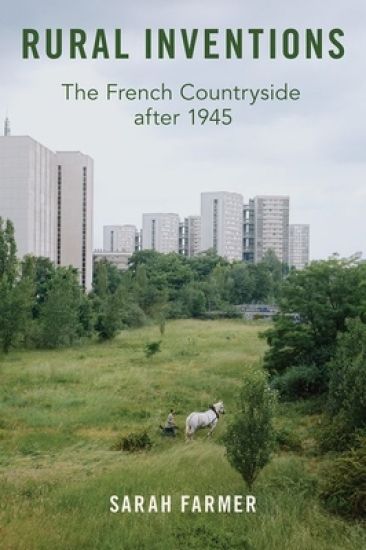
At the close of the twentieth century, even as globalization spurred the growth of megacities worldwide, inhabiting the French countryside had become an internationally-shared fantasy and practice. Accounts of moving into old farmhouses were bestsellers, and houses and barns built by peasants had been renovated as second homes throughout the rural hinterland. Such developments, Sarah Farmer argues, did not simply stem from nostalgia for a rural past or a desire to invest in real estate. Rather, they defined new versions of the rural that emerge in post-agrarian societies. In post-World War II France, cutting-edge technological modernization and explosive economic growth uprooted rural populations and eroded the village traditions of a largely peasant nation. And yet, this book argues, rural France did not vanish in the sweeping transformations of the 1950s and 1960s. The French responded to the collapse of peasant society and threats to cherished landscapes by devising new ways of inhabiting the countryside, making them the sites of change and adaptation. In addition to the rise of restored peasant houses as second residences, Rural Inventions explores the utopian experiments in rural communes and in "going back to the land"; environmentalism; the extraordinary success of peasant autobiographies; photography; and other representations through which the French revalorized rural life and landscapes. The peasantry as a social class may have died out, but the countryside persisted, valued as a site not only for agriculture but increasingly for sport and leisure, tourism, social and political engagement, and a natural environment worth protecting. The postwar French state and the nation's rural and urban inhabitants, Sarah Farmer eloquently shows, remade the French countryside in relation to the city and to the world at large, not only invoking traditional France but also creating a vibrant and evolving part of the France yet to come.
Martyred Village

Martyred Village

Sarah Farmer

University of California Press
2000
pokkari
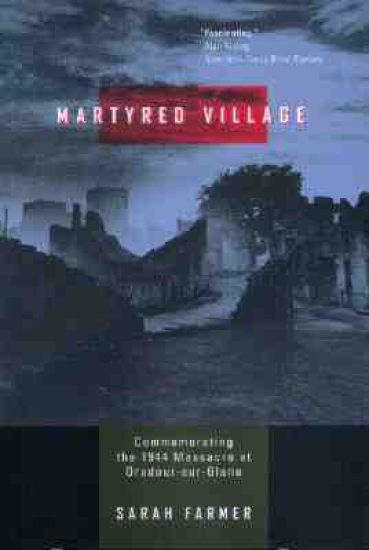
Among German crimes of the Second World War, the Nazi massacre of 642 men, women, and children at Oradour-sur-Glane on June 10, 1944, is one of the most notorious. On that Saturday afternoon, four days after the Allied landings in Normandy, SS troops encircled the town in the rolling farm country of the Limousin. Soldiers marched the men to nearby barns, lined them up, and shot them. They then locked the women and children in the church, shot them, and set the building and the rest of the town on fire. Residents who had been away for the day returned to a blackened scene of horror, carnage, and devastation. In 1946 the French State expropriated and preserved the entire ruins of Oradour. The forty acres of crumbling houses, farms and shops became France's village martyr, set up as a monument to French suffering under the German occupation. Today, the village is a tourist destination, complete with maps and guidebooks. In this first full-scale study of the destruction of Oradour and its remembrance over the half century since the war, Sarah Farmer investigates the prominence of the massacre in French understanding of the national experience under German domination. Through interviews with survivors and village officials, as well as extensive archival research, she pieces together a fascinating history of both a shattering event and its memorial afterlife. Complemented by haunting photographs of the site, Farmer's eloquent dissection of France's national memory addresses the personal and private ways in which, through remembrance, people try to come to terms with enormous loss. Martyred Village will have implications for the study of the history and sociology of memory, testimonies about remembrances of war and the Holocaust, and postmodern concerns with the presentation of the past.