Kirjojen hintavertailu – 12 859 824 kirjaa ja 27 kauppaa

Kirjailija

Sarah Fishman

Kirjat ja teokset yhdessä paikassa: 3 kirjaa, julkaisuja vuosilta 2002–2017, suosituimpiin kuuluu The Battle for Children. Vertaile teosten hintoja ja tarkista saatavuus suomalaisista kirjakaupoista.

3 kirjaa

Kirjojen julkaisuvuodet: 2002–2017.

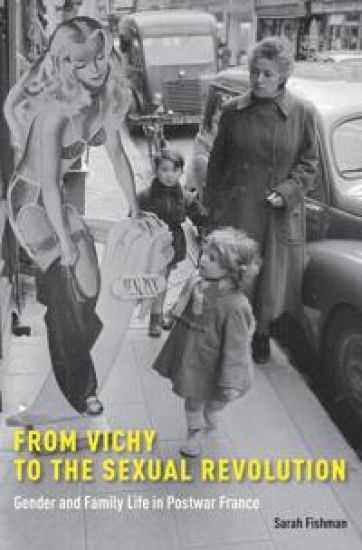
From Vichy to the Sexual Revolution

From Vichy to the Sexual Revolution

Sarah Fishman

Oxford University Press Inc
2017
sidottu
At the end of World War II, the vast majority of people in France, living in small towns or rural areas, had suffered through a series of traumas-economic depression, war and occupation, the absence of millions of POWs, deportees and forced laborers, widespread destruction. The resulting disruptions continued to reverberate in families for several years after the Liberation. In the decades following the war, France experienced radical economic and social transformations, becoming an urban, industrial, affluent nation. In less than thirty years, French ideas about gender and family life underwent dramatic changes. This book provides a broad view of changing lives and ideas about love, courtship, marriage, giving birth, parenting, childhood, and adolescence in France from the Vichy regime to the sexual revolution of 1960s. To understand how such changes influenced ideas about family life, From Vichy to the Sexual Revolution explores inexpensive guide books on marriage, childbirth and parenting, advice columns and popular magazines directed at readers from a variety of backgrounds. Sarah Fishman puts these sources into context, by exploring juvenile court family case studies. She links economic and social changes to the evolution of thinking about gender, the self, and the family, throwing new light on the emergence of a new vision of the family, one based on dynamic relationships rather than a set structure.

France and Its Empire Since 1870

France and Its Empire Since 1870

Alice L. Conklin; Sarah Fishman; Robert Zaretsky

Oxford University Press Inc
2014
nidottu
Providing an up-to-date synthesis of the history of an extraordinary nation--one that has been shrouded in myths, many of its own making--France and Its Empire Since 1870 seeks both to understand these myths and to uncover the complicated and often contradictory realities that underpin them. It situates modern French history in transnational and global contexts and also integrates the themes of imperialism and immigration into the traditional narrative. Authors Alice L. Conklin, Sarah Fishman, and Robert Zaretsky begin with the premise that while France and the U. S. are sister republics, they also exhibit profound differences that are as compelling as their apparent similarities. The authors frame the book around the contested emergence of the French Republic--a form of government that finally appears to have a permanent status in France--but whose birth pangs were much more protracted than those of the American Republic. Presenting a lively and coherent narrative of the major developments in France's tumultuous history since 1870, the authors organize the chapters around the country's many turning points and confrontations. They also offer detailed analyses of politics, society, and culture, considering the diverse viewpoints of men and women from every background including the working class and the bourgeoisie, immigrants, Catholics, Jews and Muslims, Bretons and Algerians, rebellious youth, and gays and lesbians.
The Battle for Children

The Battle for Children

Sarah Fishman

Harvard University Press
2002
sidottu
The Battle for Children links two major areas of historical inquiry: crime and delinquency with war and social change. In a study based on impressive archival research, Sarah Fishman reveals the impact of the Vichy regime on one of history’s most silent groups—children—and offers enlightening new information about the Vichy administration. Fishman examines how French children experienced the events of war and the German occupation, demonstrating that economic deprivation, not family dislocation, sharply drove up juvenile crime rates. Wartime circumstances led authorities to view delinquent minors as victims, and provided the opportunity for reformers in psychiatry, social work, and law to fundamentally transform France’s punitive juvenile justice system into a profoundly therapeutic one. Vichy-era legislation thus formed the foundation of the modern juvenile justice system in France, which rarely incarcerates delinquent youth. In her examination of the critical but unexpected role the war and the authoritarian Vichy regime played in the transformation of France’s juvenile courts and institutions, Fishman has enriched our knowledge of daily life in France during World War II, refined our understanding of Vichy’s place in the historical development of France, and provided valuable insights into contemporary debates on juvenile justice.