Kirjojen hintavertailu – 12 859 829 kirjaa ja 27 kauppaa

Kirjailija

Sarah Franklin

Kirjat ja teokset yhdessä paikassa: 20 kirjaa, julkaisuja vuosilta 1999–2024, suosituimpiin kuuluu Shelter. Vertaile teosten hintoja ja tarkista saatavuus suomalaisista kirjakaupoista.

20 kirjaa

Kirjojen julkaisuvuodet: 1999–2024.

The 14 Day Rule and Human Embryo Research

The 14 Day Rule and Human Embryo Research

Sarah Franklin; Emily Jackson

TAYLOR FRANCIS LTD
2024
nidottu
This assessment of Britain’s influential 14 day rule governing embryo research explores how and why it became the de facto global standard for research into human fertilisation and embryology, arguing that its influence and stability offers valuable lessons for successful biological translation. One of the most important features of the 14 day rule, the authors claim, is its reliance on sociological as well as ethical, legislative, regulatory and scientific principles. The careful integration of social expectations and perceptions, as well as sociological definitions of the law and morality, into the development of a robust legislative infrastructure of ‘human fertilisation and embryology’, enabled what has come to be known as the Warnock Consensus – a solid and enduring public acceptance that has enabled successive parliamentary approval for controversial areas of scientific research in the UK, such as stem cell research and mitochondrial donation, for over 30 years. These important sociological insights are increasingly relevant to new biotranslational challenges such as human germline gene editing and the use of AI assisted technologies in human reproduction. As the legislation around the 14 day rule begins to be reviewed worldwide, the important lessons we can learn from its global and enduring significance will apply not only to future legislation governing embryo research, but to the future of biological translation more widely. An important volume for those interested in reproductive studies, biogovernance and biological translation, it is suitable for researchers, clinicians and students in medicine, biosciences, sociology, and science and technology studies.

The 14 Day Rule and Human Embryo Research

The 14 Day Rule and Human Embryo Research

Sarah Franklin; Emily Jackson

TAYLOR FRANCIS LTD
2024
sidottu
This assessment of Britain’s influential 14 day rule governing embryo research explores how and why it became the de facto global standard for research into human fertilisation and embryology, arguing that its influence and stability offers valuable lessons for successful biological translation. One of the most important features of the 14 day rule, the authors claim, is its reliance on sociological as well as ethical, legislative, regulatory and scientific principles. The careful integration of social expectations and perceptions, as well as sociological definitions of the law and morality, into the development of a robust legislative infrastructure of ‘human fertilisation and embryology’, enabled what has come to be known as the Warnock Consensus – a solid and enduring public acceptance that has enabled successive parliamentary approval for controversial areas of scientific research in the UK, such as stem cell research and mitochondrial donation, for over 30 years. These important sociological insights are increasingly relevant to new biotranslational challenges such as human germline gene editing and the use of AI assisted technologies in human reproduction. As the legislation around the 14 day rule begins to be reviewed worldwide, the important lessons we can learn from its global and enduring significance will apply not only to future legislation governing embryo research, but to the future of biological translation more widely. An important volume for those interested in reproductive studies, biogovernance and biological translation, it is suitable for researchers, clinicians and students in medicine, biosciences, sociology, and science and technology studies.
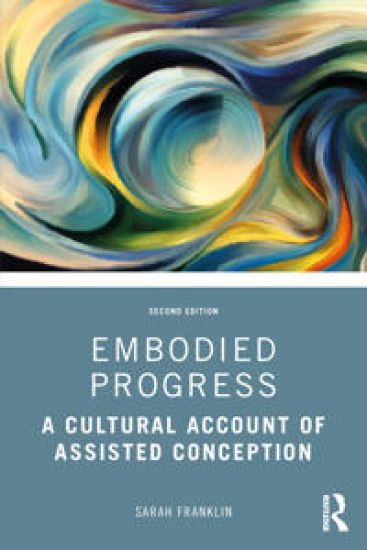
Embodied Progress

Embodied Progress

Sarah Franklin

TAYLOR FRANCIS LTD
2022
nidottu
This new edition of Sarah Franklin’s classic monograph on the development of in vitro fertilisation (IVF) includes two entirely new chapters reflecting on the relevance of the book’s findings in the context of the past two decades and providing a ‘state-of-the-art’ review of the field today. Over the past 25 years, both the assisted conception industry and the academic field of reproductive studies have grown enormously. IVF, in particular, is belatedly becoming recognised as one of the most influential technologies of the twentieth and twenty-first centuries, with a far-reaching set of implications that have to date been underestimated, understudied and under-reported. This pioneering text was the first to explore the emergence of commercial IVF in the United Kingdom, where the technique was originally developed. During the 1980s, the British Parliament devised a unique system of comprehensive national regulation of assisted reproduction amidst fractious public and media debate over IVF and embryo research. Franklin chronicles these developments and explores their significance in relation to classic anthropological debates about the meanings of kinship, gender and the 'biological facts' of parenthood. Drawing on extensive personal interviews with women and couples undergoing IVF, as well as ethnographic fieldword in early IVF clinics, the book explores the unique demands of the IVF technique. In richly detailed chapters, it documents the ‘topsy-turvy’ world of IVF, and how the experience of undergoing IVF changes its users in ways they had not anticipated. Franklin argues that such experiences reveal a crucial feature of translational biomedical procedures more widely – namely, that these are ‘hope technologies’ that paradoxically generate new uncertainties and risks in the very space of their supposed resolution. The final chapter closely engages with the ‘hope technology’ concept, as well as the idea of ‘having to try’ and uses these frames to link contemporary reproductive studies to core sociological and anthropological arguments about economy, society and technology. In the context of rapid fertility decline and huge growth in the fertility industry, this volume is even more relevant today than when it was first published at the dawn of what Franklin calls the era of 'iFertility'. Embodied Progress is an essential read for all social science academics and students with an interested in the burgeoning new field of reproductive studies. It is also a valuable resource for practitioners working in the fields of reproductive health, biomedicine and policy.
Embodied Progress

Embodied Progress

Sarah Franklin

TAYLOR FRANCIS LTD
2022
sidottu
This new edition of Sarah Franklin’s classic monograph on the development of in vitro fertilisation (IVF) includes two entirely new chapters reflecting on the relevance of the book’s findings in the context of the past two decades and providing a ‘state-of-the-art’ review of the field today. Over the past 25 years, both the assisted conception industry and the academic field of reproductive studies have grown enormously. IVF, in particular, is belatedly becoming recognised as one of the most influential technologies of the twentieth and twenty-first centuries, with a far-reaching set of implications that have to date been underestimated, understudied and under-reported. This pioneering text was the first to explore the emergence of commercial IVF in the United Kingdom, where the technique was originally developed. During the 1980s, the British Parliament devised a unique system of comprehensive national regulation of assisted reproduction amidst fractious public and media debate over IVF and embryo research. Franklin chronicles these developments and explores their significance in relation to classic anthropological debates about the meanings of kinship, gender and the 'biological facts' of parenthood. Drawing on extensive personal interviews with women and couples undergoing IVF, as well as ethnographic fieldword in early IVF clinics, the book explores the unique demands of the IVF technique. In richly detailed chapters, it documents the ‘topsy-turvy’ world of IVF, and how the experience of undergoing IVF changes its users in ways they had not anticipated. Franklin argues that such experiences reveal a crucial feature of translational biomedical procedures more widely – namely, that these are ‘hope technologies’ that paradoxically generate new uncertainties and risks in the very space of their supposed resolution. The final chapter closely engages with the ‘hope technology’ concept, as well as the idea of ‘having to try’ and uses these frames to link contemporary reproductive studies to core sociological and anthropological arguments about economy, society and technology. In the context of rapid fertility decline and huge growth in the fertility industry, this volume is even more relevant today than when it was first published at the dawn of what Franklin calls the era of 'iFertility'. Embodied Progress is an essential read for all social science academics and students with an interested in the burgeoning new field of reproductive studies. It is also a valuable resource for practitioners working in the fields of reproductive health, biomedicine and policy.
How to Belong

How to Belong

Sarah Franklin

Zaffre
2020
sidottu

Halvin toimitettuna 29,90 €

'The kind of book that gives you hope and courage. I loved it' Kit de Waal'Insightful, thoughtful' Carys Bray'I relished every word' Shelley Harris'Such a warm and touching novel' Lissa Evans A moving and courageous exploration of belonging and finding home in a rapidly-changing world from the critically acclaimed author of Shelter. Jo grew up in the Forest of Dean, but she was always the one destined to leave for a bigger, brighter future. When her parents retire from their butcher's shop, she returns to her beloved community to save the family legacy, hoping also to save herself. But things are more complex than the rose-tinted version of life which sustained Jo from afar. Tessa is a farrier, shoeing horses two miles and half a generation away from Jo, further into the forest. Tessa's experience of the community couldn't be more different. Now she too has returned, in flight from a life she could have led, nursing a secret and a past filled with guilt and shame. Compelled through circumstance to live together, these two women will be forced to confront their sense of identity, and reconsider the meaning of home.
Reading Hindi: Novice to Intermediate
Reading Hindi: Novice to Intermediate is an innovative collection of graded readings that are both accessible in language and engaging in content, specifically designed for adult learners of Hindi. Ideal for those just starting out in Hindi, the texts provide culturally rich content written in simple, level-appropriate language, with a range of activities to reinforce learning. The graded readings support the learner as they build their confidence with the language, gradually encountering a wider range of grammar constructions and vocabulary as the book progresses. Reading Hindi can be used alongside a main textbook and is ideal for both class-use and independent study.
Shelter

Shelter

Sarah Franklin

Zaffre
2018
nidottu
An S Magazine MUST HAVE'Beautiful' Adele Parks'Life affirming and compelling!' Clare Mackintosh'Tender and illuminating' Carys Bray'Its characters pulse with life and energy . . . vividly rendered' Daily Mail'Highly recommended' Viv GroskopSpring 1944. As war threatens even the most remote English communities, a trainee lumberjill and an Italian Prisoner of War form a friendship in the Forest of Dean. Both are outsiders. Both are in desperate, unspoken need. Connie Granger arrived in the ancient forest alone. Fleeing tragedy in her devastated city, she hopes the Women's Timber Corps will give her a place of safety, and a place to protect the secret she carries. Seppe is haunted by his memories of combat and loss but is surprised to find a certain liberty in his new surroundings. They discover in each other a means to start again, to find a home. But Connie knows she cannot stay - and soon she must make a life-defining choice . . . But is the price Connie must pay for her freedom too great?
Shelter

Shelter

Sarah Franklin

Zaffre
2017
sidottu
'Beautiful' Adele Parks'Life affirming and compelling!' Clare Mackintosh'Tender and illuminating' Carys Bray'Its characters pulse with life and energy . . . vividly rendered' Daily MailPerfect for fans of Early One Morning by Virginia Baily and the novels of Maggie O'Farrell. Early spring 1944. Connie Granger has escaped her bombed-out city home, finding refuge in the Women's Timber Corps. For her, this remote community must now serve a secret purpose. Seppe, an Italian prisoner of war, is haunted by his memories. In the forest camp, he finds a strange kind of freedom. Their meeting signals new beginnings. But as they are drawn together, the world outside their forest haven is being torn apart. Old certainties are crumbling, and both must now make a life-defining choice. What price will they pay for freedom? What will they fight to protect? What readers are saying about Shelter:'Tender, moving . . . with its unforgettable heroine' Irish Times'Powerful and moving. Connie and Seppe are amazing characters. So well nuanced. I loved her feisty courage. And such heartbreak! This compelling debut shows how outsiders in a time of war seek to rebuild their lives again' Essie Fox, author of The Last Days of Leda Grey'I LOVED it. Seppe is one of the most refreshing portrayals of masculinity I have ever read' Shelley Harris, author of Jubilee'A lovely hymn to the woods and the men and women who worked there during the Second World War' Lissa Evans, author of Their Finest Hour'The deeply profound effects of war quietly resonate through Sarah Franklin's gentle but delightful debut. Filled with characters armed with little more than their steadfast resolve and plucky humour, Shelter casts a light on the often forgotten work of the Women's Timber Corps and presents it with charm and delicately refreshing warmth' Jason Hewitt, author of Devastation Road'A brilliant book. Everyone should read it' Alex Reeve, author of House on Half Moon Street'Such a treat . . . a super sense of place' Rachael Beale, London Review Bookshop'Beautifully written . . . Authentic and honest' Roger Deek, 'Reading the Forest''An impressive debut' WhatCathyReadNext'Fresh, moving and redemptive' Literary Sofa'One of the year's hottest debuts' NetGalley, Book of the Month'Evocative, beautifully complex characters you grow to adore and a grittiness that grounds you within its message of loss, hope and what home really means' Goodreads 5* review'The book is really fantastic. It's Sarah Franklin's debut novel but I really hope she's working on her second one right now' NetGalley Reviewer 'A tender, empathetic novel' NetGalley Reviewer'Spirited, determined and reckless, the Second World War brings Connie the opportunity to seek what she's looking for, but the price for that opportunity is a high one . . . an impressive debut' NetGalley Reviewer
Before and After Gender – Sexual Mythologies of Everyday Life

Before and After Gender – Sexual Mythologies of Everyday Life

Marilyn Strathern; Sarah Franklin; Judith Butler

HAU
2016
nidottu
Written in the early 1970s amidst widespread debate over the causes of gender inequality, Marilyn Strathern’s Before and After Gender was intended as a widely accessible analysis of gender as a powerful cultural code and sex as a defining mythology. But when the series for which it was written unexpectedly folded, the manuscript went into storage, where it remained for more than four decades. This book finally brings it to light, giving the long-lost feminist work—accompanied here by an afterword from Judith Butler—an overdue spot in feminist history. Strathern incisively engages some of the leading feminist thinkers of the time, including Shulamith Firestone, Simone de Beauvoir, Ann Oakley, and Kate Millett. Building with characteristic precision toward a bold conclusion in which she argues that we underestimate the materializing grammars of sex and gender at our own peril, she offers a powerful challenge to the intransigent mythologies of sex that still plague contemporary society. The result is a sweeping display of Strathern’s vivid critical thought and an important contribution to feminist studies that has gone unpublished for far too long.
Biological Relatives

Biological Relatives

Sarah Franklin

Duke University Press
2013
pokkari
Thirty-five years after its initial success as a form of technologically assisted human reproduction, and five million miracle babies later, in vitro fertilization (IVF) has become a routine procedure worldwide. In Biological Relatives, Sarah Franklin explores how the normalization of IVF has changed how both technology and biology are understood. Drawing on anthropology, feminist theory, and science studies, Franklin charts the evolution of IVF from an experimental research technique into a global technological platform used for a wide variety of applications, including genetic diagnosis, livestock breeding, cloning, and stem cell research. She contends that despite its ubiquity, IVF remains a highly paradoxical technology that confirms the relative and contingent nature of biology while creating new biological relatives. Using IVF as a lens, Franklin presents a bold and lucid thesis linking technologies of gender and sex to reproductive biomedicine, contemporary bioinnovation, and the future of kinship.
Biological Relatives

Biological Relatives

Sarah Franklin

Duke University Press
2013
sidottu
Thirty-five years after its initial success as a form of technologically assisted human reproduction, and five million miracle babies later, in vitro fertilization (IVF) has become a routine procedure worldwide. In Biological Relatives, Sarah Franklin explores how the normalization of IVF has changed how both technology and biology are understood. Drawing on anthropology, feminist theory, and science studies, Franklin charts the evolution of IVF from an experimental research technique into a global technological platform used for a wide variety of applications, including genetic diagnosis, livestock breeding, cloning, and stem cell research. She contends that despite its ubiquity, IVF remains a highly paradoxical technology that confirms the relative and contingent nature of biology while creating new biological relatives. Using IVF as a lens, Franklin presents a bold and lucid thesis linking technologies of gender and sex to reproductive biomedicine, contemporary bioinnovation, and the future of kinship.
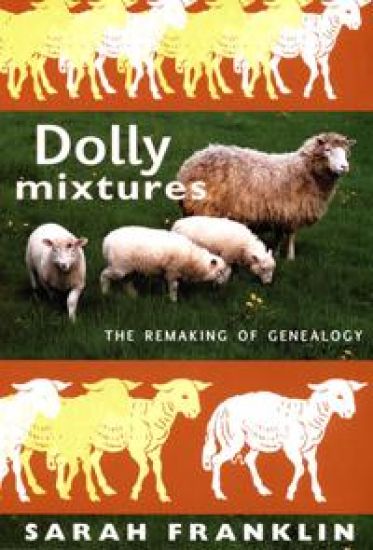
Dolly Mixtures

Dolly Mixtures

Sarah Franklin

Duke University Press
2007
pokkari
While the creation of Dolly the sheep, the world's most famous clone, triggered an enormous amount of discussion about human cloning, in Dolly Mixtures the anthropologist Sarah Franklin looks beyond that much-rehearsed controversy to some of the other reasons why the iconic animal's birth and death were significant. Building on the work of historians and anthropologists, Franklin reveals Dolly as the embodiment of agricultural, scientific, social, and commercial histories which are, in turn, bound up with national and imperial aspirations. Dolly was the offspring of a long tradition of animal domestication, as well as the more recent histories of capital accumulation through selective breeding, and enhanced national competitiveness through the control of biocapital. Franklin traces Dolly's connections to Britain's centuries-old sheep and wool markets (which were vital to the nation's industrial revolution) and to Britain's export of animals to its colonies-particularly Australia-to expand markets and produce wealth. Moving forward in time, she explains the celebrity sheep's links to the embryonic cell lines and global bioscientific innovation of the late twentieth century and early twenty-first. Franklin combines wide-ranging sources-from historical accounts of sheep-breeding, to scientific representations of cloning by nuclear transfer, to popular media reports of Dolly's creation and birth-as she draws on gender and kinship theory as well as postcolonial and science studies. She argues that there is an urgent need for more nuanced responses to the complex intersections between the social and the biological, intersections which are literally reshaping reproduction and genealogy. In Dolly Mixtures, Franklin uses the renowned sheep as an opportunity to begin developing a critical language to identify and evaluate the reproductive possibilities that post-Dolly biology now faces, and to look back at some of the important historical formations that enabled and prefigured Dollys creation.
Dolly Mixtures

Dolly Mixtures

Sarah Franklin

Duke University Press
2007
sidottu
While the creation of Dolly the sheep, the world's most famous clone, triggered an enormous amount of discussion about human cloning, in Dolly Mixtures the anthropologist Sarah Franklin looks beyond that much-rehearsed controversy to some of the other reasons why the iconic animal's birth and death were significant. Building on the work of historians and anthropologists, Franklin reveals Dolly as the embodiment of agricultural, scientific, social, and commercial histories which are, in turn, bound up with national and imperial aspirations. Dolly was the offspring of a long tradition of animal domestication, as well as the more recent histories of capital accumulation through selective breeding, and enhanced national competitiveness through the control of biocapital. Franklin traces Dolly's connections to Britain's centuries-old sheep and wool markets (which were vital to the nation's industrial revolution) and to Britain's export of animals to its colonies-particularly Australia-to expand markets and produce wealth. Moving forward in time, she explains the celebrity sheep's links to the embryonic cell lines and global bioscientific innovation of the late twentieth century and early twenty-first. Franklin combines wide-ranging sources-from historical accounts of sheep-breeding, to scientific representations of cloning by nuclear transfer, to popular media reports of Dolly's creation and birth-as she draws on gender and kinship theory as well as postcolonial and science studies. She argues that there is an urgent need for more nuanced responses to the complex intersections between the social and the biological, intersections which are literally reshaping reproduction and genealogy. In Dolly Mixtures, Franklin uses the renowned sheep as an opportunity to begin developing a critical language to identify and evaluate the reproductive possibilities that post-Dolly biology now faces, and to look back at some of the important historical formations that enabled and prefigured Dollys creation.
Born and Made

Born and Made

Sarah Franklin; Celia Roberts

Princeton University Press
2006
pokkari
Are new reproductive and genetic technologies racing ahead of a society that is unable to establish limits to their use? Have the "new genetics" outpaced our ability to control their future applications? This book examines the case of preimplantation genetic diagnosis (PGD), the procedure used to prevent serious genetic disease by embryo selection, and the so-called "designer baby" method. Using detailed empirical evidence, the authors show that far from being a runaway technology, the regulation of PGD over the past fifteen years provides an example of precaution and restraint, as well as continual adaptation to changing social circumstances. Through interviews, media and policy analysis, and participant observation at two PGD centers in the United Kingdom, Born and Made provides an in-depth sociological examination of the competing moral obligations that define the experience of PGD. Among the many novel findings of this pathbreaking ethnography of reproductive biomedicine is the prominence of uncertainty and ambivalence among PGD patients and professionals--a finding characteristic of the emerging "biosociety," in which scientific progress is inherently paradoxical and contradictory. In contrast to much of the speculative futurology that defines this field, Born and Made provides a timely and revealing case study of the on-the-ground decision-making that shapes technological assistance to human heredity.
Global Nature, Global Culture

Global Nature, Global Culture

Sarah Franklin; Celia Lury; Jackie Stacey

SAGE Publications Inc
2000
sidottu
`An excellent book. The authors have the rare capacity to handle popular culture and case studies in a theoretically informed manner. Original and well researched' - Mike Featherstone, Nottingham Trent University Understandings of globalization have been little explored in relation to gender or related concerns such as identity, subjectivity and the body. This book contrasts `the natural' and `the global' as interpretive strategies, using approaches from feminist cultural theory. The book begins by introducing the central themes: ideas of the natural; questions of scale and context posed by globalization and their relation to forms of cultural production; the transformation of genealogy; and the emergence of interest in definitions of life and life forms. The authors explores these questions through a number of case studies including Benneton advertising, Jurassic Park, The Body Shop, British Airways, Monsanto and Dolly the Sheep. In order to respecify the `nature, culture and gender' concerns of two decades of feminist theory, this highly original book reflects, hypothesizes and develops new interpretive possibilities within established feminist analytical frames.
Global Nature, Global Culture

Global Nature, Global Culture

Sarah Franklin; Celia Lury; Jackie Stacey

SAGE Publications Inc
2000
nidottu
`An excellent book. The authors have the rare capacity to handle popular culture and case studies in a theoretically informed manner. Original and well researched' - Mike Featherstone, Nottingham Trent University Understandings of globalization have been little explored in relation to gender or related concerns such as identity, subjectivity and the body. This book contrasts `the natural' and `the global' as interpretive strategies, using approaches from feminist cultural theory. The book begins by introducing the central themes: ideas of the natural; questions of scale and context posed by globalization and their relation to forms of cultural production; the transformation of genealogy; and the emergence of interest in definitions of life and life forms. The authors explores these questions through a number of case studies including Benneton advertising, Jurassic Park, The Body Shop, British Airways, Monsanto and Dolly the Sheep. In order to respecify the `nature, culture and gender' concerns of two decades of feminist theory, this highly original book reflects, hypothesizes and develops new interpretive possibilities within established feminist analytical frames.
Technologies of Procreation

Technologies of Procreation

Jeanette Edwards; Sarah Franklin; Eric Hirsch; Frances Price; Marilyn Strathern

Routledge
1999
sidottu
Technologies of Procreation bridges the gap between medical technology and cultural values. It looks at the ways in which the 'technologies of procreation' affect society from an anthropological perspective.
Technologies of Procreation

Technologies of Procreation

Jeanette Edwards; Sarah Franklin; Eric Hirsch; Frances Price; Marilyn Strathern

Routledge
1999
nidottu
Technologies of Procreation bridges the gap between medical technology and cultural values. It looks at the ways in which the 'technologies of procreation' affect society from an anthropological perspective.