

Kirjailija
Sarah Hamilton
Kirjat ja teokset yhdessä paikassa: 14 kirjaa, julkaisuja vuosilta 2001–2024, suosituimpiin kuuluu Strong Boys. Vertaile teosten hintoja ja tarkista saatavuus suomalaisista kirjakaupoista.
14 kirjaa
Kirjojen julkaisuvuodet: 2001–2024.


Endangered: Three Plays
Justine Campbell; Sarah Hamilton; Hannie Rayson; Caleb Lewis
Currency Press Pty Ltd
2017
nidottu

What better way to share good wishes than by sending a beautifully crafted, handmade card? This inspiring book makes creating your own handmade designs easy, affordable, and deeply rewarding. WINNER OF THE 2023 CREATIVE BOOK AWARD FOR PAPERCRAFT Research shows that people have a much stronger emotional connection to handwritten cards than to texts or emails. In this practical and insightful book, you’ll discover 10 visually exciting and easy-to-follow card-making projects from professional card designers. Each one teaches you a different style and technique, from silkscreen printing and textile foiling to letterpress and stitched motifs. Clear and inspiring step-by-step instructions guide you effortlessly through every stage. Accompanied by a wealth of beautiful photography, the artists offer a colourful behind-the-scenes glimpse into their studios and practice, plus tips and tricks to help you achieve a professional finish. There’s also insider information on how to sell and license your card designs commercially, for anyone keen to take card-making to the next level.
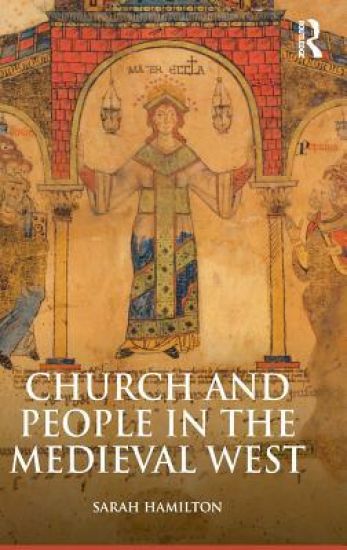
During the middle ages, belief in God was the single more important principle for every person, and the all-powerful church was the most important institution. It is impossible to understand the medieval world without understanding the religious vision of the time, and this new textbook offers an approach which explores the meaning of this in day-to-day life, as well as the theory behind it. Church and People in the Medieval West gets to the root of belief in the Middle Ages, covering topics including pastoral reform, popular religion, monasticism, heresy and much more, throughout the central middle ages from 900-1200. Suitable for undergraduate courses in medieval history, and those returning to or approaching the subject for the first time.
The Best of Critique Cafe: Summer 2015
Jody Bailey Day; Sarah Hamilton; Lisa C. Hannon
Createspace Independent Publishing Platform
2015
nidottu
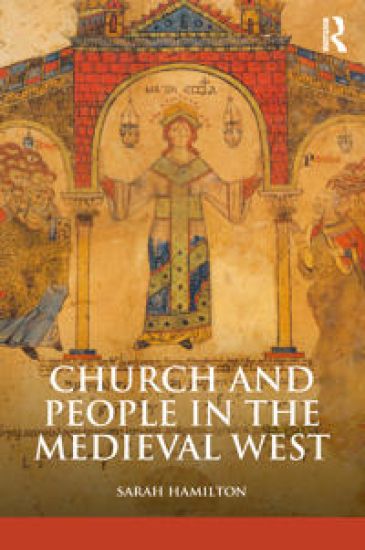
Church and People in the Medieval West, 900-1200
Sarah Hamilton
Pearson Education Limited
2013
nidottu
During the middle ages, belief in God was the single more important principle for every person, and the all-powerful church was the most important institution. It is impossible to understand the medieval world without understanding the religious vision of the time, and this new textbook offers an approach which explores the meaning of this in day-to-day life, as well as the theory behind it. Church and People in the Medieval West gets to the root of belief in the Middle Ages, covering topics including pastoral reform, popular religion, monasticism, heresy and much more, throughout the central middle ages from 900-1200. Suitable for undergraduate courses in medieval history, and those returning to or approaching the subject for the first time.
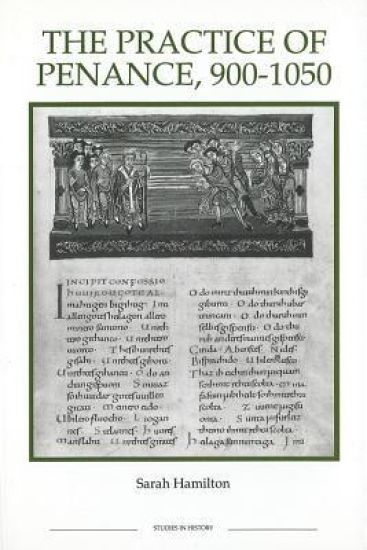
Penitential practice in the Holy Roman Empire 900-1050, examined through records in church law, the liturgy, monastic and other sources. This study examines all forms of penitential practice in the Holy Roman Empire under the Ottonian and Salian Reich, c.900 - c.1050. This crucial period in the history of penance, falling between the Carolingians' codification of public and private penance, and the promotion of the practice of confession in the thirteenth century, has largely been ignored by historians. Tracing the varieties of penitential practice recorded in church law, the liturgy, monastic practice, narrative and documentary sources, Dr Hamilton's book argues that many of the changes previously attributed to the twelfth and thirteenth centuries can be found earlier in the tenth and early eleventh centuries. Whilst acknowledging that there was a degree of continuity from the Carolingian period, she asserts that the period should be seen as having its own dynamic. Investigating the sources for penitential practice by genre, sheacknowledges the prescriptive bias of many of them and points ways around the problem in order to establish the reality of practice in this area at this time. This book thus studies the Church in action in the tenth and eleventhcenturies, the reality of relations between churchmen, and between churchmen and the laity, as well as the nature of clerical aspirations. It examines the legacy left by the Carolingian reformers and contributes to our understanding of pre-Gregorian mentalities in the period before the late eleventh-century reforms. SARAH HAMILTON teaches in the Department of History, University of Exeter.
The Liberation of Joseph, a Sacred Dramatic Poem ... the Beauties of Vegetation, with Digressive Sketches of Norwich ... in Four Cantos; And Other Poems.
Sarah Hamilton
British Library, Historical Print Editions
2011
pokkari

Sonnets, Tour to Matlock, Recollections of Scotland, and Other Poems. by a Resident of Sherwood Forest [Sarah Hamilton].
Sarah Hamilton
British Library, Historical Print Editions
2011
pokkari
Sonnets, Tour To Matlock, Recollections Of Scotland, And Other Poems (1825)
A Resident Of Sherwood Forest; Sarah Hamilton
KESSINGER PUBLISHING, LLC
2009
pokkari
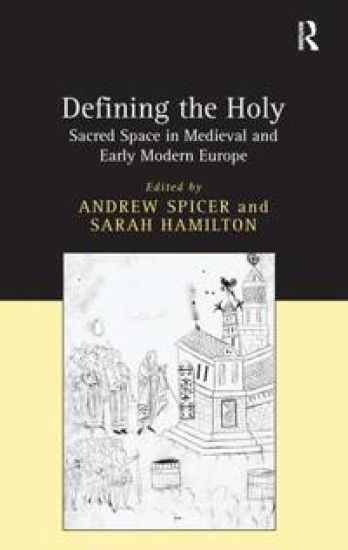
Holy sites, both public - churches, monasteries, shrines - and more private - domestic chapels, oratories - populated the landscape of medieval and early modern Europe, providing contemporaries with access to the divine. These sacred spaces thus defined religious experience, and were fundamental to both the geography and social history of Europe over the course of 1,000 years. But how were these sacred spaces, both public and private, defined? How were they created, used, recognised and transformed? And to what extent did these definitions change over the course of time, and in particular as a result of the changes wrought in the sixteenth and seventeenth centuries. Taking a strongly interdisciplinary approach, this volume tackles these questions from the point of view of archaeology, architectural and art history, liturgy, and history to consider the fundamental interaction between the sacred and the profane. Exploring the establishment of sacred space within both the public and domestic spheres, as well as the role of the secular within the sacred sphere, each chapter provides fascinating insights into how these concepts helped shape, and were shaped by, wider society. By highlighting these issues on a European basis from the medieval period through the age of the reformations, these essays demonstrate the significance of continuity as much as change in definitions of sacred space, and thus identify long term trends which have hitherto been absent in more limited studies. As such this volume provides essential reading for anyone with an interest in the ecclesiastical development of western Europe from the thirteenth to the eighteenth centuries.
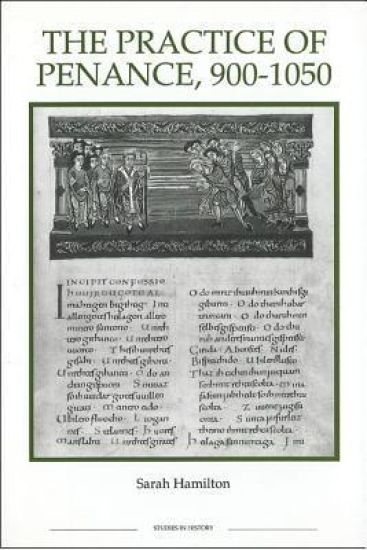
Penitential practice in the Holy Roman Empire 900-1050, examined through records in church law, the liturgy, monastic and other sources. This study examines all forms of penitential practice in the Holy Roman Empire under the Ottonian and Salian Reich, c.900 - c.1050. This crucial period in the history of penance, falling between the Carolingians' codification of public and private penance, and the promotion of the practice of confession in the thirteenth century, has largely been ignored by historians. Tracing the varieties of penitential practice recorded in church law, the liturgy, monastic practice, narrative and documentary sources, Dr Hamilton's book argues that many of the changes previously attributed to the twelfth and thirteenth centuries can be found earlier in the tenth and early eleventh centuries. Whilst acknowledging that there was a degree of continuity from the Carolingian period, she asserts that the period should be seen as having its own dynamic. Investigating the sources for penitential practice by genre, sheacknowledges the prescriptive bias of many of them and points ways around the problem in order to establish the reality of practice in this area at this time. This book thus studies the Church in action in the tenth and eleventh centuries, the reality of relations between churchmen, and between churchmen and the laity, as well as the nature of clerical aspirations. It examines the legacy left by the Carolingian reformers and contributes to our understanding of pre-Gregorian mentalities in the period before the late eleventh-century reforms. SARAH HAMILTON teaches in the Department of History, University of Exeter.