Kirjojen hintavertailu – 12 867 199 kirjaa ja 27 kauppaa

Kirjailija

Sarah Hernandez

Kirjat ja teokset yhdessä paikassa: 5 kirjaa, julkaisuja vuosilta 2008–2023, suosituimpiin kuuluu We Are the Stars. Vertaile teosten hintoja ja tarkista saatavuus suomalaisista kirjakaupoista.

5 kirjaa

Kirjojen julkaisuvuodet: 2008–2023.
We Are the Stars

We Are the Stars

Sarah Hernandez

University of Regina Press
2023
pokkari
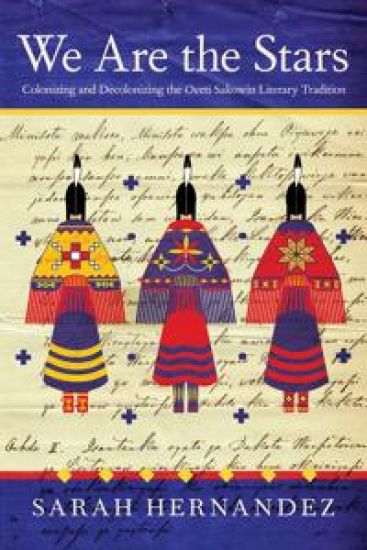
An emerging Lakota scholarâ??s critical interrogation of settler-colonial nations that re-centers Oceti Sakowin (Dakota) women as the tribeâ??s traditional culture keepers and bearers.
We Are the Stars

We Are the Stars

Sarah Hernandez

University of Arizona Press
2023
sidottu
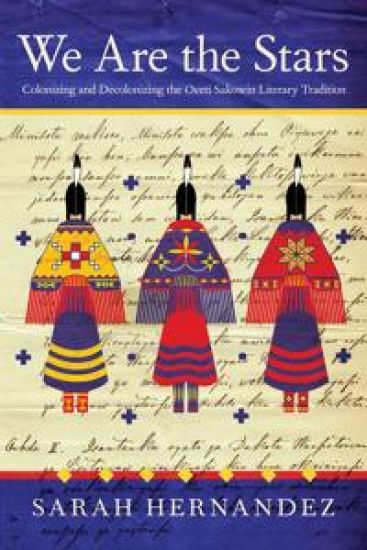
After centuries of colonization, this important new work recovers the literary record of Oceti Sakowin (historically known to some as the Sioux Nation) women, who served as their tribes’ traditional culture keepers and culture bearers. In so doing, it furthers discussions about settler colonialism, literature, nationalism, and gender. Women and land form the core themes of the book, which brings tribal and settler colonial narratives into comparative analysis. Divided into two parts, the first section of the work explores how settler colonizers used the printing press and boarding schools to displace Oceti Sakowin women as traditional culture keepers and culture bearers with the goal of internally and externally colonizing the Dakota, Nakota, and Lakota nations. The second section focuses on decolonization and explores how contemporary Oceti Sakowin writers and scholars have started to reclaim Dakota, Nakota, and Lakota literatures to decolonize and heal their families, communities, and nations.
We Are the Stars

We Are the Stars

Sarah Hernandez

University of Arizona Press
2023
nidottu
After centuries of colonization, this important new work recovers the literary record of Oceti Sakowin (historically known to some as the Sioux Nation) women, who served as their tribes’ traditional culture keepers and culture bearers. In so doing, it furthers discussions about settler colonialism, literature, nationalism, and gender. Women and land form the core themes of the book, which brings tribal and settler colonial narratives into comparative analysis. Divided into two parts, the first section of the work explores how settler colonizers used the printing press and boarding schools to displace Oceti Sakowin women as traditional culture keepers and culture bearers with the goal of internally and externally colonizing the Dakota, Nakota, and Lakota nations. The second section focuses on decolonization and explores how contemporary Oceti Sakowin writers and scholars have started to reclaim Dakota, Nakota, and Lakota literatures to decolonize and heal their families, communities, and nations.
Native American Transracial Adoptees Tell Their Stories

Native American Transracial Adoptees Tell Their Stories

Rita J. Simon; Sarah Hernandez

Lexington Books
2008
sidottu
Native American Transracial Adoptees Tell Their Stories presents twenty interviews with Native American adoptees raised in non-Native homes. Through the in-depth interviews they conduct with each participant, the authors explore complex questions of cultural identity formation. The participants of the study represent a range of positive and negative experiences of transracial adoption. Regardless of their personal experiences, however, all twenty respondents indicate that they are supporters of the Indian Child Welfare Act and that they believe that Native children should be raised in Native households whenever possible. However, eighteen of the twenty respondents concede that non-Native families can raise Native children to be happy, healthy, well-adjusted adults. Through the interviews, Simon and Hernandez allow readers to better understand the different experiences of Native American adoptees.
Native American Transracial Adoptees Tell Their Stories

Native American Transracial Adoptees Tell Their Stories

Rita J. Simon; Sarah Hernandez

Lexington Books
2008
nidottu
Native American Transracial Adoptees Tell Their Stories presents twenty interviews with Native American adoptees raised in non-Native homes. Through the in-depth interviews they conduct with each participant, the authors explore complex questions of cultural identity formation. The participants of the study represent a range of positive and negative experiences of transracial adoption. Regardless of their personal experiences, however, all twenty respondents indicate that they are supporters of the Indian Child Welfare Act and that they believe that Native children should be raised in Native households whenever possible. However, eighteen of the twenty respondents concede that non-Native families can raise Native children to be happy, healthy, well-adjusted adults. Through the interviews, Simon and Hernandez allow readers to better understand the different experiences of Native American adoptees.