Kirjojen hintavertailu – 12 903 725 kirjaa ja 27 kauppaa
Kirjailija
Sarah J. Donovan
Kirjat ja teokset yhdessä paikassa: 11 kirjaa, julkaisuja vuosilta 2018–2026, suosituimpiin kuuluu Teaching Genocide and Holocaust Education in ELA Classrooms. Vertaile teosten hintoja ja tarkista saatavuus suomalaisista kirjakaupoista.
This book centers on a single, pressing question from a teacher: “What is my role as an ELA teacher in genocide education– and how do I do it ethically?” Teaching Genocide and Holocaust Education in ELA Classrooms: Language to Remember, Witness, and Repair offers middle and high school English teachers a thoughtful, practice-centered approach to teaching histories shaped by human experience and the ways language has been used to harm, name, witness, and repair. Grounded in an Ethical Literacy Framework, the book brings together classroom-rooted practices—young adult literature, diaspora memoirs, poetry, oral histories, rhetoric, and multigenre research—to help students encounter human stories with care and responsibility. Each chapter offers adaptable structures, mentor texts, and reflective practices that support trauma-informed, student-centered instruction within the realities teachers already navigate, and concludes with reflection questions and resources to extend learning and support planning. Concepts such as critical empathy, the web of passivity, and imagining just futures guide students to examine how language shapes both violence and possibility. Written for secondary ELA teachers, literacy leaders, and teacher educators, this book approaches genocide education as an ethical, relational practice.
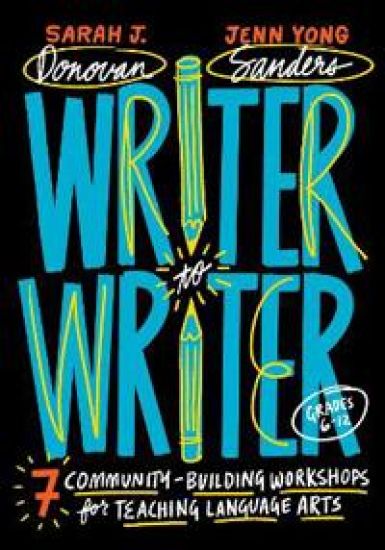
The guided workshops depicted in this book offer seven, ready-to-implement instructional units that walk secondary language arts teachers through practical, day-one engagements to get writers collaborating and connecting with one another. By focusing on texts from a writer’s point of view, Writer to Writer offers a humanizing and fresh vision for teaching language arts that dramatically increases engagement by centering student lives, voices, and peer relationships. Grounded in a workshop model, this book blends theory and practice to show how writing and reading can be humanizing, relational, and responsive for adolescent learners. Across seven genre-based workshops that include place-based poetry, narrative, speculative fantasy, novel study, literary analysis, and argumentative writing, readers will find practical routines, mentor text studies, conferring strategies, low-stakes daily writing invitations, and author’s craft lessons. This culturally sustaining instruction fosters student agency and engagement while ensuring robust alignment with academic standards and assessment demands in ethical, relational ways. New and experienced teachers will find inspiration, concrete tools, and renewed purpose in this curriculum designed to reduce planning time and resist burnout, allowing you to reclaim the joy of teaching ELA. Book Features: A holistic, relational vision for ELA curriculum: seven distinct workshops on writer’s notebooks, place-based poetry, narrative, speculative fantasy, novel study, literary analysis, and argument writing. Ready-to-use, teacher-friendly features: guided lessons in “instructional invitations,” peer conferring protocols, write-in activities, mentor text suggestions, assessment tools, and celebration practices. An innovative integration of joy and critical justice: practical teaching routines blended with critical pedagogies such as grammar as linguistic justice, place-based poetry, and writing speculative futures to promote equitable instruction. Assessment that humanizes learning: concrete models of ethical grading, including student self-assessment tools and reflection practices integrated into each workshop Professional development in book form: a series of workshops designed for both individual teachers, Professional Learning Communities (PLCs), or book study groups.
Assessing Students with Poetry Writing Across Content Areas reimagines formative assessment by advocating for a dynamic, poetic approach that delves into students’ meaning-making processes. It is a guide for teachers seeking innovative approaches to formative assessment, promoting a holistic, creative, reflective, and collaborative learning environment. It challenges the limitations of traditional worksheets and quizzes, urging educators to move beyond seeking restrictive answers and embrace students’ texts as pathways to understanding. The authors put forward poetry as a vigorous tool and writing poetry as an act to foster deep learning across content areas. Practical examples of acrostic poems, haiku, and pantoum demonstrate the adaptability of poetic forms to diverse subjects. Through adaptable lesson plans that can be used across history, math, world languages, ELA, and science, the book encourages intentional poetic writing-to-learn activities and explores how poetry might present itself as a short, creative assessment tool that helps teachers see what their students know and can do while also offering them the space to make new meaning in their original poetry. This book is a key resource for in-service educators teaching grades 6-12.
Teaching Poetry in a Digital World supports English language arts (ELA) educators for grades 6–12 to incorporate digital literacy in their classrooms by teaching the reading and writing of poetry. In an increasingly digital age, educators must adapt to meet the changing needs and interests of their students by incorporating technology into the classroom. This book introduces its audience to the e-Poetry Framework. This framework demonstrates how poetry might present itself in a literacy-based unit with the benefit of a technology medium to share with the world. Examples include teaching zip-ode poetry, incorporating haiku with the creation of GIFs, and ethically discussing AI with nonet poems. With adaptable lesson plans and assessments, as well as educator examples, the book will inspire teachers to create intentional student-centered e-Poetry units. The book is aligned with ELA literacy standards, International Society for Technology in Education (ISTE) educator standards, and National Council of Teachers of English (NCTE)’s position statement for integrating technology into ELA classrooms. It is a key resource for secondary school educators teaching ELA, creative writing, and digital media.
Unlock the transformative power of poetry in your classroom with 90 Ways of Community. This indispensable resource guides teachers through a year-long journey of poetic engagement, fostering a safe and inclusive environment where every student feels valued and heard. Grounded in social emotional learning and trauma-informed pedagogy, the authors provide practical, adaptable lessons that seamlessly integrate poetry writing into any curriculum. Each chapter begins with a heartfelt "Dear Teacher" letter, offering context and support, while thematic clusters of prompts inspire creativity and connection. The book covers a wide range of topics, from celebrating individuality to extending community and healing through poetic expression. The authors draw on real classroom experiences and the collective wisdom of a community of teacher-poets. 90 Ways of Community is more than a collection of prompts-it's a roadmap to building a classroom culture where poetry becomes a vital tool for learning and growth. Join us in nurturing the hearts and minds of students, one poem at a time.
Sadie Carter's life is a mess, as wavy and tangled as her unruly hair. At 15, she is barely surviving the chaos of her large Catholic family. When one sister becomes pregnant and another is thrown out, her unemployed dad hides his depression, and her mom hides a secret. Sadie, the peacekeeper and rule-follower, has had enough. The empty refrigerator, years of hand-me-downs, and all the secrets have to stop. She longs for something more and plans her escape. However, getting arrested was not her plan. Falling in love was not her plan. With the help of three mysterious strangers--a cop, a teacher, and a cute boy--maybe Sadie will find the strength to defy the rules and do the unexpected. Told in verse, Sarah J. Donovan's debut Alone Together has secrets, romance, struggle, sin, and redemption, all before Sadie blows out her 16 candles. It's a courageously honest look at growing up in a big family.