Kirjojen hintavertailu – 12 859 824 kirjaa ja 27 kauppaa

Kirjailija

Sarah J Summers

Kirjat ja teokset yhdessä paikassa: 5 kirjaa, julkaisuja vuosilta 2007–2022, suosituimpiin kuuluu Fair Trials. Vertaile teosten hintoja ja tarkista saatavuus suomalaisista kirjakaupoista.

Nimi esiintyy myös muodoissa: Sarah J. Summers

5 kirjaa

Kirjojen julkaisuvuodet: 2007–2022.

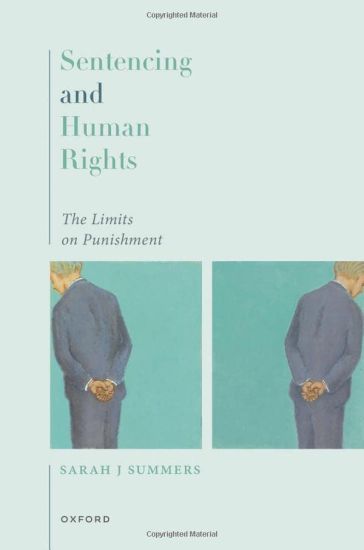
Sentencing and Human Rights

Sentencing and Human Rights

Sarah J Summers

Oxford University Press
2022
sidottu
This is an open access title available under the terms of a CC BY-NC-ND 4.0 International licence. It is free to read at Oxford Scholarship Online and offered as a free PDF download from OUP and selected open access locations. There has been little sustained consideration of the ways in which human rights act to safeguard the individual from substantive unfairness or injustice in the imposition of punishment. Human rights might be expected to play a pivotal role at the sentencing stage, regulating the process and substance of sentencing, mapping out the state's role, and affording it legitimacy in the imposition of punishment. The traditional view that sentencing theory is best understood as a branch of moral philosophy has obscured the importance of consideration of the special nature of state punishment as mediated by and through law and the significance of human rights principles, notably legality, proportionality, equality, and judicial responsibility for the determination of the sentence. Sarah J Summers focusses on sentencing practices which are widespread across Europe and indeed further afield and their compatibility with constitutional or human rights principles. Sentencing and Human Rights develops a systematic account of the importance of human rights principles at sentencing stage. Consideration of these principles provides the basis for an examination of the way in which they might be expected to limit important sentencing practices, such as the imposition of aggravated sentences for previous convictions, the treatment of confessions and mandatory minimum sentences. It is not just that punishment follows a multitude of aims but rather that the balance of these aims may, and in the context of lengthy prison sentences almost certainly will, change during the sentence. This examination of the human rights limits on the sentence suggests that it might be necessary to reconsider the way in which state punishment is conceptualised in sentencing theory.
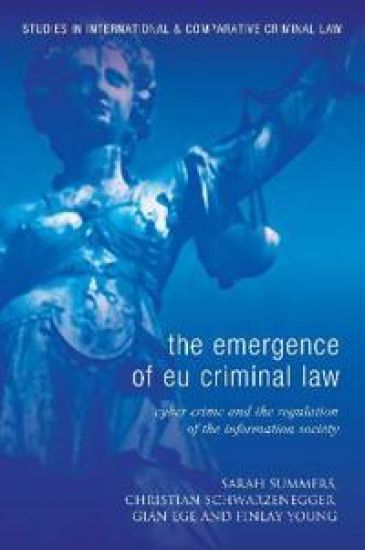
The Emergence of EU Criminal Law

The Emergence of EU Criminal Law

Christian Schwarzenegger; Finlay Young; Gian Ege; Sarah J Summers

Hart Publishing
2014
sidottu
Criminal law can no longer be neatly categorised as the product and responsibility of domestic law. That this is true is emphasised by the ever-increasing amount of legislation stemming from the European Union (EU) which impacts, both directly and indirectly, on the criminal law. The involvement of the EU institutions in the substantive criminal laws of its Member States is of considerable legal and political significance. This book deals with the emerging EU framework for creating, harmonising and ensuring the application of EU criminal law. This book aims to highlight some of the consequences of EU involvement in the criminal law by examining the provisions which have been adopted in the field of information and communications technology. It provides an overview of the criminal law competence of the EU and evaluates the impact of these developments on the criminal laws of the Member States. It then goes on to consider the EU legislation which requires Member States to regulate matters such as data protection, e-security, intellectual property and various types of illegal content through the criminal law is analysed. In the course of this evaluation, particular consideration is given to issues such as the basis on which the EU institutions establish the need for criminal sanctions, the liability of service providers and the extent to which the Member States have adhered to, or departed from, the legislation in the course of implementation.
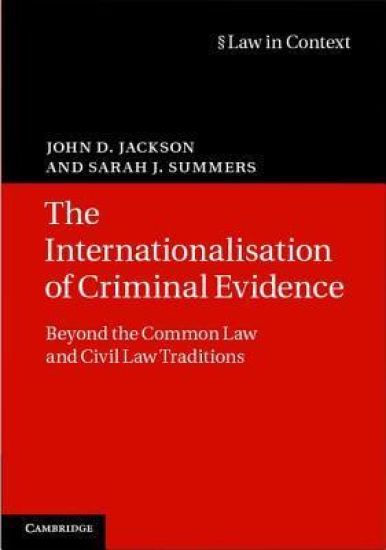
The Internationalisation of Criminal Evidence

The Internationalisation of Criminal Evidence

John D. Jackson; Sarah J. Summers

Cambridge University Press
2012
sidottu
Although there are many texts on the law of evidence, surprisingly few are devoted specifically to the comparative and international aspects of the subject. The traditional view that the law of evidence belongs within the common law tradition has obscured the reality that a genuinely cosmopolitan law of evidence is being developed in criminal cases across the common law and civil law traditions. By considering the extent to which a coherent body of common evidentiary standards is being developed in both domestic and international jurisprudence, John Jackson and Sarah Summers chart this development with particular reference to the jurisprudence on the right to a fair trial that has emerged from the European Court of Human Rights and to the attempts in the new international criminal tribunals to fashion agreed approaches towards the regulation of evidence.
The Internationalisation of Criminal Evidence

The Internationalisation of Criminal Evidence

John D. Jackson; Sarah J. Summers

Cambridge University Press
2012
pokkari
Although there are many texts on the law of evidence, surprisingly few are devoted specifically to the comparative and international aspects of the subject. The traditional view that the law of evidence belongs within the common law tradition has obscured the reality that a genuinely cosmopolitan law of evidence is being developed in criminal cases across the common law and civil law traditions. By considering the extent to which a coherent body of common evidentiary standards is being developed in both domestic and international jurisprudence, John Jackson and Sarah Summers chart this development with particular reference to the jurisprudence on the right to a fair trial that has emerged from the European Court of Human Rights and to the attempts in the new international criminal tribunals to fashion agreed approaches towards the regulation of evidence.
Fair Trials

Fair Trials

Sarah J Summers

Hart Publishing
2007
sidottu
The right to a fair trial has become an issue of increasing public concern, following a series of high profile cases such as the Bulger case, Khan (Sultan) and R v DPP ex p Kebilene. In determining the scope of the right, we now increasingly look to the ECHR, but the court has given little guidance, focusing on reconciling procedural rules rather than addressing the broader issues. This book addresses the issue of the meaning of the right by examining the contemporary jurisprudence in the light of a body of historical literature which discusses criminal procedure in a European context. It argues that there is in fact a European criminal procedural tradition which has been neglected in contemporary discussions, and that an understanding of this tradition might illuminate the discussion of fair trial in the contemporary jurisprudence. This challenging new work elucidates the meaning of the fair trial and in doing so challenges the conventional approach to the analysis of criminal procedure as based on the distinction between adversarial and inquisitorial procedural systems. The book is divided into two parts. The first part is dominated by an examination of the fair trial principles in the works of several notable European jurists of the nineteenth century, arguing that their writings were instrumental in the development of the principles underlying the modern conception of criminal proceedings. The second part looks at the fair trials jurisprudence of the ECHR and it is suggested that although the Court has neglected the European tradition, the jurisprudence has nevertheless been influenced, albeit unconsciously, by the institutional principles developed in the nineteenth century.