Kirjojen hintavertailu – 12 903 724 kirjaa ja 27 kauppaa

Kirjailija

Sarah Jo Peterson

Kirjat ja teokset yhdessä paikassa: 3 kirjaa, julkaisuja vuosilta 2013–2020, suosituimpiin kuuluu When the Road Price Is Right. Vertaile teosten hintoja ja tarkista saatavuus suomalaisista kirjakaupoista.

3 kirjaa

Kirjojen julkaisuvuodet: 2013–2020.

The Transportation Research Board, 1920–2020

The Transportation Research Board, 1920–2020

Sarah Jo Peterson

National Academies Press
2020
sidottu
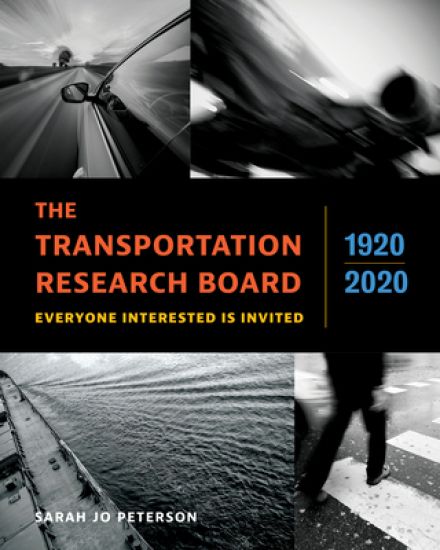
In 1920, state highway engineers, federal officials, and experts from academia were among a small group convened by the National Academy of Sciences to confront the problems of the highway. The public was entrusting them with billions of dollars for good roads, and World War I had proved the feasibility of moving freight long distances by truck. But even new highways were crumbling. They turned to research for solutions. The founders of the Transportation Research Board (TRB) and the generations that followed took on problems such as safety, social equity, and environmental issues. They embraced "total transportation," adapting their highway research model to urban transportation and then applying it to rail, marine, and aviation modes. Today TRB convenes thousands of researchers, practitioners, and administrators every year to advise the government, solve practical problems, foster innovation, and stimulate new research. In The Transportation Research Board, 1920–2020: Everyone Interested Is Invited, Sarah Jo Peterson tells the story of how people and institutions created and have continued to shape TRB. In a compelling narrative accompanied by more than 150 images exploring the history of transportation and research, she argues that TRB can be best understood as an infrastructure—one that people purposely designed and devotedly maintained. Despite TRB's institutional complexity, its unique mission, the vast collection of acronyms in its orbit, and the significant changes to the organization in its first 100 years, Dr. Peterson provides a view from 30,000 feet, deftly describing the social, political, and economic context in which transportation (and TRB) functioned. At the same time, she attends to details of the key events, individuals, and human motivations that shaped TRB's evolution. The author's skills as a historian, her experience in the transportation field, and her manifest ability to tell a good story have produced a book that transportation professionals of all stripes—and, for that matter, anyone interested in the history of transportation in the United States—should find both engaging and informative and an essential addition to their library. Table of Contents
Planning the Home Front

Planning the Home Front

Sarah Jo Peterson

University of Chicago Press
2013
sidottu
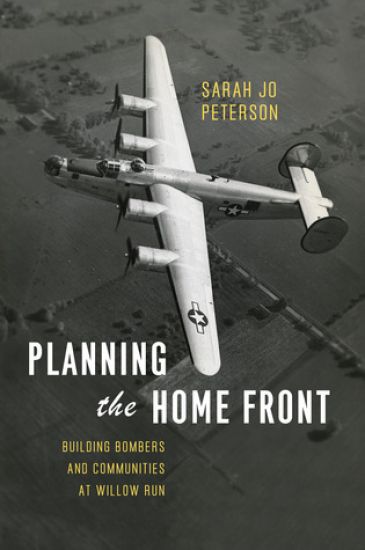
Before Franklin Roosevelt declared December 7 to be a "date which will live in infamy"; before American soldiers landed on D-day; before the B-17s, B-24s, and B-29s roared over Europe and Asia, there was Willow Run. Located twenty-five miles west of Detroit, the bomber plant at Willow Run and the community that grew up around it attracted tens of thousands of workers from across the United States during World War II. Together, they helped build the nation's "arsenal of democracy," but Willow Run also became the site of repeated political conflicts over how to build suburbia while mobilizing for total war. In "Planning the Home Front", Sarah Jo Peterson offers readers a portrait of the American people - industrialists, labor leaders, federal officials, municipal leaders, social reformers, and industrial workers and their families - that lays bare the foundations of community, the high costs of racism, and the tangled process of negotiation between New Deal visionaries and wartime planners. By tying the history of suburbanization to that of the home front, Peterson uncovers how the United States planned and built industrial regions in the pursuit of war, setting the stage for the suburban explosion that would change the American landscape when the war was won.
When the Road Price Is Right

When the Road Price Is Right

Sarah Jo Peterson; Rachel MacCleery

Urban Land Institute,U.S.
2013
nidottu
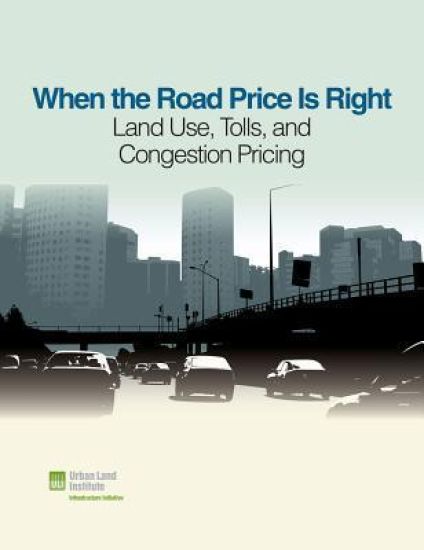
Tolling is increasingly used to pay for new and revitalised transportation infrastructure and to provide users with a reliable, congestion-free trip and this report presents the results of interviews with more than 35 land-use and transportation experts who discuss how tolling and congestion pricing will interact with land use. In addition, it features five case studies of tolling in California, Colorado, Florida, Maryland, and Texas. Informative and up-to-the-minute, this account provides guidance not only for those who manage roadway development and funding, but also for those whose land-development projects may be affected by road tolling and congestion pricing.